


Victorian Stoneware Urns
Victorian stoneware urns are robust garden and display vessels crafted during the nineteenth century, sought after for their enduring garden presence and architectural form.
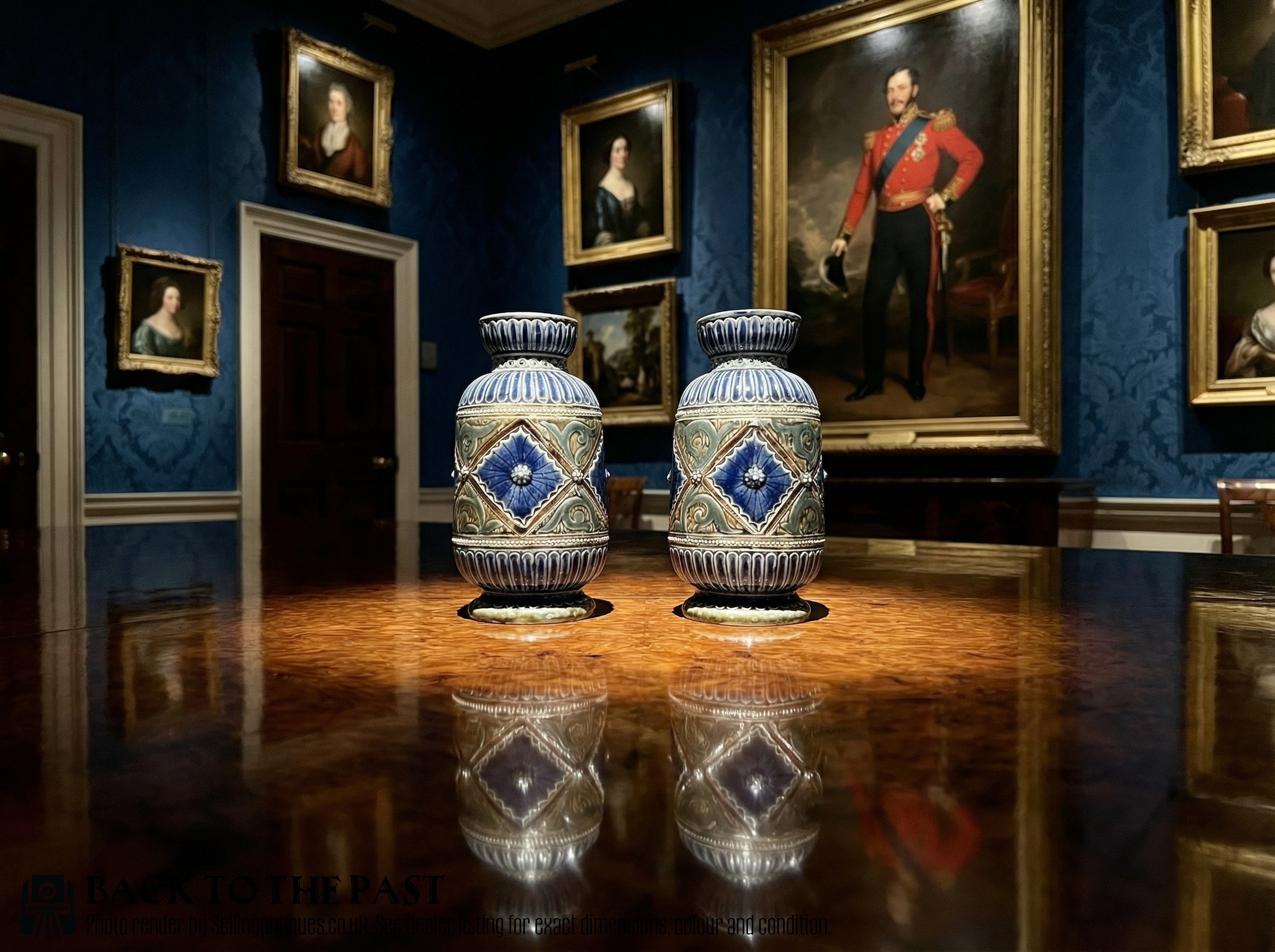
Victorian Stoneware Urns
Victorian stoneware urns encompass a diverse selection of heavy pottery vessels, planters, and decorative vases produced across the nineteenth century and into the early twentieth century. These pieces bridge utilitarian garden wares and refined interior art pottery, capturing the expansive manufacturing shifts of the era.
Buyers will encounter various forms on this page, ranging from salt-glazed garden planters and faux bois strawberry pots to intricate Doulton Lambeth display vases and blue jasperware campana urns. Many examples reflect specific stylistic revivals, including Neoclassical, Arts and Crafts, and Art Nouveau motifs.
Origins span notable English potteries alongside continental European makers, demonstrating a wide geographical reach within the category. Domestic garden ornaments sit alongside studio ceramics, offering distinct textures suited for both landscape and interior placement.
Evaluating the standard of execution
The division between standard production wares and exceptional examples rests upon the intricacy of the surface decoration and the renown of the studio or decorator. Pieces bearing signatures or monograms from accomplished artists command particular attention for their individualised execution.
Crispness in moulded reliefs and precision in hand-applied slipwork distinguish superior pieces from utilitarian items. The depth of the salt glaze and the harmony of proportion across matched pairs further indicate the level of care invested in manufacture.
Garden planners can utilise nineteenth-century salt-glazed faux bois strawberry planters, bringing historical agricultural novelty straight to the modern patio.
Doulton Lambeth·Royal Doulton·Mettlach Pottery·Wedgwood·Mason·Eliza Simmance·Emily Edwards·Emily Stormer·Florence Barlow·Dee Filter Company
The Victorian Stoneware Urns Glossary
- Stoneware
- A robust, vitrified pottery fired at high temperatures until impervious to liquid. It forms the durable foundation for heavy garden urns and utilitarian vessels.
- Salt glaze
- A vitreous coating formed by throwing common salt into the kiln during high-temperature firing. This creates a distinctive orange-peel texture across the pottery surface.
- Jasperware
- A fine-grained, unglazed stoneware developed with distinct coloured backgrounds and applied white classical relief ornaments. It is frequently associated with neoclassical revival urns.
- Faux bois
- An artistic imitation of wood grain applied to pottery surfaces. Makers utilised this technique to give stoneware planters and garden bases a rustic, organic appearance.
- Campana
- A bell-shaped classical urn form featuring an everted rim and a pedestal base. This traditional silhouette appeared frequently in nineteenth-century decorative garden and mantel pieces.
Victorian Stoneware Urns: Frequently Asked Questions
Where were Victorian stoneware urns placed?
Garden urns and planters were designed for placement in orangeries, patios, and formal gardens where their heavy stoneware bodies could withstand weathering.
Smaller decorative vases and water vessels were intended for interior display on sideboards and mantelpieces within Victorian homes.
How do I care for stoneware outdoors?
Dense stoneware and salt-glazed bodies offer natural resistance to frost, making them suitable for year-round garden display.
Ensure proper drainage in planters during freezing conditions to prevent moisture expansion from cracking the ceramic material.
How can I identify the period of a piece?
Stylistic indicators such as Neoclassical bas-reliefs, Arts and Crafts motifs, and Art Nouveau curves point directly to nineteenth-century production eras.
Maker marks, patent stamps, and specific glazing techniques provide further chronological markers for dating individual vessels.