




Victorian Stoneware Jardiniere
These Victorian stoneware jardinieres are robust glazed planting vessels made to bring greenery indoors during the nineteenth century.
Victorian Stoneware Jardiniere
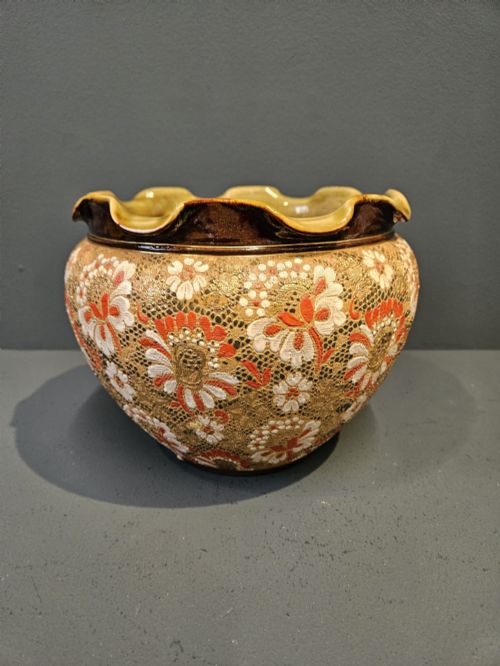
A victorian stoneware jardiniere is a heavy planting vessel designed to hold potted indoor plants while protecting domestic furniture from moisture and soil. You are looking at sturdy ceramic pots intended for use in parlours, orangeries, and patios.
The pieces on this page span the nineteenth century and the early twentieth century, showing periods like eighteen eighty alongside broader Victorian dates. English makers dominate the selection, alongside continental examples.
Forms include standard jardinieres as well as larger tree planter bases and log bins. Styles range from plain utilitarian bodies to elaborate Victorian art pottery and arts and crafts designs.
Materials and construction
These vessels are fashioned from dense clay bodies, utilising stoneware and ceramic materials that are fired at high temperatures to ensure durability and water resistance. Many pieces feature salt glazing or applied enamel details.
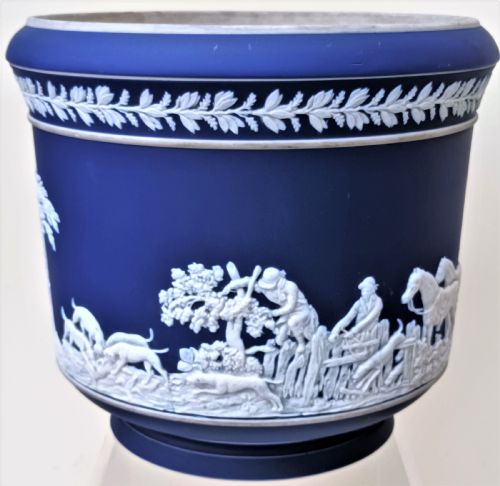
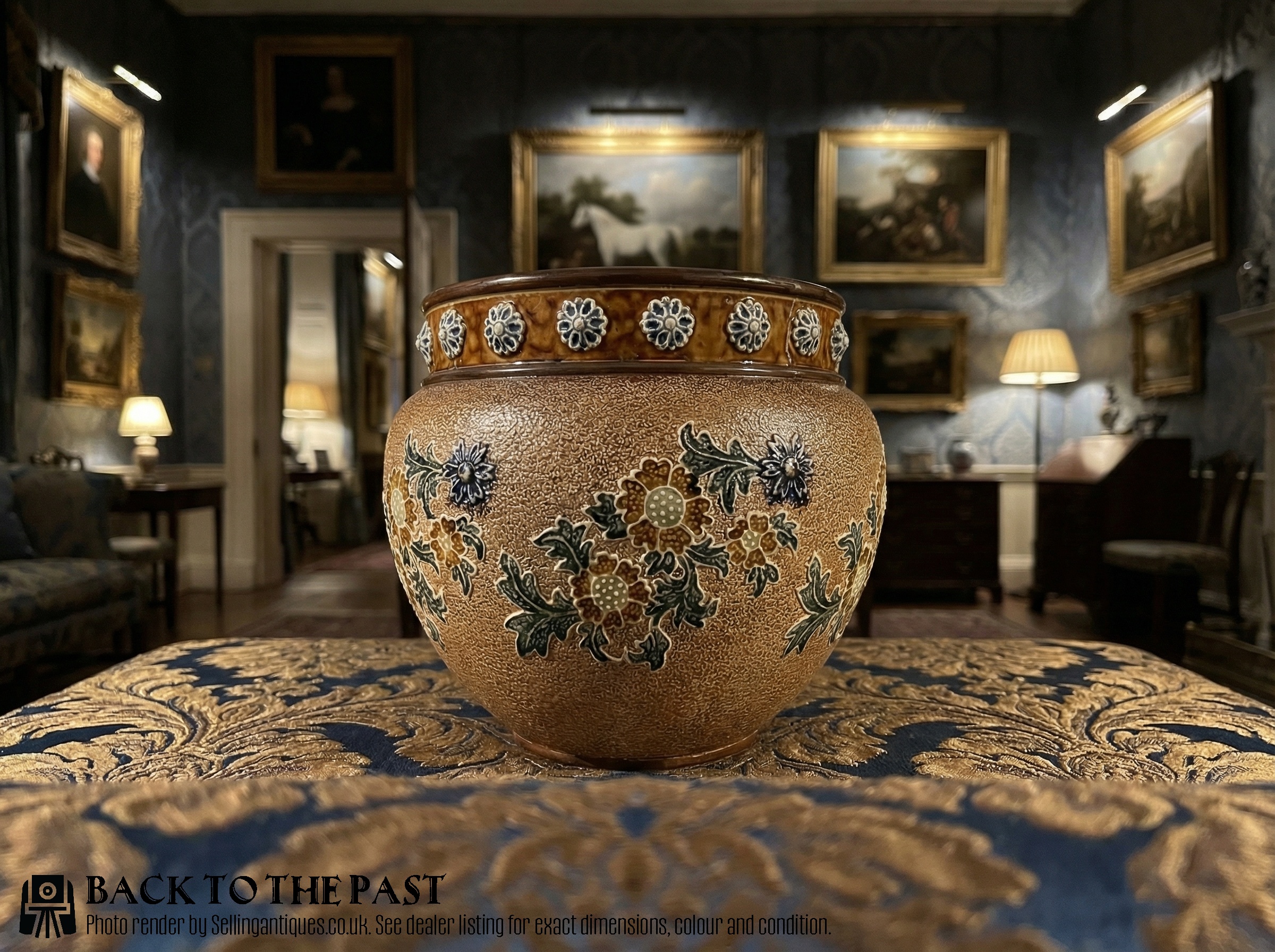
Makers employed various decorative techniques, including blue jasperware reliefs, textured slaterware finishes, and faux bois treatments that mimic natural wood grain on the ceramic surface.
Victorian Stoneware Jardiniere Retail Price Guide 2026
Typical asking prices for victorian stoneware jardiniere among the pieces listed under this phrase on Sellingantiques today, from the lower quarter to the upper quarter. They describe what is for sale here now, not the wider market.
Some nineteenth century potters gave heavy clay pots the texture of tree bark so they could pretend to be logs.
Markers of distinction
Quality in a victorian stoneware jardiniere rests upon the crispness of the moulded decoration and the control shown in the glaze application. Finer pieces display sharp detailing in relief work and intentional colour variation rather than flat, muddy surfaces.
The reputation of the pottery and the skill of the individual decorator elevate certain examples above standard utilitarian vessels. Superior potting shows balanced proportions and robust walls that withstand regular handling.
Doulton Lambeth·William Adams and Sons·Doulton Burslem·Royal Doulton
The Victorian Stoneware Jardiniere Glossary
- Stoneware
- A type of pottery fired at high temperatures until semi-vitrified, making the clay dense and impermeable to water.
- Jasperware
- A fine-grained, unglazed stoneware developed with contrasting coloured reliefs, often associated with classical figures.
- Slaterware
- A ceramic technique imitating the rough texture of slate, popular in late nineteenth century art pottery.
- Faux bois
- A decorative style mimicking the appearance of natural wood grain or tree bark on ceramic or stone surfaces.
- Jardiniere
- A large ornamental pot or stand designed to hold growing plants or flowers indoors.
Victorian Stoneware Jardiniere: Frequently Asked Questions
How were these jardinieres originally used?
These vessels held potted palms and ferns inside Victorian homes, sitting on heavy tables or pedestals to protect furnishings from water.
They allowed homeowners to bring large tropical plants into parlours and drawing rooms without risking damage to carpets or wooden floors.
Can I use them for modern plants?
They remain entirely functional for holding potted plants today, provided you place a saucer inside to catch drainage water.
Their robust stoneware bodies withstand moisture well, making them practical for indoor greenery and conservatory displays.
How do I identify a Doulton piece?
Look for factory stamps and impressed monograms on the unglazed base, which often indicate the specific Lambeth or Burslem studio.
Decoration styles like slaterware or blue jasper also point toward these prominent English workshops.
What is faux bois decoration?
Faux bois is a ceramic finish designed to resemble natural timber, capturing the texture and grain of tree bark.
Potters applied this style to create rustic garden and conservatory vessels that blended with botanical displays.