



Victorian Sterling Silver Cellars
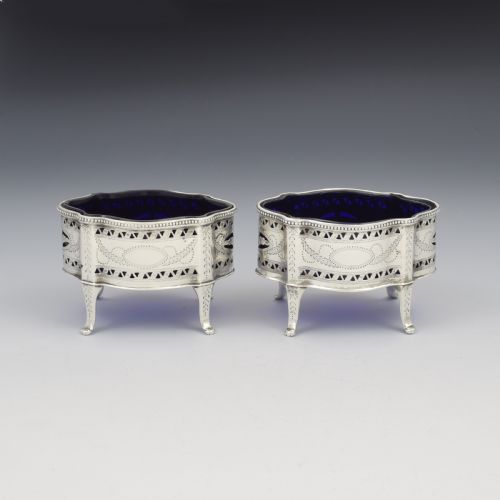
These victorian sterling silver cellars bring nineteenth-century dining tables alive with chased detail and coloured glass liners.
Victorian Sterling Silver Cellars
Victorian sterling silver cellars are small open vessels or enclosed pots designed to hold salt, mustard, and condiments for the dining table. Most items met on this page date from the Victorian period, alongside occasional Georgian and Edwardian examples.
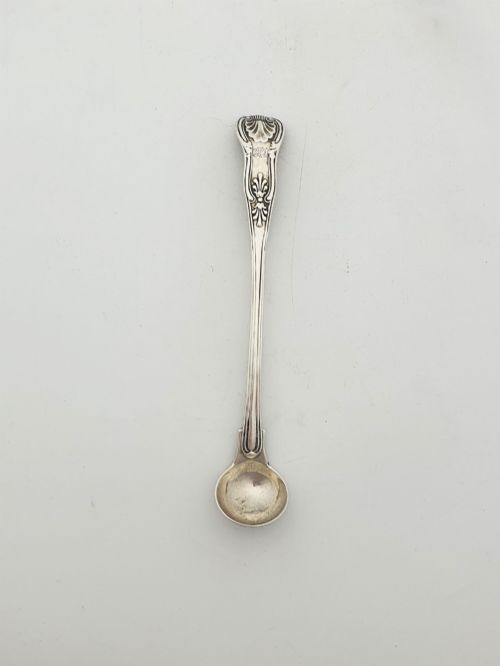
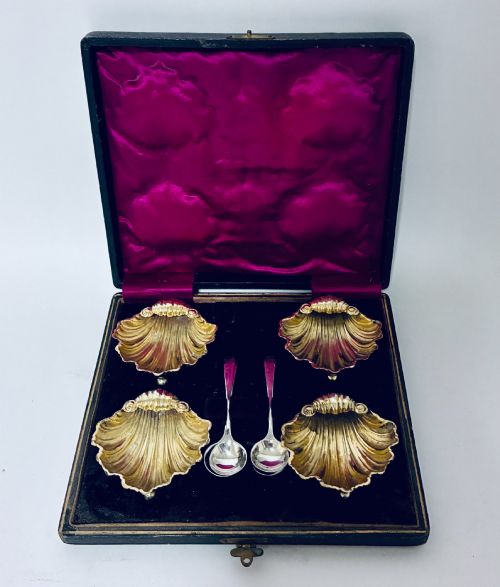
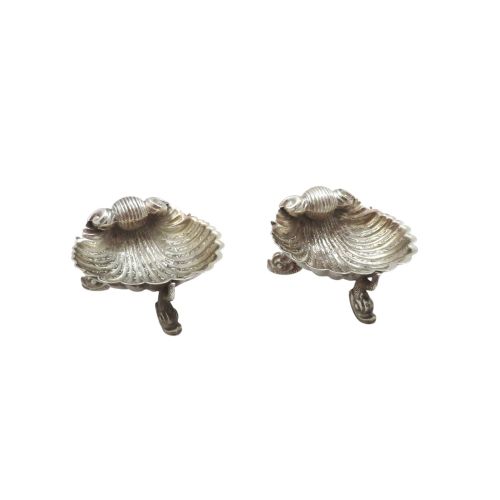
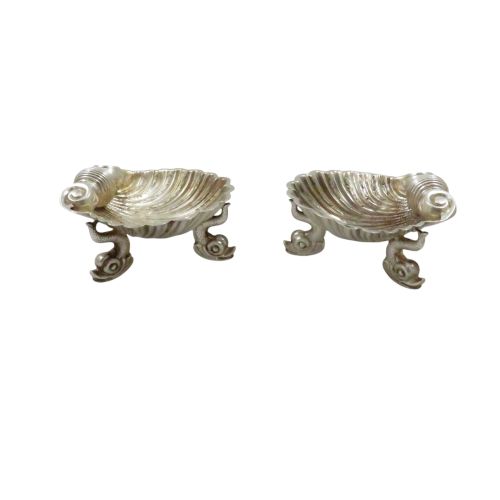
The selection ranges from simple boat-shaped dishes and classic cauldron salts to elaborate novelty pieces shaped as shells, birds, chicks, swans, and baby figures. Many arrive as matched pairs or complete boxed condiment sets complete with fitted spoons and glass liners.
Makers and assay offices across London, Birmingham, and Sheffield produced these tablewares in various styles, including the Aesthetic Movement and Georgian Revival. Buyers encounter single dishes, multi-piece cruet stands, and cased sets intended for formal dining.
Method and Material
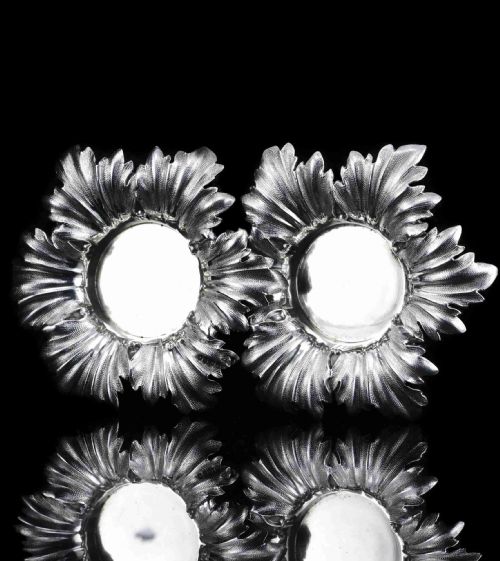
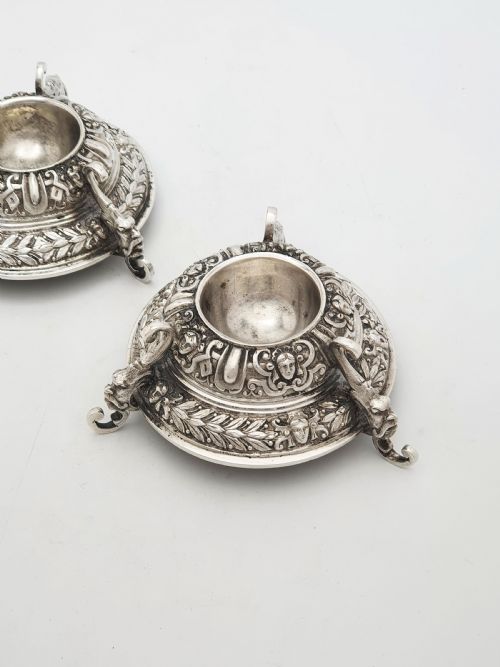
Silversmiths formed these vessels from solid sterling silver using techniques such as piercing, repoussé, and foliate chasing to create decorative surfaces on bowls and stands. Cast components provided structural details like dolphin feet, handles, and figural models.
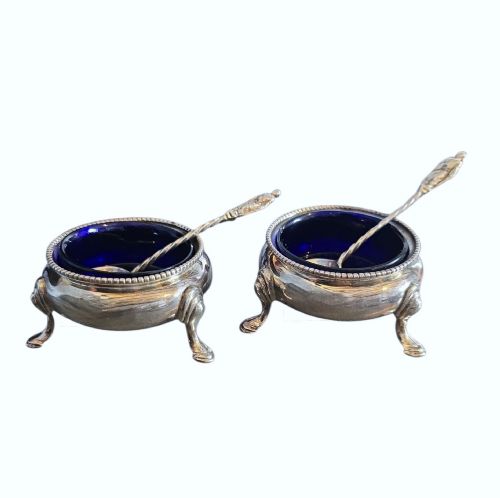
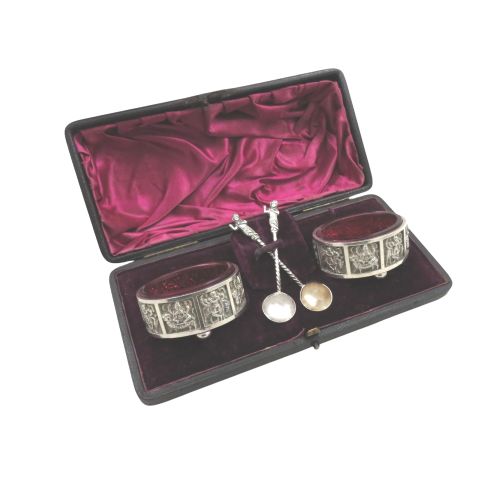
Many open salt cellars incorporate removable coloured glass liners in cobalt blue or ruby red to protect the silver from corrosion by salt. Fitted presentation cases often lined the interior with velvet, satin, or leatherette to house the silver vessels and matching spoons securely.
Victorian Sterling Silver Cellars Retail Price Guide 2026
Typical asking prices for victorian sterling silver cellars among the pieces listed under this phrase on Sellingantiques today, from the lower quarter to the upper quarter. They describe what is for sale here now, not the wider market.
The inventory records nineteenth-century production spanning the Victorian, Edwardian, and Georgian periods.
Quality and Distinction
Quality rests upon the crispness of the silversmith's chasing and the complexity of the form, distinguishing standard functional items from sculptural novelty pieces. Hand-pierced geometric patterns and detailed figural modelling demonstrate superior workshop skill.
The presence of original matching components, such as cobalt glass liners and fitted presentation boxes with intact velvet or satin interiors, elevates a set. Clear hallmarks confirming maker marks and assay dates provide reliable provenance for collectors.
Beare Falcke·Barnards·Michael Alexandrovich Romanov·Thomas Smily·Sampson Mordan·Thomas Johnson·William Hutton and Sons·Heath and Middleton
The Victorian Sterling Silver Cellars Glossary
- Sterling silver
- A silver alloy containing 92.5 percent pure silver and 7.5 percent other metals, typically copper, used for durability in tableware.
- Chasing
- A metalworking technique where the silversmith punches and hammers patterns into the front surface of the silver without removing metal.
- Cruet set
- A matched collection of condiment bottles, jars, or open cellars held together in a metal stand for table service.
- Cobalt glass
- A deep blue glass produced by adding cobalt oxide during manufacture, frequently utilised for removable salt cellar liners.
- Cauldron salt
- A small, round salt cellar shaped like a cooking pot, typically standing on three short feet.
Victorian Sterling Silver Cellars: Frequently Asked Questions
How were victorian salt cellars used?
Dinners placed open salt cellars at intervals along the table for guests to spoon salt onto their plates. Unlike modern shakers, open cellars required small spoons to transfer the condiment.
Enclosed pots held prepared mustards, while multi-bottle cruet sets organised various condiments together on a single stand.
Do salt cellars need glass liners?
Many open salt cellars incorporate removable glass liners in cobalt blue or ruby red. Salt is corrosive to silver, so these glass inserts protected the metal from direct contact.
Liners that survive intact add authenticity and utility to antique salt dishes.
How do you date victorian silver?
British silver bears hallmarks stamped directly into the metal, including symbols for the assay office, the standard of silver, and a date letter specific to the year of manufacture. Maker marks identify the individual silversmith or firm responsible.
Comparing these stamps against official assay records reveals the exact year and origin of the piece.