
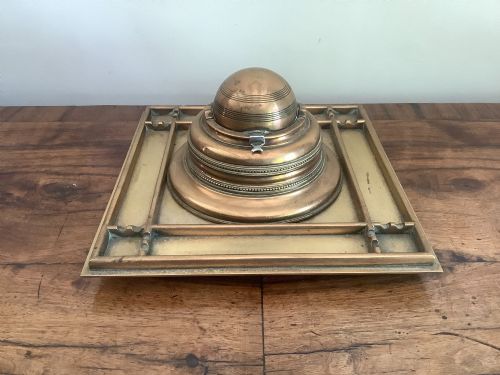


Victorian Stationery Tray
A victorian stationery tray gathers letters and writing tools into one tidy place on the desk, offering both practical organisation and period charm.
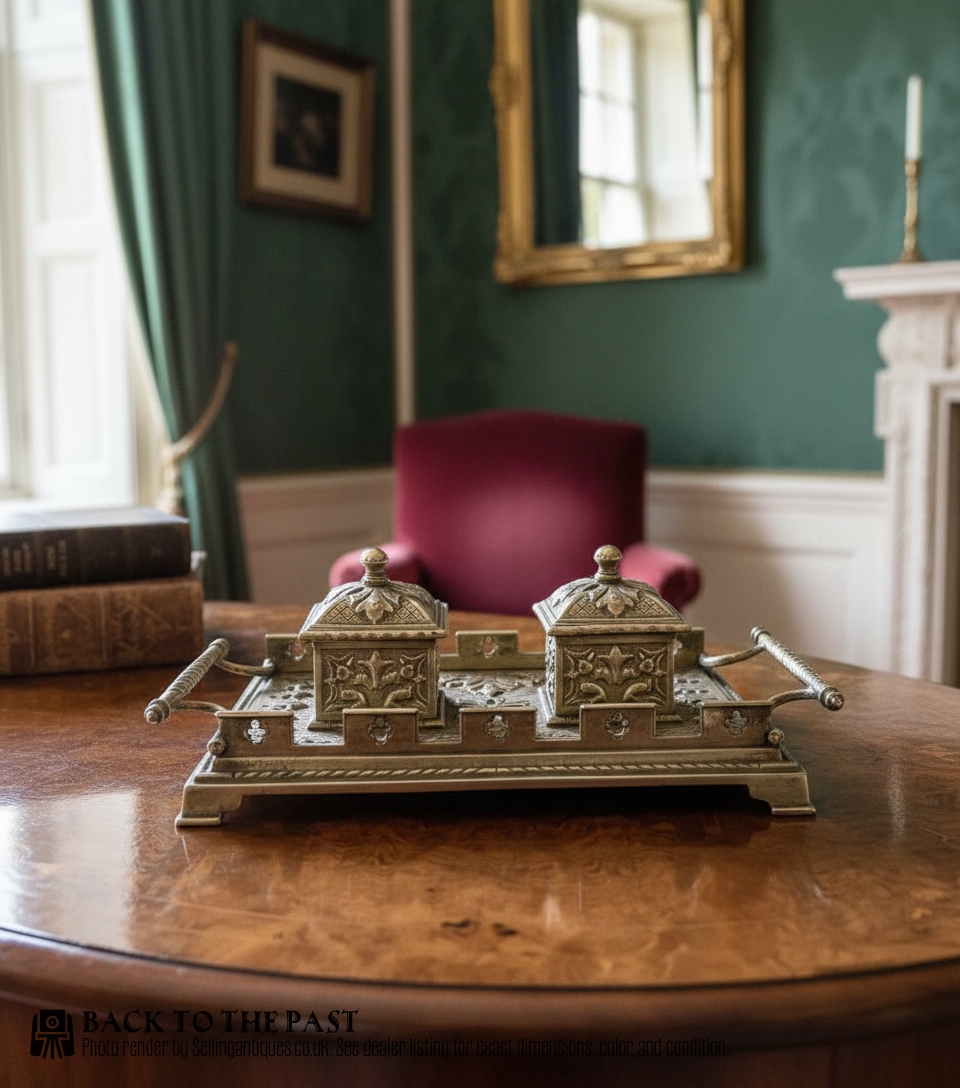
Victorian Stationery Tray
A victorian stationery tray and its close relatives serve as desk accessories for holding letters and writing equipment. The listings here include desk sets, letter racks, inkstands, and desk tidies.
Most examples originate from the Victorian period alongside pieces from the Edwardian, Georgian, and Regency eras. Forms range from simple wooden letter racks to elaborate multi-piece brass and papier-mâché desk sets.
How they were made
Materials span polished brass, carved mother-of-pearl, and delicate papier-mâché, often combined with native and exotic timbers like oak and rosewood. Metal items utilise casting and gilding techniques to achieve ornate surface decoration.
Wooden pieces employ traditional joinery and inlay work, sometimes featuring raised bun feet or secret compartments. Inlay materials such as mother-of-pearl and contrasting woods provide decorative surface contrast.
Some desk sets feature gilded bronze cats and kittens at play, adding a touch of feline mischief to official correspondence.
What varies in quality
Quality rests on the selection of materials and the crispness of surface ornamentation, from cast brass mounts to inlaid mother-of-pearl. Simpler wooden desks and tidies rely on proportion and timber grain for their visual appeal.
Ornate items incorporate detailed gilding, agate cabochons, or figural bronzes depicting subjects like playing cats and kittens. The integration of functional compartments and matching inkwells influences the complexity of the piece.
The Victorian Stationery Tray Glossary
- Desk tidy
- A small container or rack designed to hold letters, envelopes, and small desk accessories. These pieces keep working surfaces orderly.
- Inkstand
- A tray or stand holding one or more inkwells and often pen troughs. They form a central part of nineteenth-century writing equipment.
- Papier-mache
- A composite material made from paper pulp or layers of paper bound with glue, then moulded and lacquered. It provides a smooth surface for painting and inlaid shell decoration.
- Cabochon
- A gemstone or mineral, such as agate, polished rather than faceted into a smooth convex shape. They are frequently mounted onto metal desk accessories.
- Letter rack
- A desk accessory featuring upright partitions to hold correspondence vertically. They organise incoming and outgoing post.
Victorian Stationery Tray: Frequently Asked Questions
What is a victorian stationery tray used for?
These items hold correspondence, envelopes, and writing equipment neatly on a desk or table surface. They provide dedicated compartments for sorting post.
Historically, they formed part of a gentleman or lady's writing suite alongside matching inkstands and blotters. Today they serve both functional organisational roles and decorative display functions.
What materials are common in these desk sets?
Common materials include brass, oak, rosewood, walnut, and papier-mâché. Many pieces feature decorative additions such as mother-of-pearl inlay or agate cabochons.
Some examples also incorporate ceramic components or gilded bronze figures. Each material reflects the prevailing tastes of the nineteenth and early twentieth centuries.
How do I identify a Victorian piece?
Victorian pieces often display characteristic nineteenth-century material combinations, such as papier-mâché with mother-of-pearl or heavy cast brass. Stylistic cues include Gothic Revival influences or Aesthetic Movement design details.
Date attributions also draw on associated periods listed in the evidence, spanning from the mid nineteenth century through to nineteen hundred.
Are these items still practical for modern desks?
Many letter racks and desk tidies accommodate modern envelopes, notebooks, and pens quite effectively. They bring period character to a contemporary workspace.
Pieces with integrated inkwells can hold small office supplies if the glass inserts are removed or utilised carefully.