
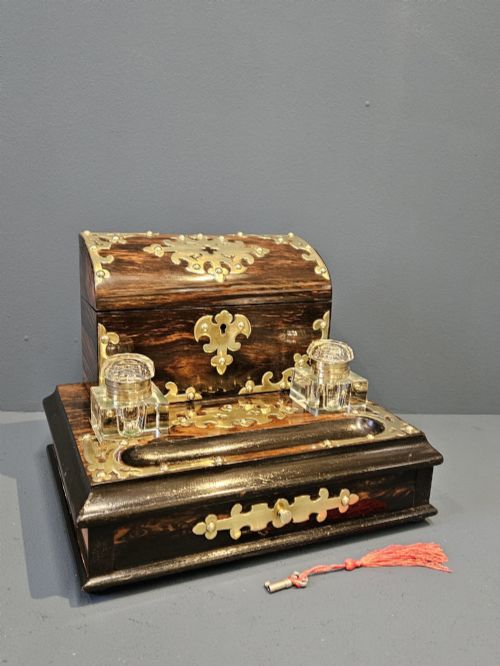


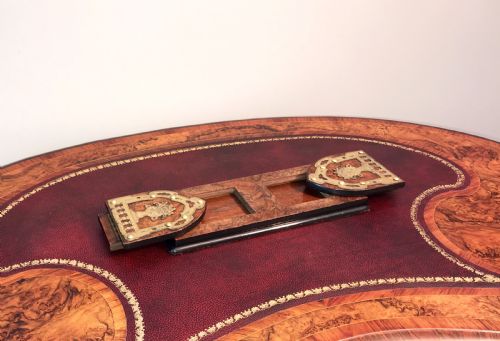
Gothic Brass Desk Organiser
A gothic brass desk organiser brings heavy brass mounts and dark woods together to keep nineteenth-century correspondence in order.
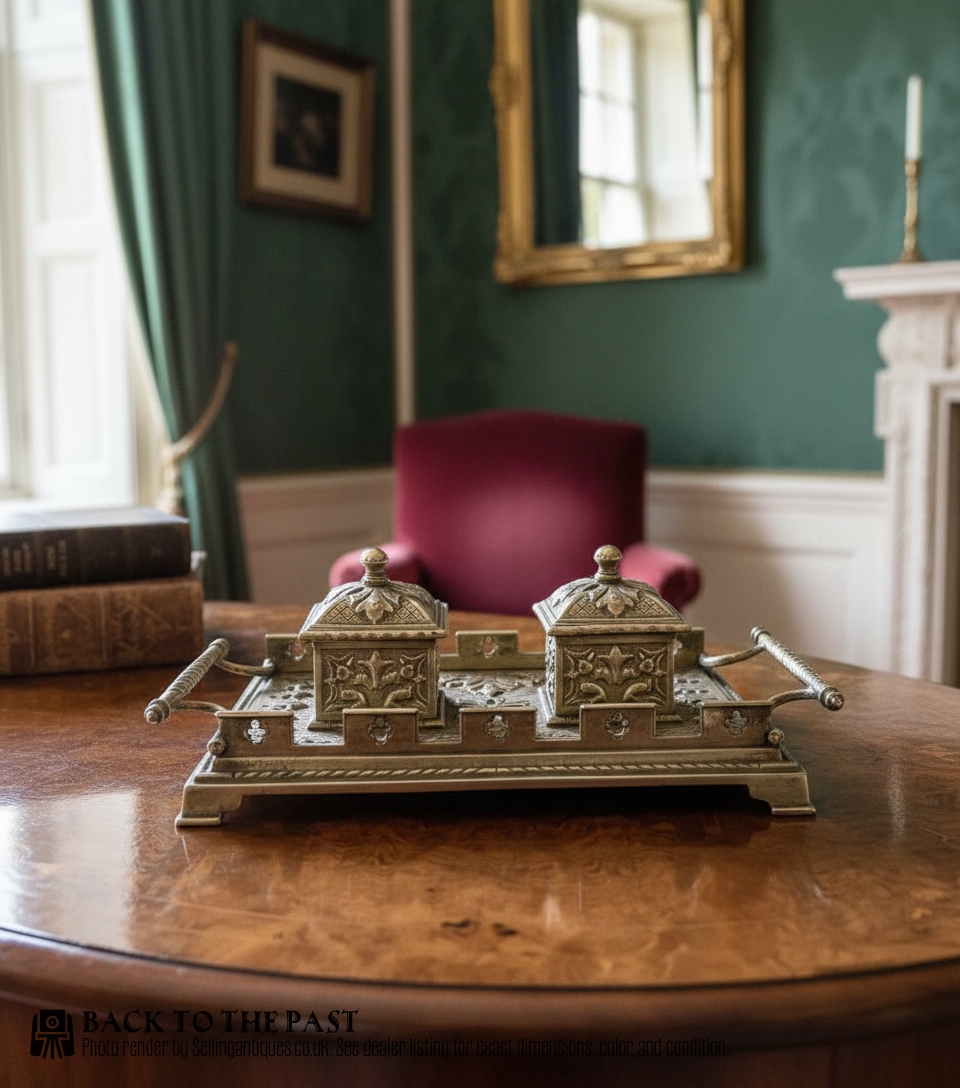
Gothic Brass Desk Organiser
A gothic brass desk organiser gathers items like stationery boxes, inkstands, and book slides into a single functional group. These items date from the Victorian period, spanning the years between eighteen-sixty and eighteen-ninety.
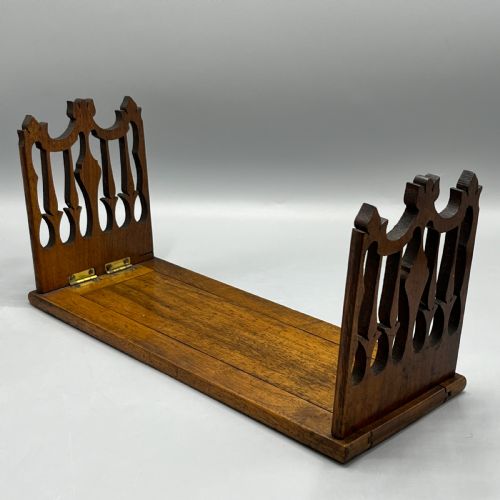
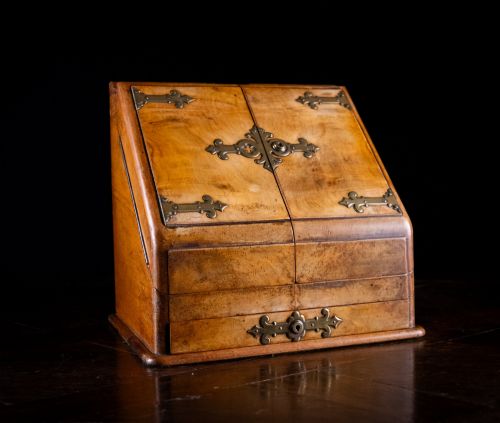
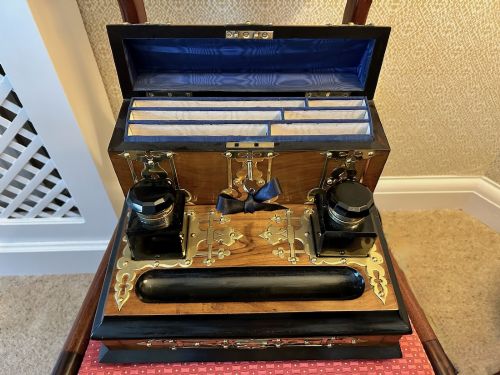
The version most commonly met on this page is the walnut stationery cabinet or correspondence box decorated with substantial brass mounts. Buyers also encounter coromandel inkstands and extending book slides designed for the Victorian desk top.
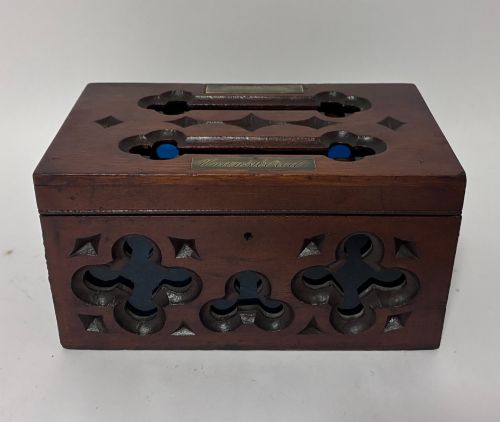
The style draws directly on Victorian Gothic Revival taste, combining ecclesiastical strapwork and architectural mounts with domestic desk accessories. Each piece served a practical purpose in the nineteenth-century study or parlour.
How they were made
Cabinet makers utilised dense hardwoods including walnut, burr walnut, and exotic coromandel as the primary carcase materials. These woods provided a dark, heavy foundation suited to elaborate brass fittings.
Workshops applied heavy brass hinges, strapwork, and mounts, frequently securing them with countersunk screws. Patent mechanisms such as those by Betjemanns allowed book slides to expand smoothly while maintaining their structural rigidity.
Listings span the Victorian era from eighteen-sixty to eighteen-ninety, featuring walnut, coromandel, and heavy brass mounts.
What varies in quality
Quality rests upon the choice of timber and the weight of the brasswork rather than mere ornamentation. Superior examples employ figured walnut or coromandel with thick, substantial brass mounts that sit flush with the wood.
The integration of mechanical elements separates standard items from the finest productions. Patent actions move without binding, and fitted interiors retain their original glass inkwells and silk linings.
The Gothic Brass Desk Organiser Glossary
- Coromandel
- A dense, heavily figured southeast Asian timber prized for dark brown grain and rich contrast against brass fittings. Makers selected it for luxury desk accessories.
- Gothic Revival
- An architectural and decorative style drawing on medieval forms, characterised by pointed arches, trefoils, and heavy metal strapwork. It influenced Victorian domestic furnishings.
- Stationery box
- A desk-top cabinet with a sloping or drop front designed to hold paper, envelopes, and correspondence. These boxes often feature internal dividers and brass locks.
- Book slide
- An extendable desk accessory with hinged or sliding wooden ends supported by brass tracks. It keeps volumes upright between decorative bookends.
Gothic Brass Desk Organiser: Frequently Asked Questions
What is a gothic brass desk organiser used for?
These accessories held writing paper, envelopes, ink, and reference books on nineteenth-century writing desks. They kept working surfaces tidy while projecting a serious, scholarly aesthetic.
Today they serve the same practical function for storing modern correspondence, fountain pens, or small notebooks in a study. Collectors appreciate how they bring period character to a modern desk top.
How do I date a Victorian desk accessory?
Dating relies on timber choices, patent stamps, and stylistic markers recorded across the nineteenth century. Pieces from eighteen-sixty often display heavier Gothic Revival strapwork, while later examples incorporate figured veneers.
Maker stamps and patent inscriptions provide precise chronological anchors. Examining the construction of internal dividers and hinge types further clarifies the period of manufacture.
Are these pieces made of solid brass?
Solid brass forms the hinges, mounts, strapwork, and inkwell lids rather than the main structure. The primary carcase consists of hardwoods like walnut or coromandel.
Brass acts as reinforcement and decoration across the corners and edges of the wooden body. This combination prevents warping while providing striking visual contrast.
How should I care for coromandel and walnut?
Maintain these hardwoods by keeping them away from direct sunlight and sudden temperature changes. Regular dusting with a dry, soft cloth preserves the polished finish of the timber.
Apply a microcrystalline wax sparingly if the wood appears dry. Avoid commercial polishes that contain silicone, as they can damage antique finishes over time.