


Antique Brass Stationery Cabinet
An antique brass stationery cabinet keeps your desk tidy while bringing solid Victorian and Edwardian craftsmanship right into your study.
Antique Brass Stationery Cabinet
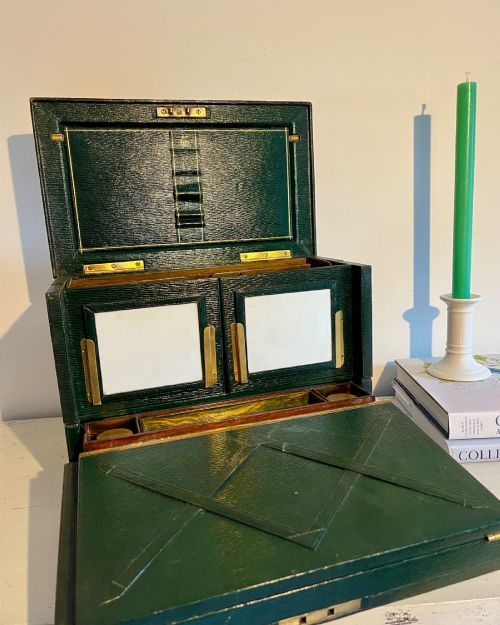
When you search for an antique brass stationery cabinet, you are looking at desk accessories and letter boxes designed to organise correspondence. These pieces appear most frequently in Victorian and Edwardian iterations, spanning the nineteenth and early twentieth centuries.
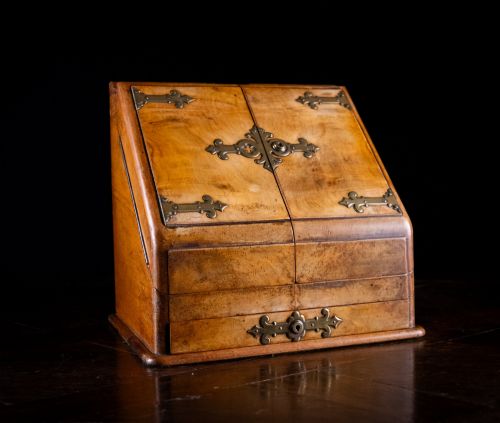
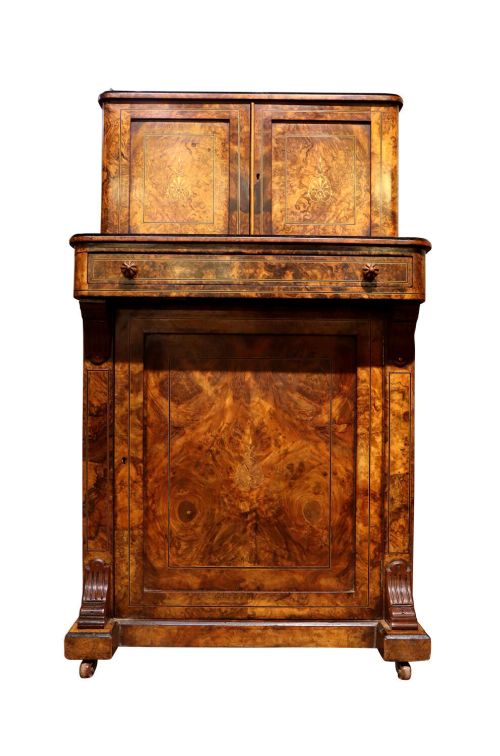
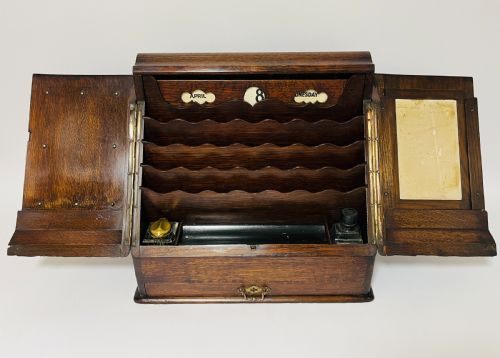
The selections range from fall-front boxes and document chests to bureau de dame desks and Davenport writing furniture. Walnut, burr walnut, oak, and mahogany form the primary carcasses, shaped to house compartments for paper, envelopes, and ink.
You will also encounter campaign-style pieces and table cabinets featuring fitted interiors and sloping lids. Each item reflects the domestic and office storage needs of nineteenth-century households and writing rooms.
How they were made
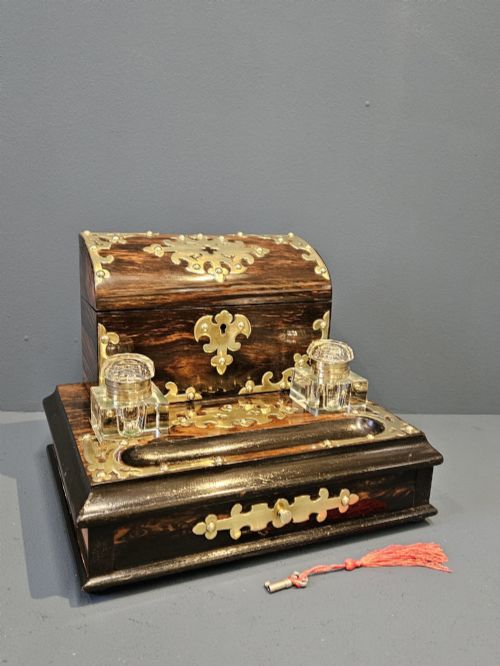
Cabinet makers utilised dense timbers like mahogany, oak, and burr walnut as the structural base, often applying decorative veneers and satinwood inlay. Brass mounts, straps, and handles reinforced the corners and edges, adding both structural strength and visual contrast.
Interiors frequently incorporated tooled leather, glass inkwells, and fitted letter compartments designed for daily correspondence. Skilled joiners constructed drop fronts, sliding tops, and locking mechanisms to secure valuable documents.
Listings feature woods including oak, burr walnut, mahogany, and rosewood, paired with brass hardware.
What varies in quality
The calibre of timber selection and the precision of veneer matching set individual pieces apart. Rich burr walnut and figured mahogany with crisp grain patterns indicate superior workshop selection.
The execution of the brass mounts and hardware marks the distinction between standard production and top-tier execution. Heavy gauge brass, detailed engraving, and original working locks with matching keys elevate the standing of the box.
Houghton and Gunn
The Antique Brass Stationery Cabinet Glossary
- Stationery cabinet
- A desktop box or small chest fitted with internal partitions and pigeonholes for organising writing paper and envelopes. These pieces often feature drop fronts or hinged lids.
- Campaign
- A portable style of furniture made for travel, typically fitted with flush brass handles, corner brackets, and reinforced edges for durability. This design originated for military officers on the move.
- Burr walnut
- A highly prized timber grain taken from the growth excrescences of the walnut tree, showing swirling patterns. Cabinet makers used it extensively for decorative veneers on high-end Victorian boxes.
- Davenport
- A small compact desk featuring a sloping, leather-lined writing surface above a pedestal of drawers. The top portion frequently houses a stationery compartment.
- Drop front
- A hinged panel that folds forward to reveal fitted pigeonholes and writing surfaces. This mechanism allows easy access to documents while keeping them enclosed when shut.
Antique Brass Stationery Cabinet: Frequently Asked Questions
How were stationery cabinets used?
These cabinets served as the central repository for household or office correspondence, holding paper, envelopes, and sealing wax. People kept them on desks or side tables for daily writing tasks.
In period homes, they maintained order among letters before the widespread use of modern filing systems. Their fitted compartments kept everything from calling cards to large documents sorted and secure.
How do I tell Victorian from Edwardian pieces?
Victorian cabinets often display heavier timber choices, darker finishes, and more ornate brass mounts or Gothic influences. Burr walnut and coromandel frequently appear in these mid-to-late nineteenth-century examples.
Edwardian pieces tend to show lighter golden oak timbers, simpler lines, and occasional Sheraton Revival influences. The overall aesthetic shifts towards cleaner country house utility as the twentieth century approaches.
Can I use these cabinets on a modern desk?
These cabinets function well on modern desks for storing stationery, notebooks, and small electronics like tablets. Their compact footprints suit contemporary workspace dimensions while offering traditional charm.
The internal partitions naturally accommodate modern letters, envelopes, and desk supplies without modification. They combine practical desktop organisation with period character.
What maintenance do brass mounts need?
Brass mounts require minimal care, generally needing only a gentle wipe with a soft, dry cloth to remove dust. Avoid harsh chemical polishes that can strip the natural aged patina or stain the surrounding timber.
If cleaning is necessary, use a mild, non-abrasive metal cleaner while taking care to keep it away from the wood and leather surfaces. Regular dusting preserves the historic finish.