


Victorian Cast Brass Inkwell
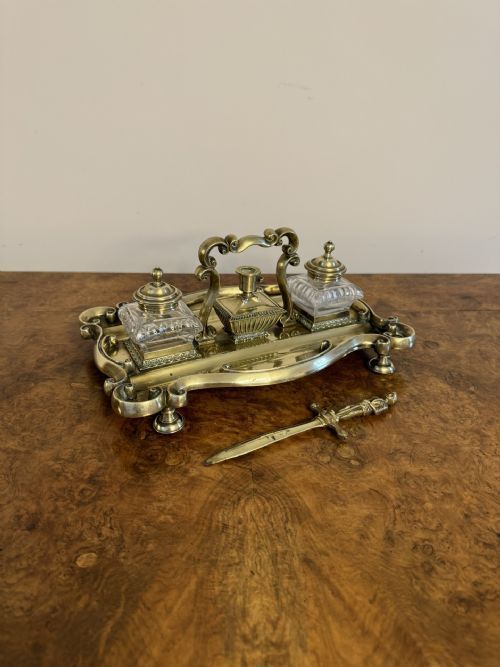
A victorian cast brass inkwell brings nineteenth-century weight and character to a writing desk.
Victorian Cast Brass Inkwell
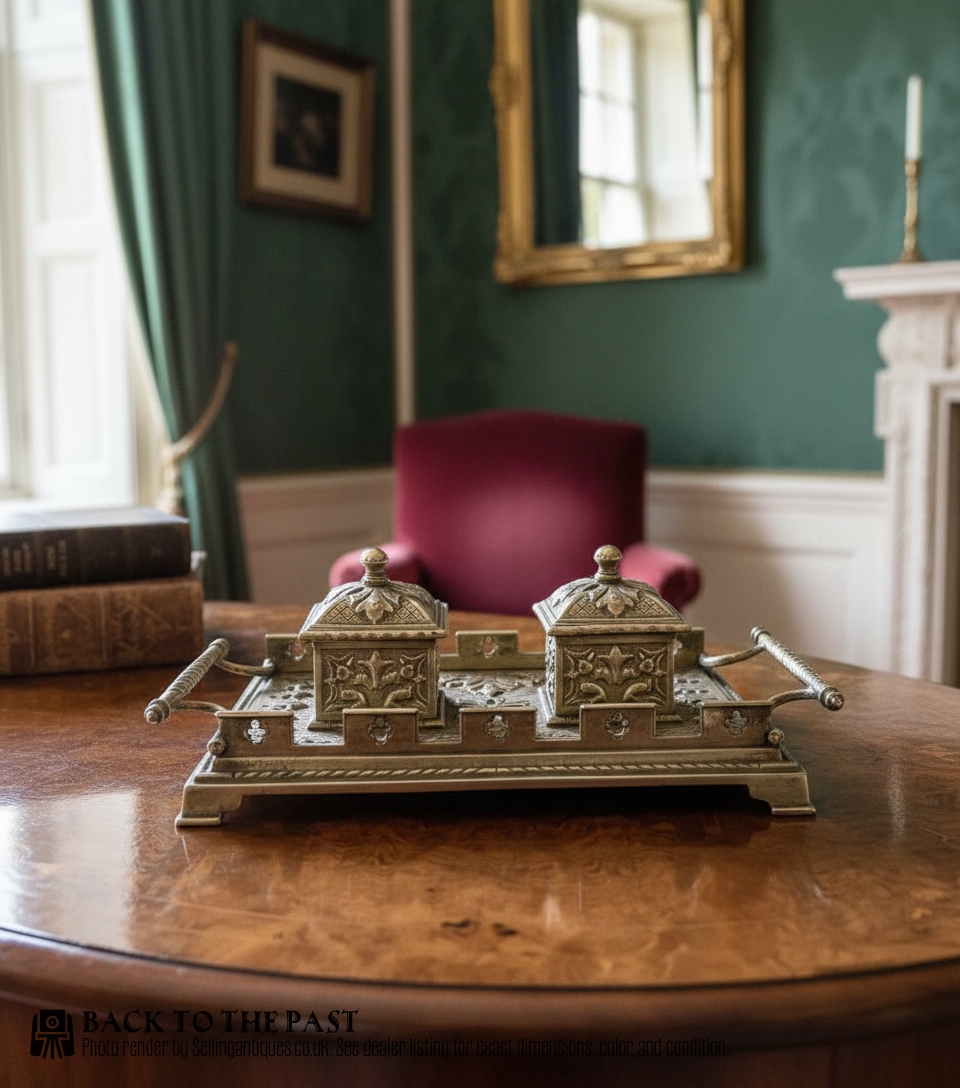
A victorian cast brass inkwell is a desk accessory designed to hold writing fluid securely during the nineteenth century. These pieces range from simple standalone inkwells to elaborate desk sets and figural novelties.
The versions most commonly met on this page date from the Victorian and Edwardian eras, spanning styles from Victorian Gothic and Rococo Revival to Art Nouveau. Many incorporate glass inserts, wood, horn, or silver plate alongside the brass base.
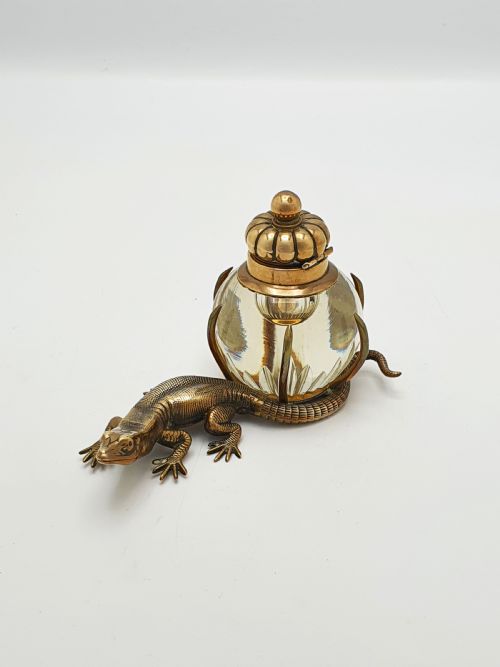
Makers of the period applied casting techniques to create functional desk furniture shaped as animals, birds, and architectural forms. The selection includes specific animal models such as lizards, owls, ostriches, bulldogs, and parrots.
How they were made
These items rely on metal casting methods to shape the brass, bronze, and ormolu into intricate forms and sturdy desk stands. Molten metal poured into moulds allowed makers to produce sharp surface details for animal feathers, fur, and decorative scrollwork.
Many examples combine cast brass with blown or moulded glass inserts to hold the ink without corroding the metal container. Additional materials like wood, horn, and silver plate appear as secondary supports or mounted details on the desk stands.
Listings feature items spanning the nineteenth century, including Victorian, Edwardian, and Art Nouveau periods.
What varies in quality
The standard of a cast brass inkwell depends on the crispness of the casting and the depth of the chased finish. Superior examples retain sharp anatomical details in figural pieces like birds and dogs, whereas simpler items show softer edges.
The presence of original glass inserts and matched components distinguishes more complete desk sets from altered pieces. Heavier gauge metal and integrated pen rests also separate high-grade productions from standard utilitarian office items.
The Victorian Cast Brass Inkwell Glossary
- Cast brass
- Metal shaped by pouring molten alloy into a mould to create solid three-dimensional objects. This technique allows for complex ornamentation on desk accessories.
- Inkstand
- A complete desk stand holding one or more inkwells alongside space for pens and sealing wax. These pieces formed the centrepiece of a nineteenth-century writing table.
- Ormolu
- Finely ground high-carat gold applied to a bronze or brass base using a mercury amalgamation process. The method imparts a rich golden lustre to decorative metalwork.
- Novelty inkwell
- An ink container fashioned into a playful or unusual shape such as an animal or bird. These figural pieces were popular as decorative desk novelties in the Victorian period.
- Art Nouveau
- A design style characterised by flowing, organic lines inspired by natural forms. It appears on desk pieces dating towards the end of the nineteenth century.
Victorian Cast Brass Inkwell: Frequently Asked Questions
How do I clean a brass inkwell?
Dust the surface gently with a soft dry cloth to preserve the natural patina built up over decades. Avoid harsh chemical polishes that strip away age and diminish the character of the metal.
Check that no moisture remains near hinges or glass liners after dusting. Proper care ensures the metalwork ages gracefully on your desk.
Can I still use it for writing?
Most pieces function mechanically with hinged lids and removable glass liners intact. You can fill the glass insert with ink for traditional dip pen writing.
Take care to clean the glass liner thoroughly after use to prevent dried ink from staining the surrounding metal. Many collectors prefer to display them as decorative objects rather than active writing tools.
What is a novelty inkwell?
A novelty inkwell is a desk accessory shaped to resemble an animal, bird, or familiar object rather than a standard geometric pot. Victorian makers produced whimsical designs depicting owls, dogs, and parrots with hinged heads concealing the ink reservoir.
These figural pieces combined utility with decorative charm for nineteenth-century writing desks. They remain popular with collectors seeking characterful desk items.
How do I date an antique brass inkwell?
Examine the overall style, manufacturing techniques, and material combinations to determine the era of production. Pieces featuring Rococo Revival scrolls typically date to the mid-nineteenth century, while flowing organic lines point towards later Art Nouveau influences.
Comparing the casting sharpness and fastener types provides further clues to the period. Makers often incorporated specific motifs that align with documented Victorian and Edwardian design trends.