
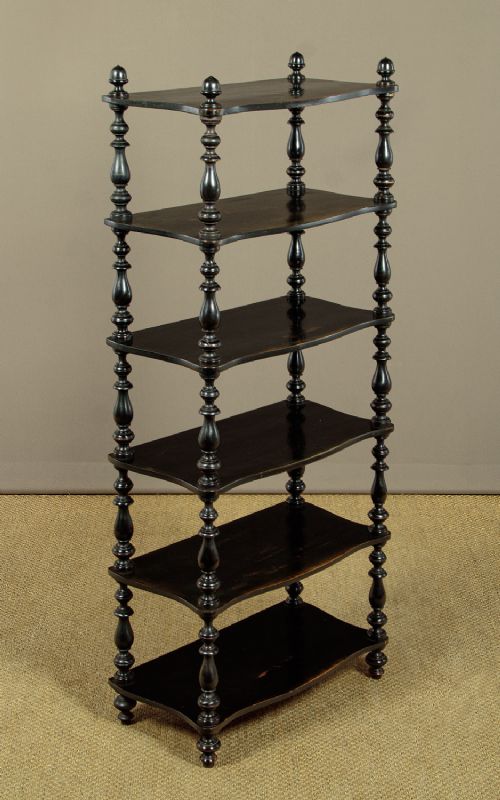


Victorian Standing Buffet
A victorian standing buffet brings tiered service and rich timber presence to dining spaces through tiered tiers and revolving forms.
Victorian Standing Buffet
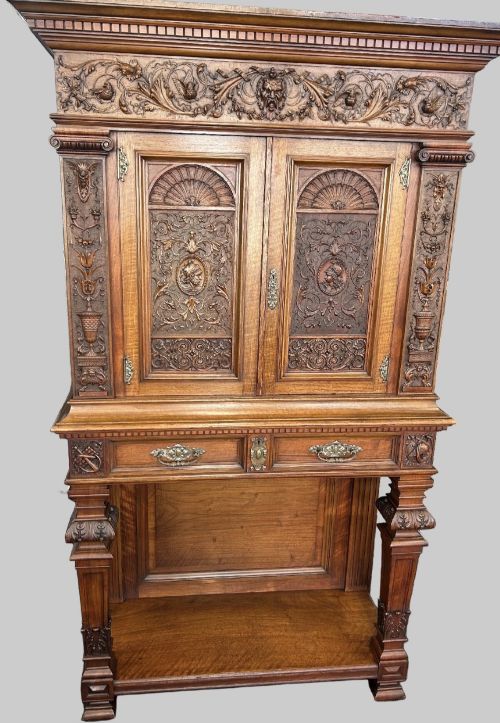
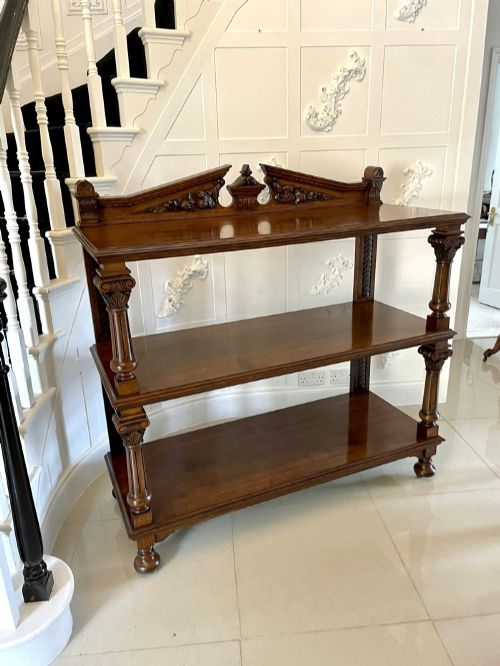
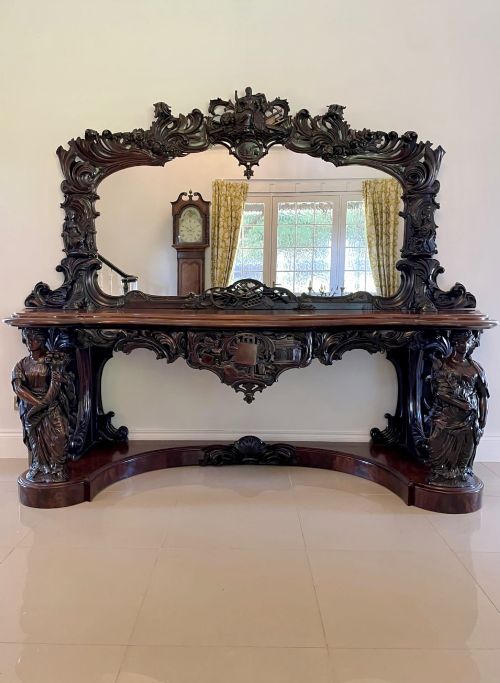
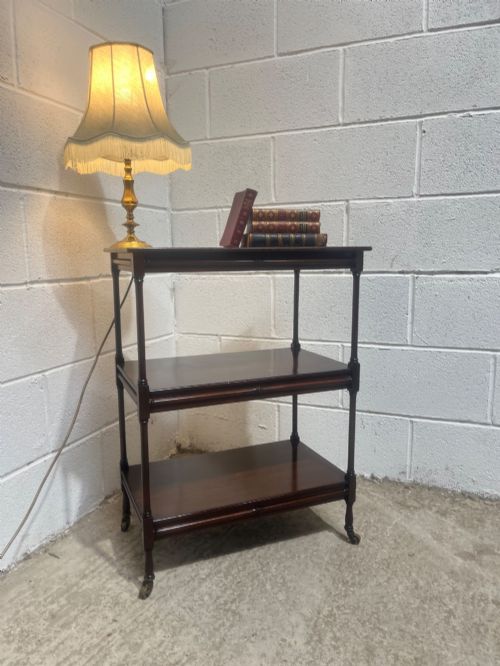
A victorian standing buffet encompasses multi-tiered server forms, dumb waiters, etageres, and console tables designed for dining rooms and grand interiors. These pieces provide vertical display and storage surfaces across multiple tiers.
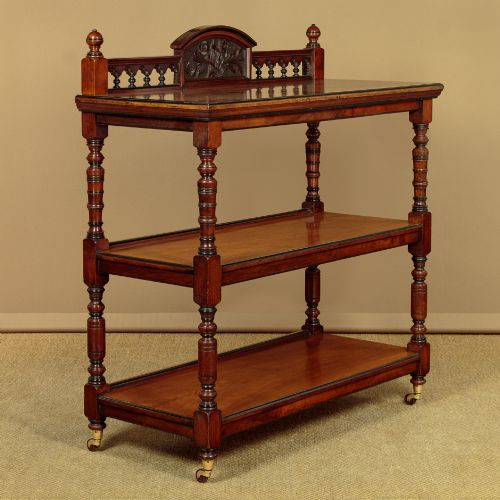
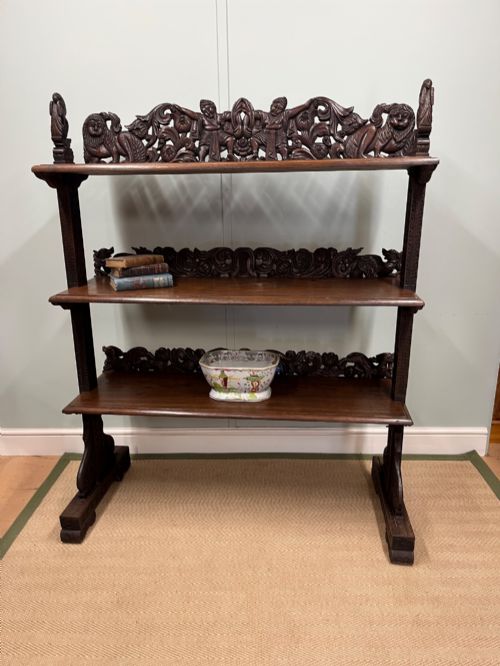
The selections on this page draw from the nineteenth century, featuring styles ranging from Victorian and Aesthetic Movement to Georgian, Regency, and Anglo-Indian influences. Mahogany, oak, and walnut dominate the structural forms alongside rosewood and teak.
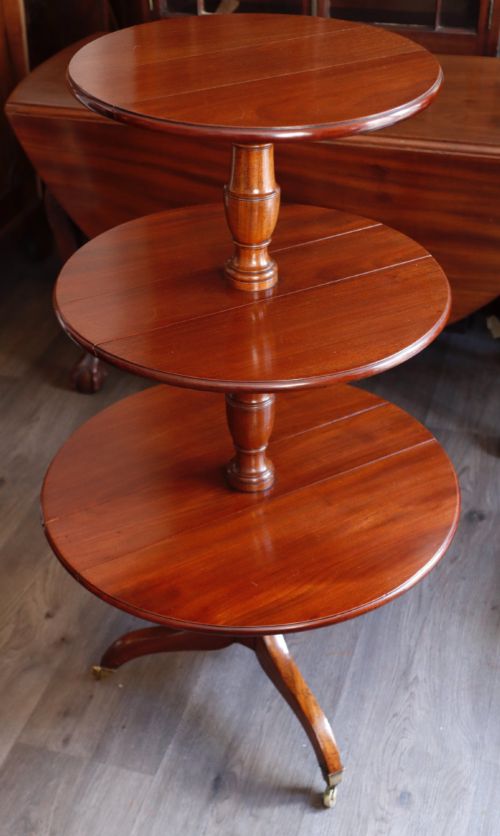
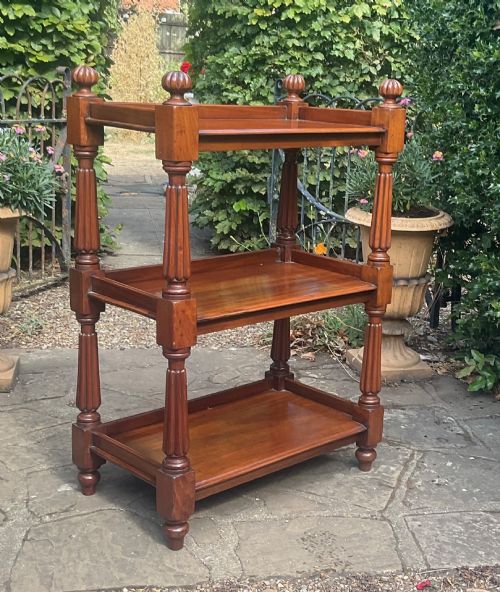
Tiered tables and revolving dumb waiters represent the most frequent iterations encountered here, often operating on tripod bases or standing on castors. Cabinets on stands and slim etagere buffets also appear to serve similar functional roles.
Materials and construction
Cabinet makers utilised dense hardwoods such as mahogany, oak, walnut, rosewood, and teak to support multiple stacked shelves and heavier top tiers. Brass fittings, castors, and hinges frequently accent these timber frames.
Carving, marquetry inlay, and ebonised details demonstrate the decorative techniques applied during the nineteenth century. Revolving mechanisms and adjustable tiers required precise joinery to ensure stability under load.
Some multi-tier stands incorporate fully adjustable shelves alongside revolving trays, ensuring absolute readiness for unexpected dining courses.
Distinctions in craftsmanship
Superior examples display crisp hand carving, particularly on oak and mahogany supports, alongside well-figured grain in rosewood and walnut surfaces. The integrity of revolving mechanisms and tiered joints separates standard utility pieces from exhibition grade creations.
The selection of secondary timbers and the precision of marquetry inlay reflect the original workshop standards. Pieces featuring adjustable elements or integrated mirror backs demand rigorous attention to mechanical and structural alignment.
Maple and Co·Mappin and Webb
The Victorian Standing Buffet Glossary
- Dumb waiter
- A multi-tiered piece of dining furniture designed to hold dishes and silverware without the aid of servants. These pieces often feature revolving shelves or stacked trays.
- Etagere
- A piece of furniture consisting of a number of open shelves for displaying small objects or serving items. They appear in slim multi-tier configurations.
- Aesthetic Movement
- A late nineteenth-century design style emphasising visual beauty over narrative subject matter. Pieces from this movement often feature ebonised wood and refined linearity.
- Marquetry
- Decorative veneer work arranged in pictorial or geometric patterns on furniture surfaces. Craftsmen utilise thin slices of contrasting woods to create detailed ornamentation.
- Tripod base
- A three-legged support structure commonly found beneath circular dumb waiters and occasional tables. This configuration provides stable balance on uneven floors.
Victorian Standing Buffet: Frequently Asked Questions
What is a victorian standing buffet used for?
These pieces served primarily in dining rooms to hold extra dishes, glassware, and silver service items during large meals.
Today, they function effectively as display surfaces or sideboards in sitting rooms and hallways.
What woods were used for these buffets?
Cabinet makers predominantly utilised mahogany, oak, and walnut for their strength and rich grain patterns.
Exotic timbers such as rosewood, teak, padauk, and amboyna also appear on pieces intended for formal reception rooms.
How do you distinguish styles like Aesthetic Movement?
Aesthetic Movement pieces often incorporate ebonised wood and stark, geometric lines that depart from heavy Victorian ornamentation.
Earlier Regency and Georgian examples tend to feature classical proportions and simpler mahogany structures.