



Victorian Rosewood Etagere
A victorian rosewood etagere brings tiered display space to a room, combining rich timber with open shelving for books and ornaments.
Victorian Rosewood Etagere
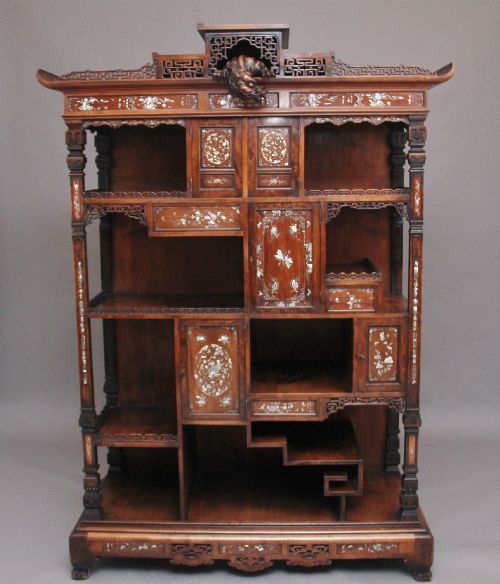
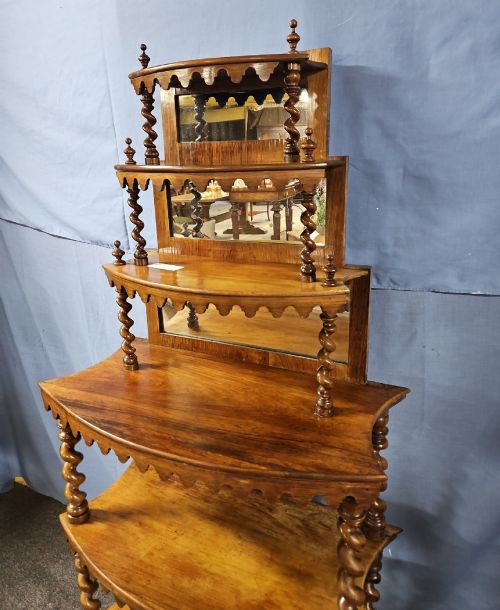
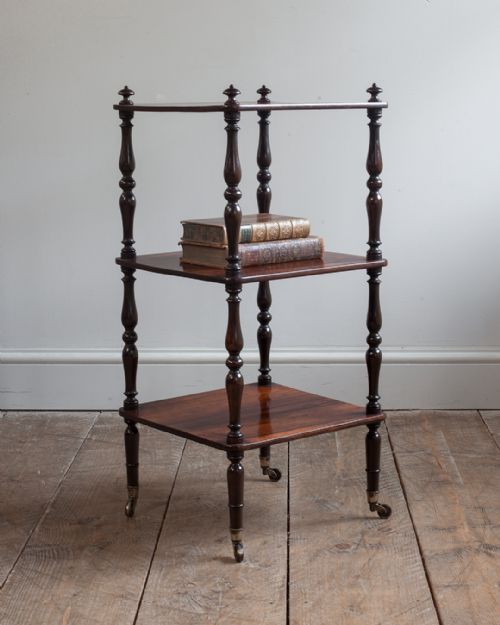
A victorian rosewood etagere is an open tiered shelving unit designed for displaying decorative objects, books, and collections in nineteenth-century interiors. These pieces appear in various configurations, including multi-tiered standing stands, corner units, and designs combined with cabinets or canterburies.
The pieces on this page span the nineteenth century, including Victorian, William IV, and Regency periods, alongside specific regional interpretations such as Anglo-Indian and French revival styles. Standard forms range from simple three-tier open shelves to elaborate designs featuring marquetry inlay, mirror panels, and brass mounts.
How they were made
Cabinet makers utilised dense, dark rosewood as the primary timber, often selecting it for its prominent grain patterns and rich natural colour. Workshops frequently combined rosewood with contrasting timbers like satinwood and mahogany for decorative banding and marquetry detail.
Construction techniques involved slender turned supports or columns holding multiple tiers, occasionally secured with brass or mirrored elements. More elaborate examples incorporated mother of pearl inlay, marquetry decoration, and specialised joinery to support freestanding or corner shelving units.
Victorian Rosewood Etagere Retail Price Guide 2026
Typical asking prices for victorian rosewood etagere among the pieces listed under this phrase on Sellingantiques today, from the lower quarter to the upper quarter. They describe what is for sale here now, not the wider market.
Makers occasionally described these tiered display wonders by the delightfully informal name of wot-not.
What varies in quality
Quality rests upon the selection of timber and the precision of the cabinet work, particularly in the turning of the slender supports and the fit of the shelves. Superior examples demonstrate refined proportions and meticulous attention to detail in secondary woods and structural joins.
Edwards & Roberts·Samson & Son London·Donald Ross
The Victorian Rosewood Etagere Glossary
- Etagere
- A piece of furniture consisting of a set of open shelves for displaying small objects or ornaments. This form became popular during the nineteenth century for drawing room display.
- Whatnot
- A multi-tiered shelving unit used for storing or exhibiting various household items. It functions interchangeably with the term etagere in many nineteenth-century contexts.
- Marquetry
- Decorative veneer work formed by fitting together small pieces of various woods, shell, or ivory into complex patterns. Makers utilised this technique to adorn the surfaces of tabletops and cabinet doors.
- Canterbury
- A low stand with partitioned vertical sections designed for holding sheet music, books, or portfolios. Some nineteenth-century examples combine this form with standard etagere shelving.
- Japonisme
- The influence of Japanese art and design upon European makers during the latter half of the nineteenth century. Pieces in this style often feature asymmetrical layouts and exotic motifs.
Victorian Rosewood Etagere: Frequently Asked Questions
What is a Victorian rosewood etagere?
A Victorian rosewood etagere is an open tiered shelving unit made from dense tropical timber, designed for displaying ornaments and books in nineteenth-century reception rooms.
These pieces range from simple three-tier stands to complex corner units and combined cabinet forms, reflecting the varied tastes of Victorian interior decoration.
How were etageres used originally?
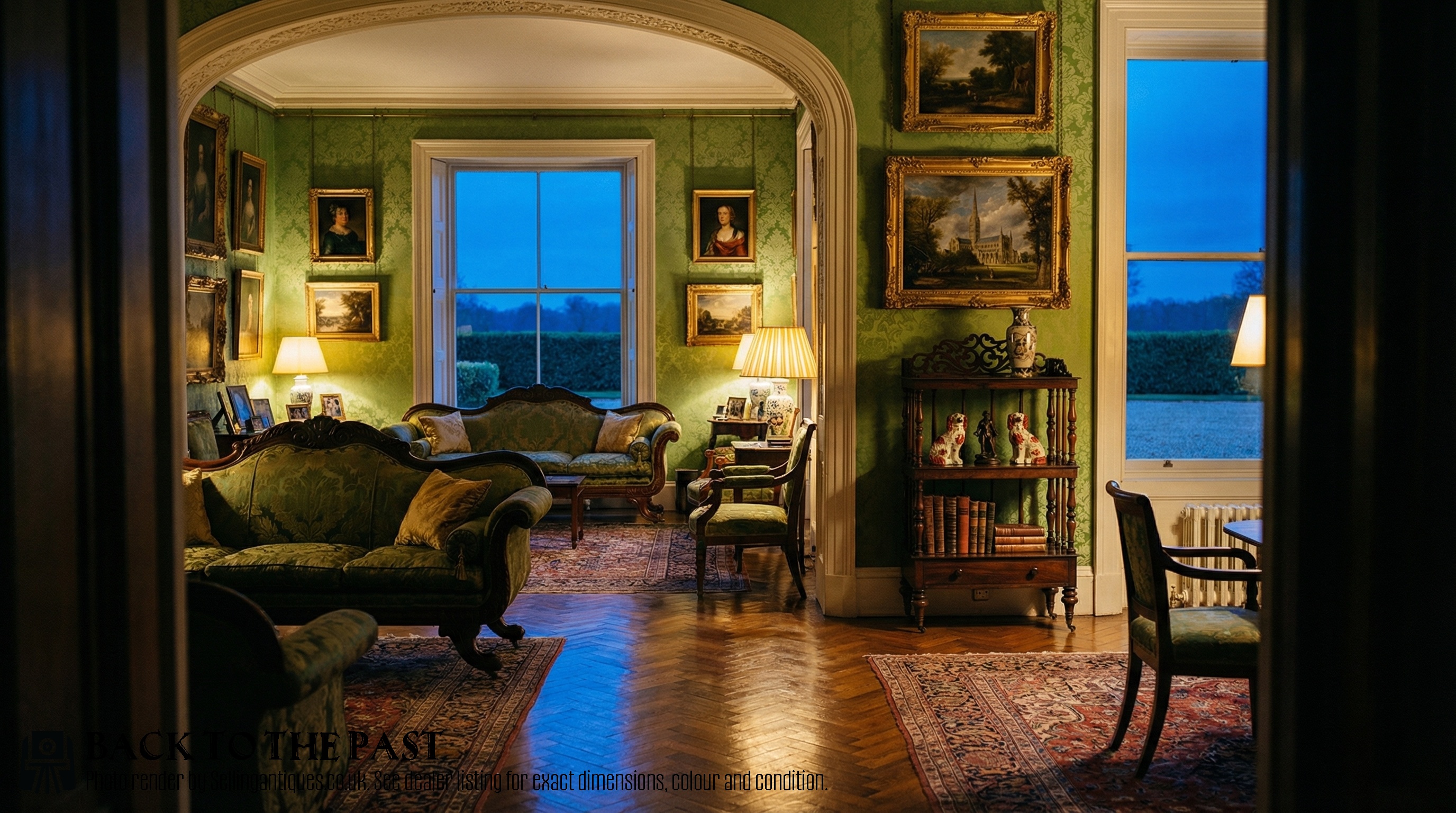
Victorians used etageres in drawing rooms and parlours to exhibit porcelain figures, small clocks, and decorative books where guests could easily admire them.
The open shelving prioritised display over storage, serving as a focal point for curated collections within formal domestic spaces.
How do I style an etagere today?
An etagere accommodates books, ceramics, and small framed objects across its multiple tiers, allowing you to create balanced arrangements of height and colour.
Because the shelves remain open on all sides, placing the unit against a flat wall or within a corner provides stable support while maintaining visibility from multiple angles.
What is the difference between an etagere and a whatnot?
While modern usage often treats the terms as interchangeable, a whatnot traditionally refers to a multi-tiered utility shelf, whereas an etagere historically implies a more decorative French-influenced display piece.
In nineteenth-century cataloguing, both descriptions apply to open-shelved furniture intended for the exhibition of household ornaments.
How do I identify a William IV etagere?
William IV etageres typically display heavier proportions, robustly turned columns, and darker rosewood timbers characteristic of the 1830s era.
These earlier pieces generally predate the lighter, more ornate marquetry-inlaid styles associated with the later Victorian and French revival periods.