


Carved Rosewood Whatnot
A carved rosewood whatnot brings tiered display to a room, offering open shelving crafted in rich dark timber for books, plants, and precious objects.
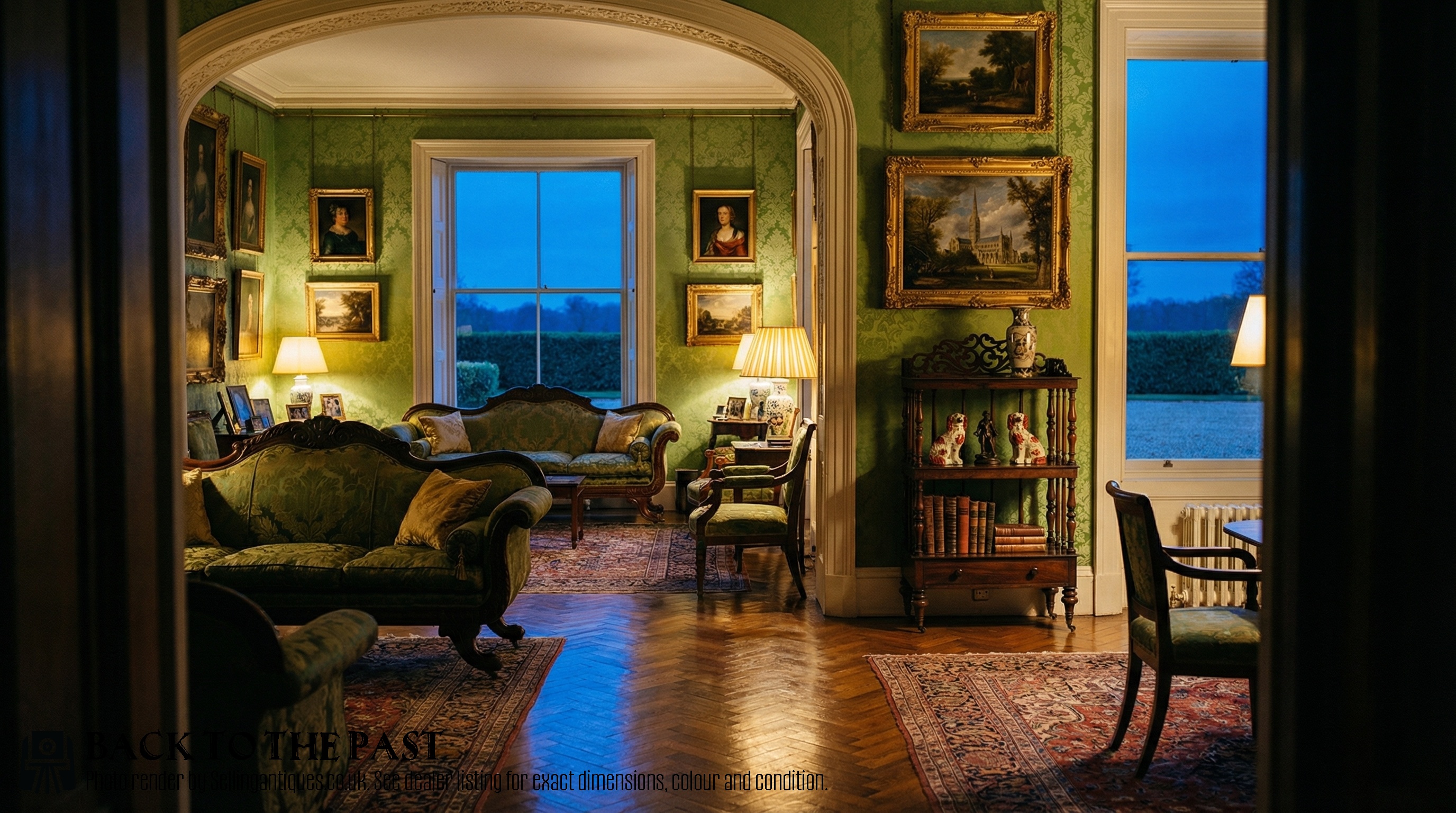
Carved Rosewood Whatnot
When searching for a carved rosewood whatnot, collectors and decorators look at tiered open shelving units designed for displaying ornaments, books, and plants. These pieces range from compact corner units and standard multi-tiered stands to more versatile forms that double as dumb waiters, jardinière plant stands, or occasional tables.
The versions most commonly met on this page belong to the Victorian and Regency periods, alongside William IV examples and Chinese export pieces. These tier structures often incorporate mirrors, glass panels, or brass details, appearing in forms such as small étagères, circular tables, and cabinets.
How they were made
Makers utilised dense, dark rosewood for its rich natural grain and structural stability, often enhancing the timber with detailed hand carving. Metal elements such as brass appeared alongside glass and mirror panels to add structural support and decorative reflection to the tiers.
Construction involved precise joinery to support multiple open shelves, sometimes incorporating circular tabletops or corner configurations. Workshops relied on traditional cabinet-making techniques to build sturdy upright supports for these tiered display stands.
The site's listings span the Regency, William IV, and Victorian periods, showcasing rosewood alongside brass, glass, and mirror.
What varies in quality
The refinement of the hand carving and the quality of the rosewood timber separate standard pieces from exceptional examples. Finer items exhibit crisp detail in the carved elements and superior selection of grain across the multiple tiers.
Proportion and form dictate the distinction between ordinary shelving units and distinguished display pieces. Pieces attributed to prominent makers or featuring integrated elements like brass mounts and mirror backs command greater attention.
Gillows
The Carved Rosewood Whatnot Glossary
- Whatnot
- A piece of furniture consisting of a set of open shelves for displaying small objects. These tiered stands gained popularity during the Regency and Victorian periods.
- Étagère
- A piece of furniture with a set of open shelves for displaying ornaments or small articles. This French term frequently applies to lighter, decorative tiered shelving units.
- Jardinière
- An ornamental pot or stand for plants and flowers. In furniture design, this term describes stands specifically adapted to hold botanical displays.
- Dumb waiter
- A piece of tiered furniture used for holding food, tableware, or books without the aid of servants. Some nineteenth-century examples share the tiered shelving structure of standard display pieces.
- Corner whatnot
- A tiered shelving unit designed specifically to fit into the corner of a room. These space-saving variants utilise angled shelves to display objects.
Carved Rosewood Whatnot: Frequently Asked Questions
What is a carved rosewood whatnot used for?
These pieces serve primarily as open shelving units for displaying ornaments, ceramics, books, and plants within a reception room or parlour.
Historically, they provided accessible display space for decorative items, while some variations functioned as plant stands or serving tables.
How do I date a rosewood whatnot?
Dating relies on stylistic markers associated with periods such as Regency, William IV, and Victorian design, alongside specific construction methods.
Earlier pieces often display restrained classical lines, whereas later nineteenth-century examples incorporate more elaborate carving and varied tier configurations.
Are all rosewood whatnots corner units?
No, while corner whatnots form a distinct category designed for room angles, many units feature rectangular, square, or circular freestanding tiers.
These standard configurations offer all-round visibility and placement against flat walls or in the centre of a room.
How do I care for antique rosewood furniture?
Maintenance requires keeping the timber away from direct sunlight and sudden temperature changes to prevent the rosewood from drying out or splitting.
Applying appropriate wax polishes occasionally helps maintain the lustre of the dark grain without building up heavy residues.