
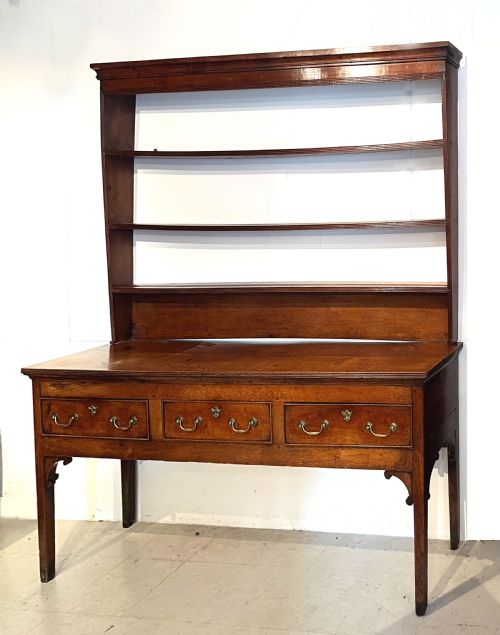


Antique Buffet Shelving
Antique buffet shelving brings tiered display and surface space together in dark timbers, giving any dining room genuine period presence.
Antique Buffet Shelving
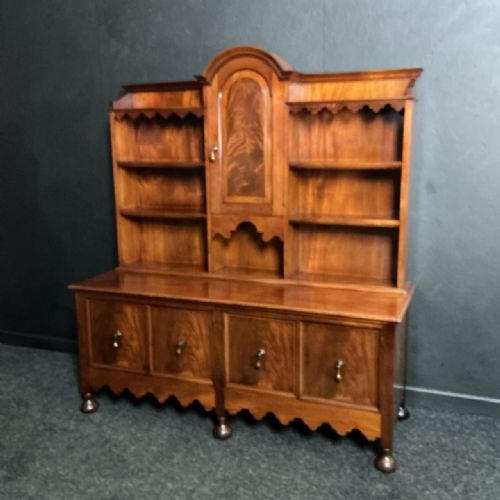
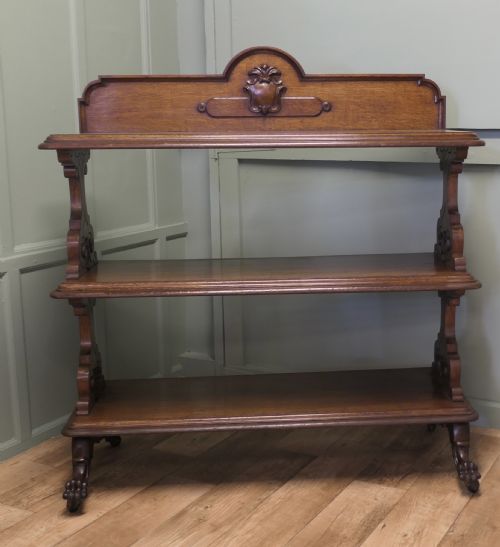
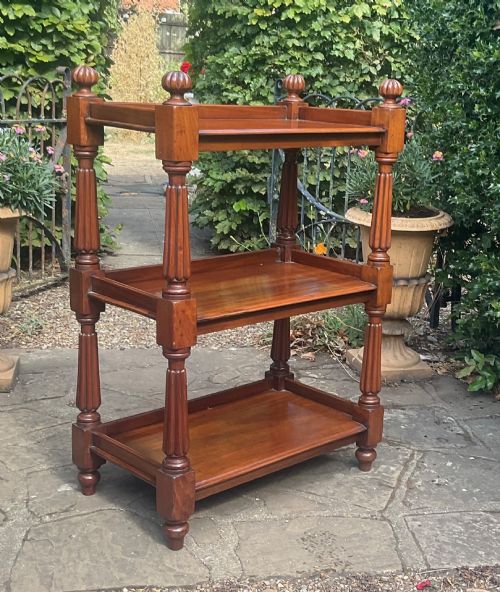
Antique buffet shelving covers multi-tiered serving stands, open étagères, and shelved sideboards designed for dining rooms and parlours. These practical pieces provide open platforms for display alongside enclosed storage below.
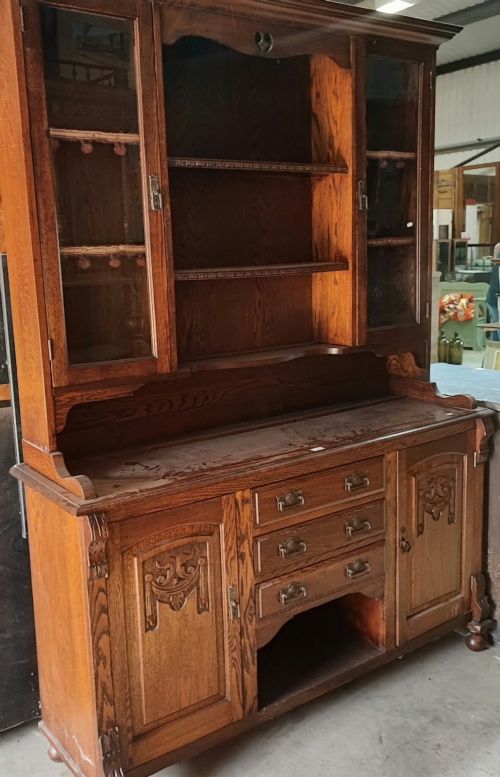
Mahogany remains the timber most frequently found on this page, often appearing alongside walnut, oak, and rosewood. Forms range from slim three-tier serving stands to large carved oak buffets with plate racks.
Examples stretch across the eighteenth, nineteenth, and early twentieth centuries, spanning Georgian proportions, Regency elegance, and heavy Victorian revival styles. The typical piece balances structural support with tiered display boards.
How they were made
Cabinetmakers constructed these pieces using solid timbers and decorative veneers such as burr walnut and flame mahogany over secondary woods. Turned columns, shaped uprights, and carved brackets support the graduated tiers.
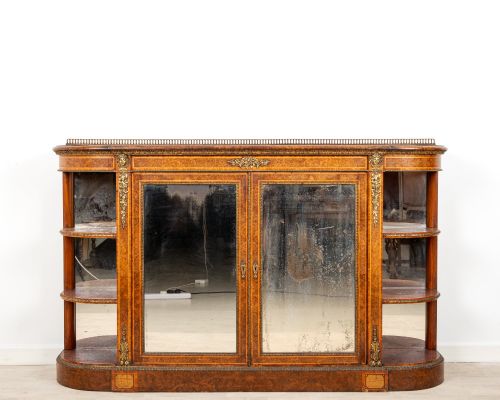
Brass mounts, galleries, and glazed doors appear on refined examples, while simpler country pieces rely on pegged joints and solid oak construction. Polish and wax finishes highlight the natural grain of the wood.
Listings span the eighteenth, nineteenth, and early twentieth centuries, featuring mahogany, oak, walnut, rosewood, and brass.
What varies in quality
Quality rests in the selection of timber figures, the crispness of turned or carved supports, and the stability of the tiered structure. Superior examples feature well-matched veneers and substantial timber thickness.
Refined detailing such as brass castors, fine stringing, and well-fitted doors distinguish finer urban cabinetwork from standard utilitarian pieces. Proportion and balance dictate how successfully multiple tiers sit upon the base.
The Antique Buffet Shelving Glossary
- Étagère
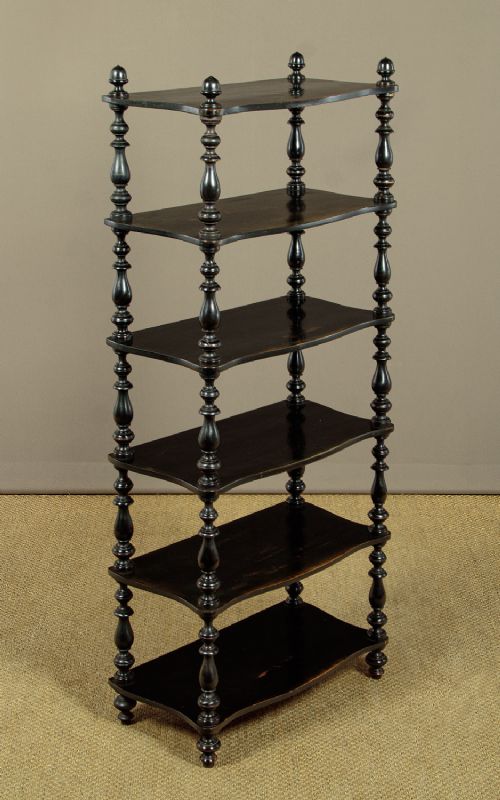
- A piece of furniture consisting of a set of open shelves for displaying small objects. These tiered stands date widely from the mid-nineteenth century.
- Dumb waiter
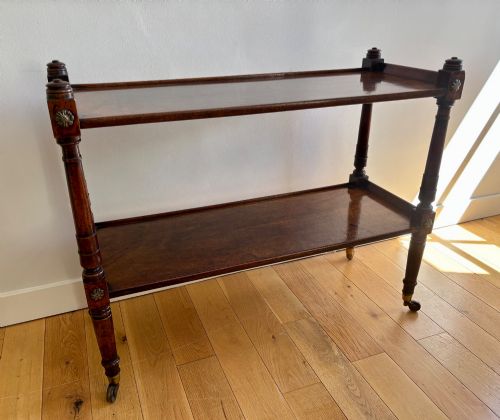
- A tiered serving stand fitted with circular or rectangular shelves on a central column or uprights. They assisted with dining room service without needing servants.
- Chiffonier
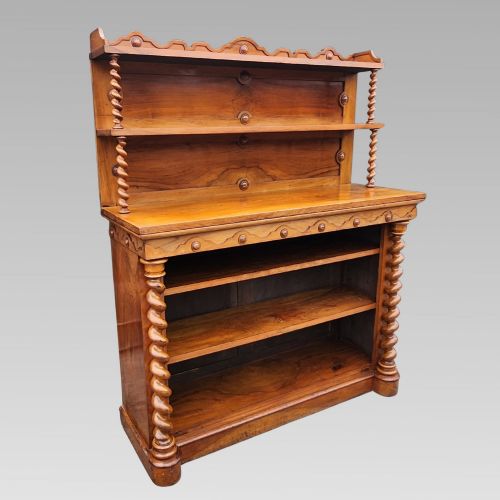
- A low sideboard or cabinet, often featuring shelves or a mirrored back above enclosed cupboards. They became popular in reception rooms during the Regency and Victorian periods.
- Credenza
- A side cabinet, frequently featuring glazed doors and ormolu mounts. These pieces often display fine burr walnut veneers.
- Talwrn dresser
- A regional form of Welsh dresser associated with specific vernacular traditions. They provide substantial open shelving and surface storage.
Antique Buffet Shelving: Frequently Asked Questions
What is antique buffet shelving used for?
These pieces function as display stands and serving surfaces in dining spaces and hallways. The open tiers hold ceramics, books, or decorative objects while enclosed lower sections store tableware.
Larger variations combine plate racks with serving boards, functioning as traditional Welsh dressers. Smaller tiered étagères suit corners or narrow wall spaces.
How do I date a piece of buffet shelving?
Dating relies on timber choice, construction methods, and stylistic cues from specific design periods. Regency pieces show clean lines and mahogany grains, while Victorian items often feature heavier carvings or burr walnut veneers.
Secondary woods and drawer construction also help determine age. Late nineteenth-century revival pieces often mimic earlier Georgian or Jacobean styles.
How do I care for antique wood shelves?
Keep wooden shelves away from direct sunlight and heat sources to prevent timber splitting and veneer lifting. Regular dusting with a soft, dry cloth maintains the polished surface.
Occasional application of bees-wax feeds the timber without building up heavy residue. Avoid placing damp items directly onto antique polished wood.
Where should I place a tiered buffet?
Tiered buffets and étagères suit dining rooms, living spaces, and wide hallways where vertical display space is useful. Ensure the piece sits against a stable wall, particularly for taller multi-tier shelving units.
Allow enough clearance around side cabinets with doors or drawers so they open fully without obstruction.