


Victorian Staffordshire Dog Ornaments
Victorian staffordshire dog ornaments bring familiar canine character into a room through earthenware modelling and hand painted markings.
Victorian Staffordshire Dog Ornaments
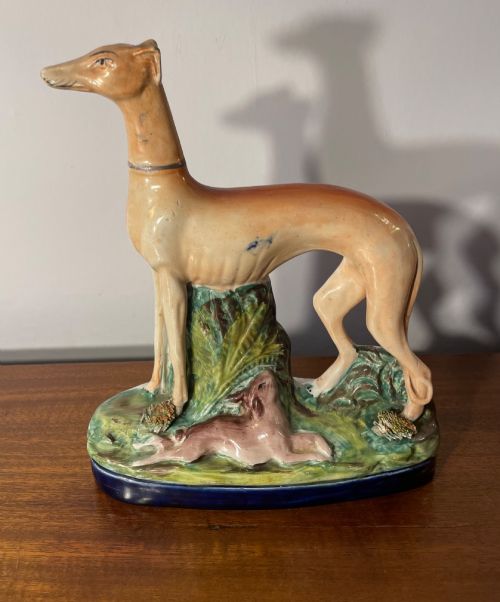
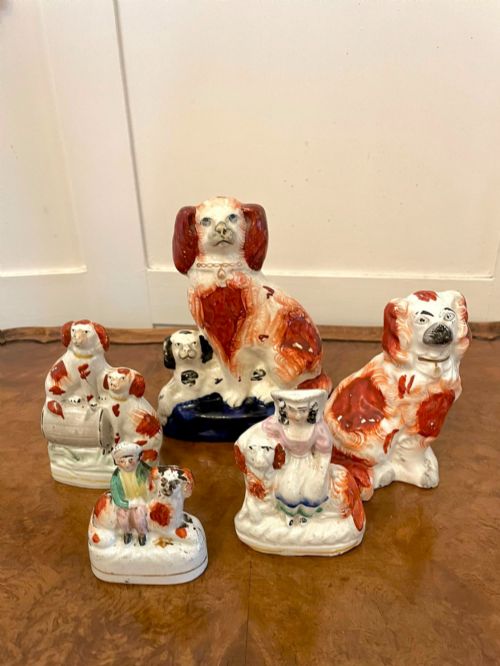
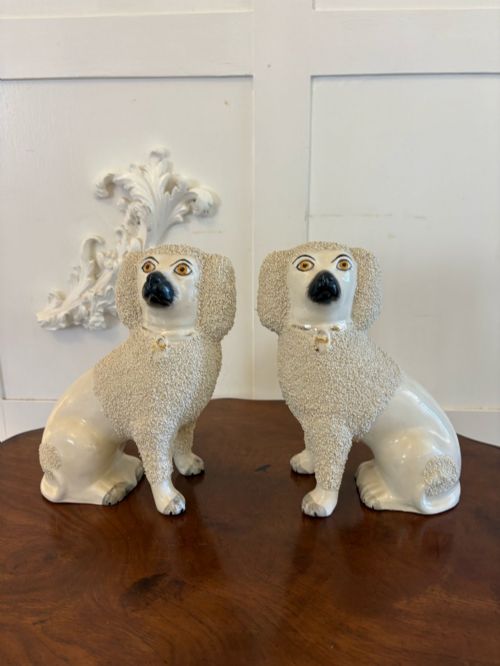
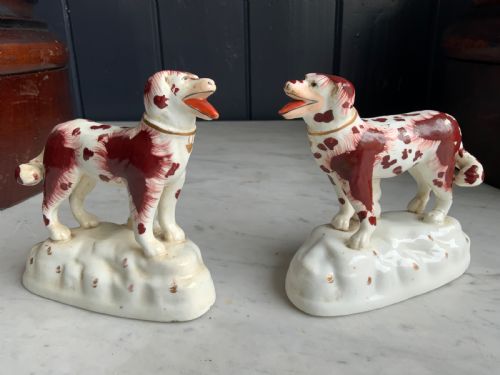
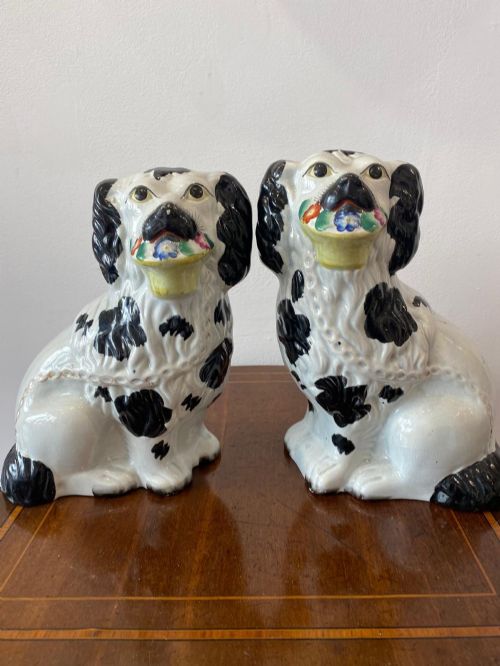
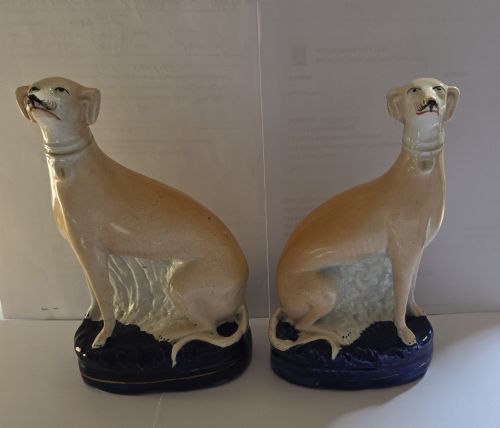
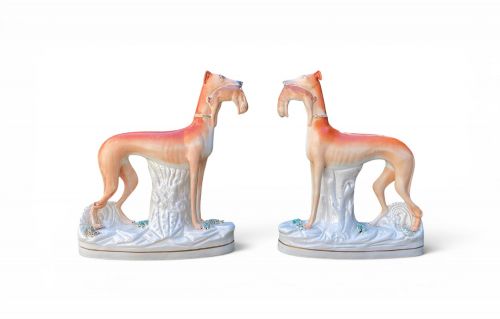
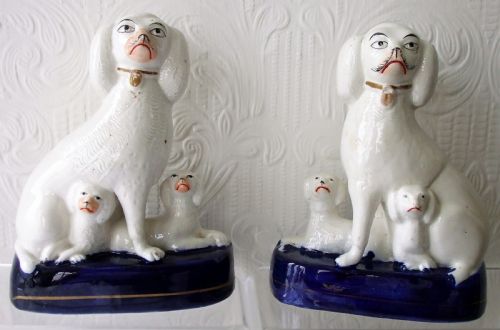
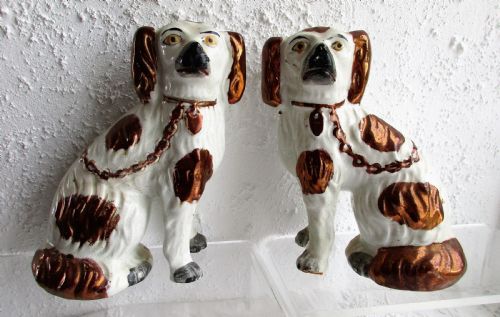
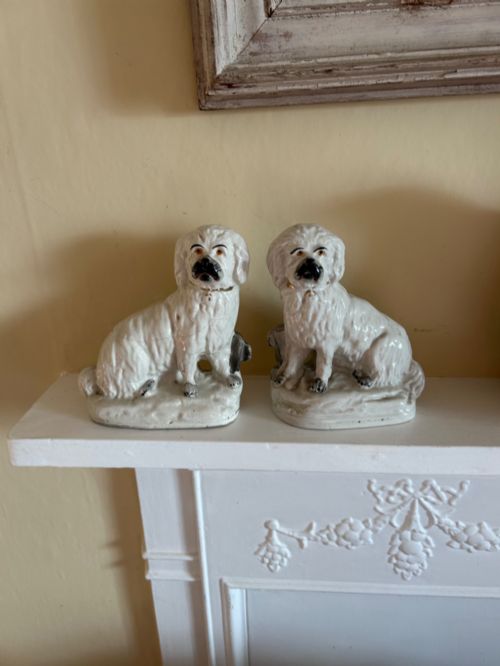
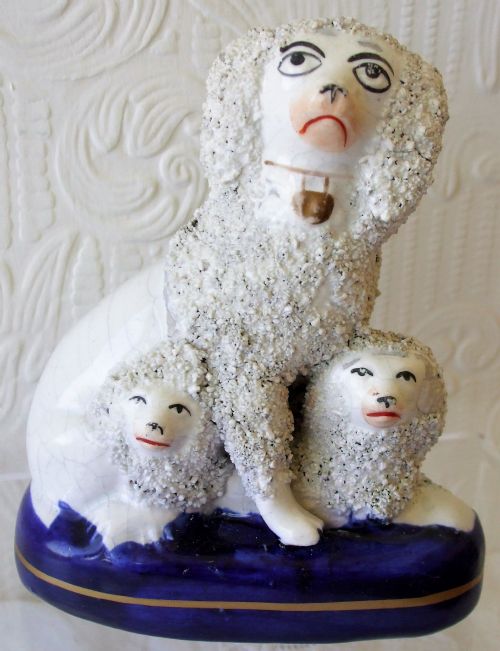
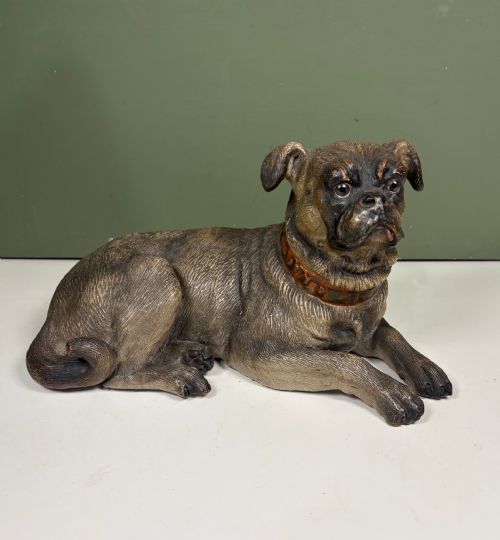
Victorian staffordshire dog ornaments are ceramic figures modelled on popular breeds like spaniels, poodles, greyhounds, whippets, pugs, and pugs with pups, often arranged as facing pairs for mantelpiece display. These pottery objects appear across periods such as the nineteenth century, Georgian era, and late Victorian decades, taking forms ranging from standard decorative figurines and figure groups to functional desk accessories like inkwells and quill holders.
The version most commonly met on this page is the classic seated spaniel, frequently referred to as a comforter spaniel, accompanied closely by pairings of greyhounds and whippets. These figures span various sizes, from miniature poodles to unusually large hounds and spaniels, capturing the domestic tastes of nineteenth century homes through distinct pottery figures and decorative objects.
Materials and methods
Makers shaped these pottery ornaments using earthenware and ceramic bodies, often applying lead glaze and gloss finishes to seal the clay base before firing. Stoneware bodies also occur, providing a heavier structure for specific spaniel figures.
Listings feature earthenware and ceramic bodies finished with lead glaze, enamel, and gold leaf.
Evaluating quality in figures
Proportion and stance distinguish the better examples, particularly in pairs where symmetry and balance create a convincing mirror image. The integration of functional elements, such as inkwells and quill holders, demands tighter geometric control in the pottery.
Thomas Parr·Wooley
The Victorian Staffordshire Dog Ornaments Glossary
- Earthenware
- A porous pottery body fired at lower temperatures, serving as the standard material for these nineteenth century figures before glazing.
- Lead glaze
- A glossy coating containing lead that melts during the kiln firing to produce a shiny, protective surface over the ceramic body.
- Enamel paint
- Opaque coloured glass fused to the pottery surface through firing, utilised for eyes, spots, and collars.
- Copper lustre
- A metallic glaze application reflecting a coppery sheen, often framing the base or coat of specific pottery dogs.
- Quill holder
- A desk accessory form featuring an incorporated trough or channel designed to hold writing feathers beside the central figure.
Victorian Staffordshire Dog Ornaments: Frequently Asked Questions
Why were they called comforter spaniels?
These spaniels earned their name from their association with the real King Charles spaniels kept as lap dogs and companions by Victorian owners.
Potters reproduced the popular dogs in pairs to sit upon fireplace mantels, offering domestic comfort and decorative symmetry to nineteenth century parlours.
How do I display pairs properly?
Matched pairs of dogs face inward toward each other when placed at opposite ends of a mantelpiece or shelf.
Arranging them correctly maintains the traditional symmetry intended by the nineteenth century potter.
Are all these figures hollow?
Most Staffordshire figures are cast as hollow earthenware pieces to ensure even drying and firing in the kiln.
Small vent holes are typically found underneath or at the back to allow steam to escape during the firing process.
What breeds besides spaniels appear?
Makers modelled a wide variety of dogs including poodles, greyhounds, whippets, pugs, Maltese terriers, and dalmatians.
Greyhounds and whippets frequently double as functional desk accessories like inkwells and quill holders.