


Staffordshire Pottery Spaniel Figures
Staffordshire pottery spaniel figures sit on mantelpieces as traditional pairs, offering a touch of Victorian domestic character to a room.
Staffordshire Pottery Spaniel Figures
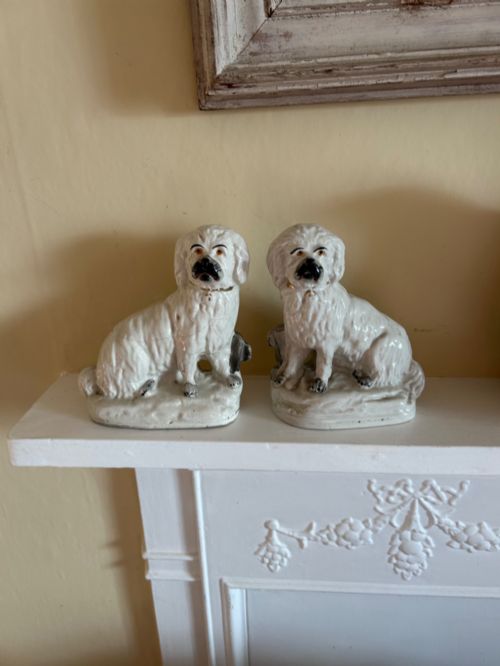
Staffordshire pottery spaniel figures emerge primarily from the nineteenth century as decorative mantel ornaments, often modelled as seated pairs gazing outward. These ceramic dogs appear in various forms, including money boxes, Toby jugs, clock groups, quill holders, and spill vases alongside standard decorative figurines.
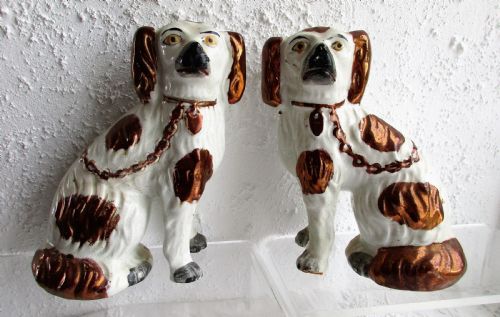
Most examples date from the Victorian era, specifically around eighteen sixty, reflecting the widespread popularity of pet dogs in domestic interior display. The selection includes white and gilt finishes, copper lustre details, and red and white markings, alongside rarer variations such as Maltese terriers or King Charles spaniels.
Buyers encounter single figures as well as matched pairs, sometimes accompanied by puppies or children. The ceramic bodies range from standard earthenware to stoneware, representing the staple output of nineteenth-century English traditional potteries.
How they were made
Makers incorporated copper lustre glazes on specific variants to produce a metallic sheen across the ceramic surface. Hand-painted touches finished the eyes and markings, while select Victorian pieces incorporated inserted glass eyes for added realism.
Victorian examples span multiple forms, including money boxes, Toby jugs, clock groups, and quill holders.
What varies in quality
The refinement of the hand-painted enamel work separates standard production pieces from finer examples, particularly in the precision of the facial expression and coat markings. Crisp moulding detail preserved in the ceramic paste indicates careful workshop production.
The presence of supplementary forms, such as clock groups, spill vases, or money boxes, alters the complexity of the piece. Matched pairs with intact gilding and well-preserved copper lustre finishes represent the higher end of the surviving range.
Beswick
The Staffordshire Pottery Spaniel Figures Glossary
- Earthenware
- A porous pottery body fired at lower temperatures, commonly used for nineteenth-century decorative figures before being glazed. It forms the structural base for the majority of these ceramic dogs.
- Copper Lustre
- A metallic glaze application that produces a coppery, reflective sheen across the ceramic surface. This technique appears on specific nineteenth-century spaniel pairs.
- Spill Vase
- A hollow ceramic cylinder attached behind the main figure, designed to hold wooden spills for lighting fires. These functional additions are integrated into the spaniel designs.
- Toby Jug
- A pottery jug modelled in the form of a seated full-length figure, occasionally taking the shape of a spaniel in this category. It combines functional pouring capacity with figural modelling.
Staffordshire Pottery Spaniel Figures: Frequently Asked Questions
Where did these spaniel figures sit?
These ceramic dogs typically occupied prominent positions on living room mantelpieces, often arranged as a facing pair at either end of the hearth.
Their primary purpose was decorative, serving as familiar domestic companions in nineteenth-century homes.
Are they always found in pairs?
While matched pairs remain common for mantel display, single figures also appear across the listings.
Some buyers encounter them incorporated into functional objects like money boxes, inkwells, or clock groups rather than as standalone ornaments.
What colours do they come in?
The most frequent variants feature white and gilt or red and white glazed earthenware bodies.
Other examples utilise copper lustre finishes or hand-painted enamel details to define the fur and facial expressions.
How do spill vases differ?
Spill vase variants include an attached vertical ceramic tube behind the seated dog to hold wooden fire lighters.
This practical addition distinguishes them from solid decorative figurines or money boxes.