


Pottery Dog Figurines
Pottery dog figurines bring centuries of canine charm to a room, offering the collector cheerful mantelpiece companions shaped in earthenware and porcelain.
Pottery Dog Figurines
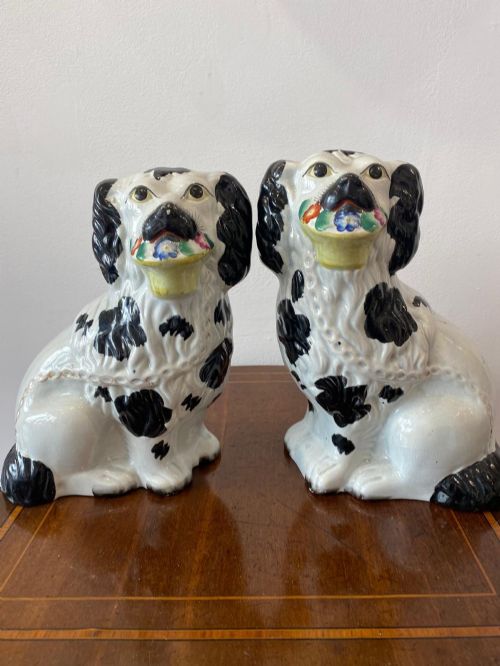
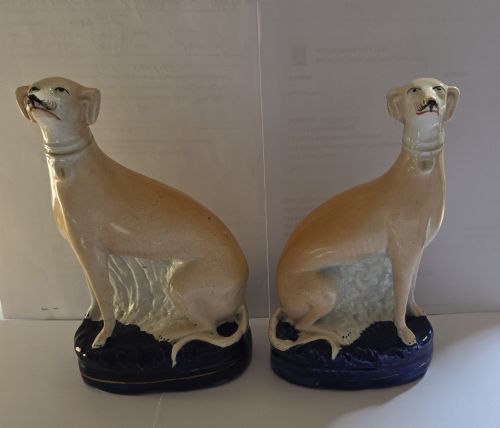
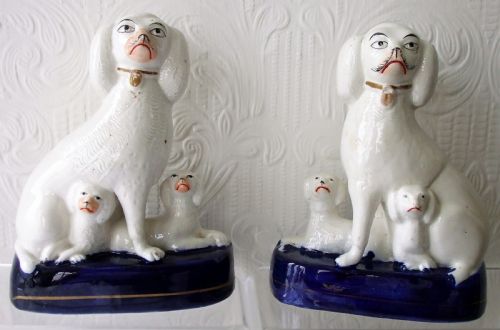
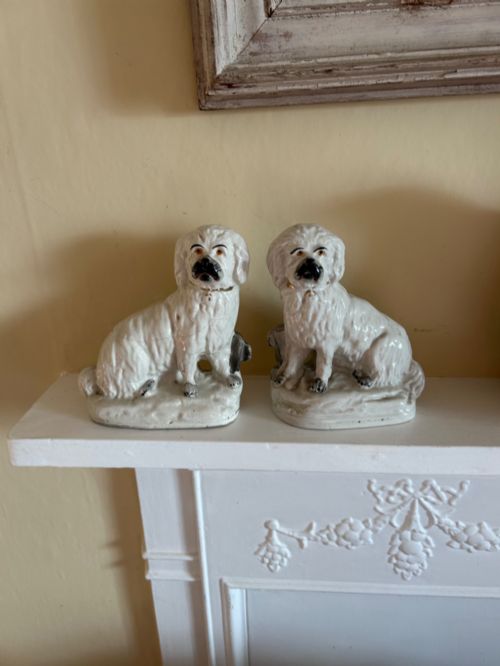
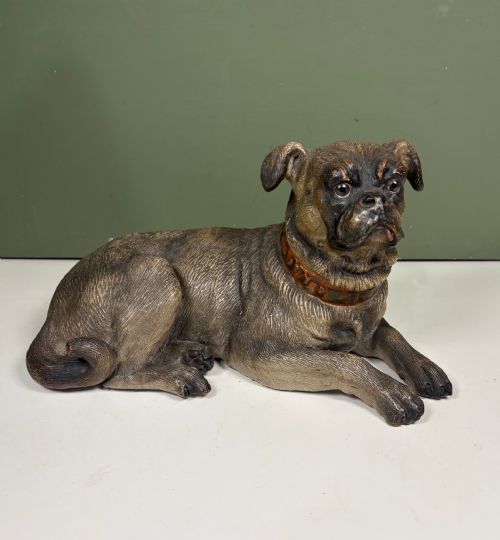
Pottery dog figurines encompass decorative earthenware and porcelain figures created across the nineteenth century and into the twentieth. The most common version met on this page is the Victorian Staffordshire pair, typically modelled as seated spaniels, greyhounds, poodles, or pugs intended for hearthsides.
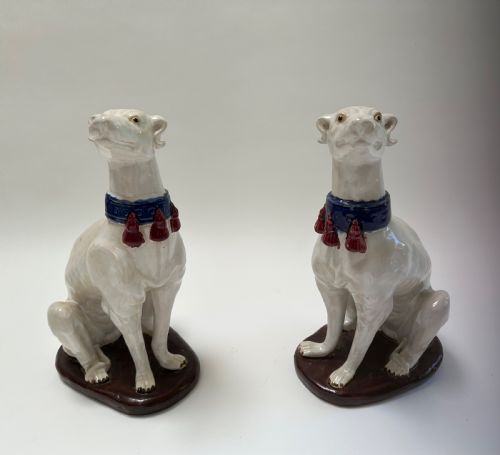
Makers shaped these decorative objects to sit on mantelpieces as pairs or single figures, sometimes incorporating practical functions such as inkwells or quill holders. Pieces span Georgian, Victorian, and Edwardian eras, alongside occasional Chinese porcelain and Italian majolica examples.
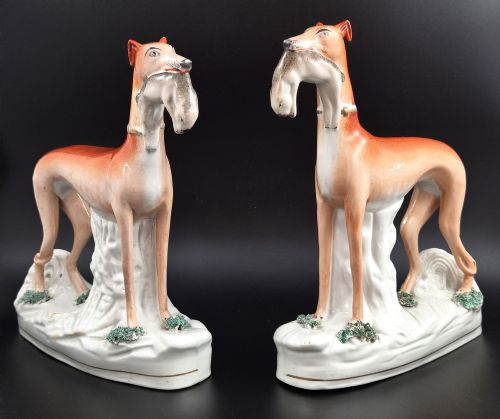
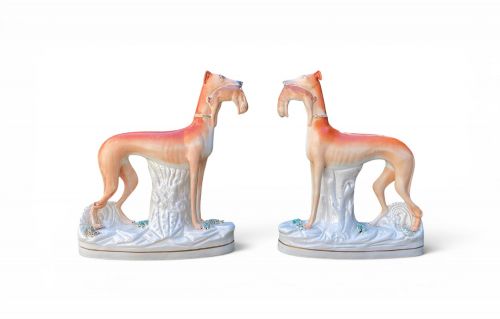
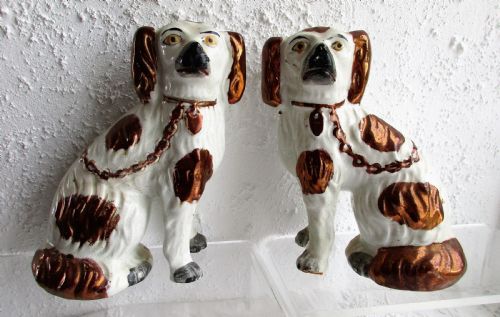
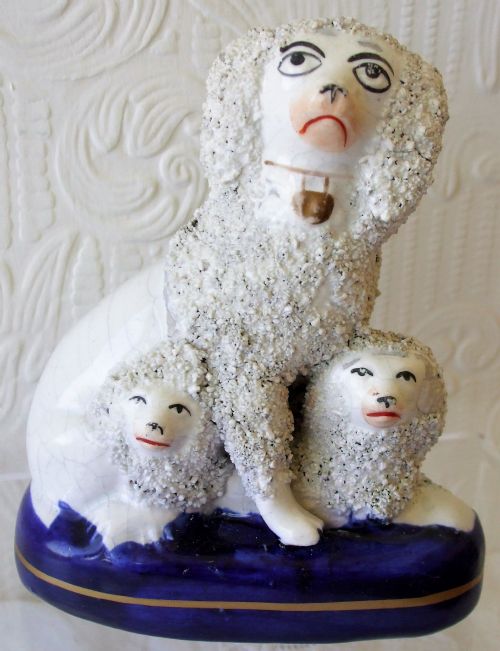
The assortment includes unusual varieties like copper lustre decoration, black and white colorways, or models featuring puppies alongside the main subject. Collectors encounter everything from miniature poodles to large-scale greyhounds with hares.
How they were made
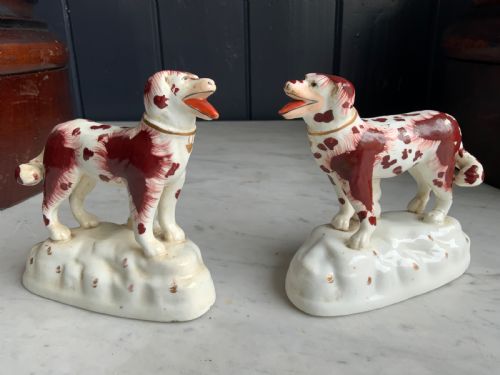
Potters shaped these figures primarily in earthenware and ceramic, applying lead glaze to seal the body before adding surface colour. Many examples received hand-painted enamel details alongside gold leaf or gilt highlights.
Makers utilised press-moulding techniques to form the hollow bodies of spaniels and greyhounds, often finishing the surfaces with characteristic copper lustre or enamel paint. Some pieces relied on porcelain or stoneware bodies fired at higher temperatures.
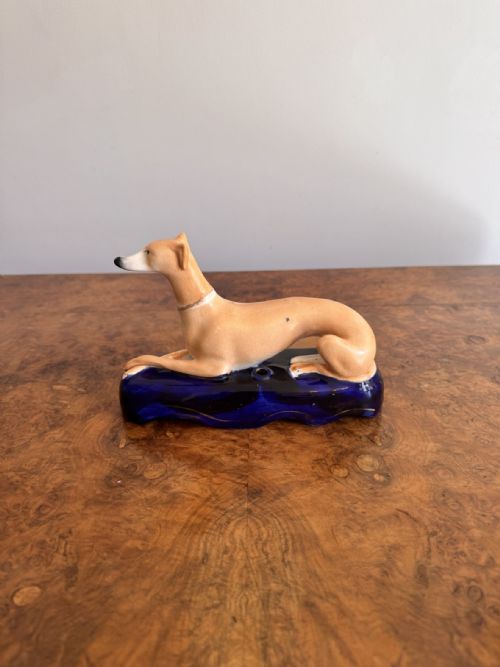
Several greyhound figures double as quill holders, ensuring Victorian correspondence had a distinctly athletic canine guard.
What varies in quality
Quality rests upon the crispness of the moulding and the sensitivity of the hand-painted enamels, where confident brushwork on the eyes and muzzle distinguishes superior examples. Firmer modelling in the clay captures the musculature of greyhounds and the curl of poodle coats more convincingly than soft, blurred contours.
The richness of the gilding and the stability of the lead glaze also divide standard production from exceptional works. Original matched pairs with consistent glazing and minimal firing blemishes command greater attention from discerning collectors.
Thomas Parr·Wooley
The Pottery Dog Figurines Glossary
- Earthenware
- A porous ceramic body fired at lower temperatures, commonly used for nineteenth-century figures. It requires a glaze to become impermeable to liquids.
- Staffordshire
- A major English pottery region responsible for producing the vast majority of these decorative figures. Potters there specialised in utilitarian wares and cheerful animal groups.
- Lead glaze
- A glossy coating applied to pottery before a final firing to create a shiny, protective surface. It gives many antique figures their characteristic reflective sheen.
- Copper lustre
- A metallic glaze finish that yields a coppery, reflective sheen when fired in a reducing atmosphere. It appears on specific Victorian pairs.
Pottery Dog Figurines: Frequently Asked Questions
What are comforter spaniels?
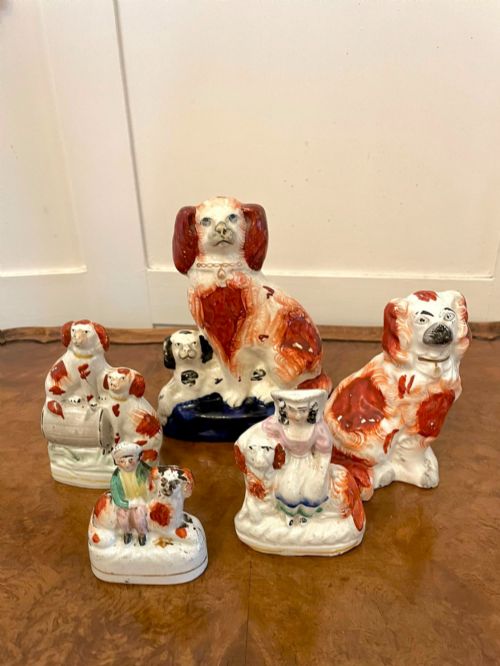
Comforter spaniels are pottery figures modelled after King Charles spaniels that Victorian households traditionally placed on mantelpieces facing inward. These cheerful dogs gained their name from their role as domestic hearth ornaments.
Pairs of these spaniels were arranged symmetrically on either side of a fireplace clock or ornament. Their presence brought a sense of settled comfort to nineteenth-century parlours.
How do I date antique pottery dogs?
Dating relies on examining the clay body, the style of the painting, and the type of glaze used by the potter. Earlier Georgian pieces often show heavier potting and simpler enamel palettes.
Victorian examples introduce greater variety, including copper lustre, gold leaf accents, and specialised breeds like dalmatians or pugs. Comparing the moulding style with known period pieces helps narrow down the decade.
Were these figures meant for use?
While most pottery dogs served purely as decorative mantelpiece ornaments, certain forms incorporated practical elements. Some greyhound figures doubled as quill holders or inkwells for writing desks.
These functional pieces combined domestic ornament with everyday utility. They allowed Victorian owners to display their affection for dogs while keeping desks organised.
Why do Staffordshire dogs come in pairs?
Staffordshire dogs were manufactured as matched pairs to flank the central mirror or clock on a Victorian fireplace mantel. This symmetrical arrangement suited the formal interior design tastes of the period.
Displaying them facing one another created a balanced composition in the room. Surviving matched pairs remain particularly sought after by collectors today.