



Antique Ceramic Wally Dogs
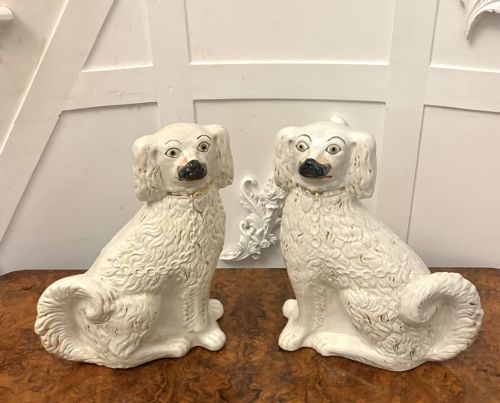
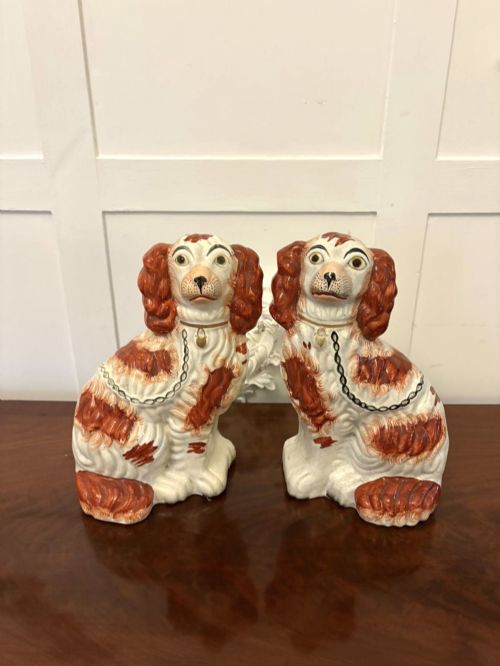
These antique ceramic wally dogs are traditional earthenware mantel spaniels that bring undeniable character and Victorian warmth to any hearth.
Antique Ceramic Wally Dogs
When you search for antique ceramic wally dogs, you are looking at decorative figurines modelled after the spaniel breeds popular in the nineteenth century. Most pieces found on this page arrive as symmetrical pairs designed to sit facing one another on either end of a mantelpiece. These ceramic figures span several decades of Victorian production, originating primarily from English traditions.
The most common version you will meet here is the earthenware pair, often depicted seated upright with alert expressions and distinct markings. Collectors encounter them in various colourways, ranging from simple white glazes to richer red, white, and copper lustre finishes. They remain enduring symbols of Victorian domestic life and traditional mantelpiece display.
How they were made
Potters shaped these figures from earthenware clay, utilising moulds to achieve the characteristic seated spaniel form before firing the bodies in kilns. Artisans then applied glazes to seal the porous ceramic base and provide a smooth, glossy surface ready for further decoration.
Antique Ceramic Wally Dogs Retail Price Guide 2026
Typical asking prices for ceramic wally dogs among the pieces listed under this phrase on Sellingantiques today, from the lower quarter to the upper quarter. They describe what is for sale here now, not the wider market.
Listings feature earthenware bodies decorated with enamel paint, gold leaf, and copper lustre across Victorian periods.
What varies in quality
Size and composition also influence the standing of a pair within the range. Larger grand pairs and those featuring unusual additions such as glass eyes represent a more ambitious output from the potteries.
Beswick
The Antique Ceramic Wally Dogs Glossary
- Earthenware
- A porous type of pottery fired at lower temperatures, commonly used for nineteenth-century figures before being glazed. It forms the solid body beneath the painted surface of these spaniels.
- Copper Lustre
- A metallic glaze technique that produces a shiny, coppery sheen on the ceramic surface. Potters used this finish to highlight collars, lockets, and markings on the figures.
- Gilt
- A thin layer of gold applied to the ceramic surface to decorate collars and chains. It provides a bright metallic contrast against the white or coloured glaze.
- Comforter spaniel
- A nineteenth-century term for these ceramic dogs, reflecting their role as loyal hearthside companions modelled after real pets. They were traditionally displayed in matching pairs gazing across the mantel.
- Enamel paint
- A hard, glossy paint applied over the fired glaze to render details such as eyes, noses, and patches. It allows for precise colouring on finished ceramic bodies.
Antique Ceramic Wally Dogs: Frequently Asked Questions
Why are they called wally dogs?
The term is a traditional Scottish and northern English nickname for ceramic mantel ornaments, particularly these spaniel figures.
Over generations, the label stuck to describe the earthenware dogs that once sat proudly on cottage and parlour chimneys.
Were they always made in pairs?
Potters designed the vast majority of these spaniel figures to be produced and sold as matching left and right-facing pairs.
This symmetry suited the formal arrangement of nineteenth-century mantelpieces, where they anchored either end of the hearth.
How do I date an older pair?
Dating relies on observing the potting style, the weight of the earthenware, and the richness of the hand-painted enamel or lustre.
Victorian examples often show softer brushwork and specific glaze characteristics associated with nineteenth-century production methods.
Where should I display them?
These decorative figures sit naturally upon a mantelpiece, shelf, or sideboard where their symmetrical arrangement can be appreciated.
They function best when placed at a slight elevation, echoing their original nineteenth-century placement in the home.