




English Earthenware Spaniel Ornaments
English earthenware spaniel ornaments bring fireside warmth and Victorian character to a room, offering the charm of mantelpiece pairs from the nineteenth century.
English Earthenware Spaniel Ornaments
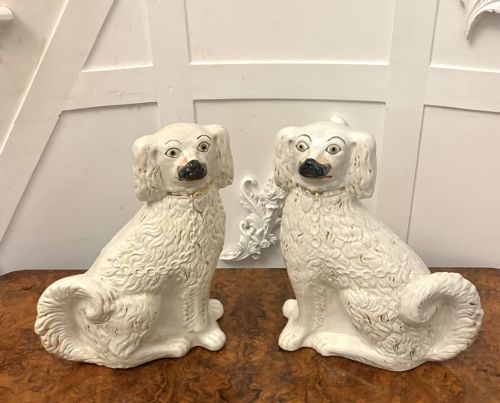
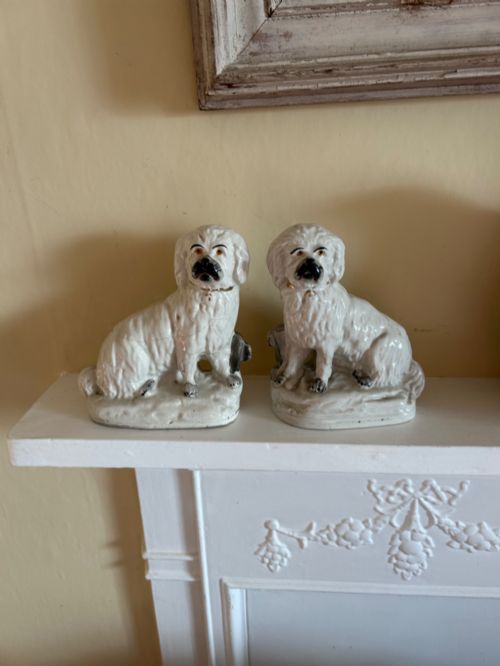
When you search for english earthenware spaniel ornaments, you encounter nineteenth century Staffordshire pottery figures made as fireside mantelpiece companions. These ornaments appear in pairs, seated patiently to mirror the loyal comforters that kept Victorian hearths company.
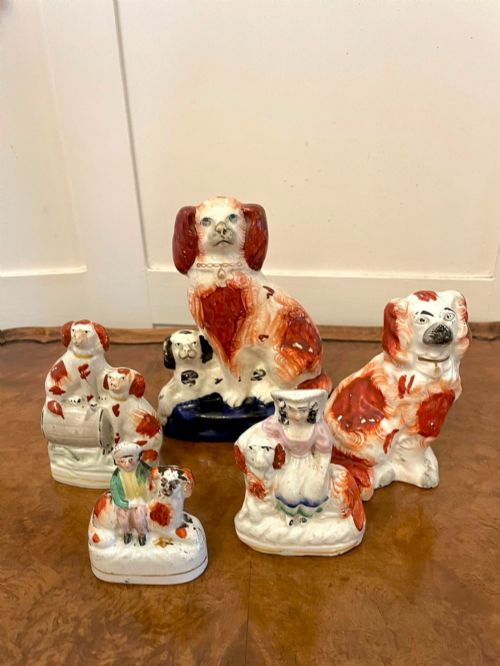
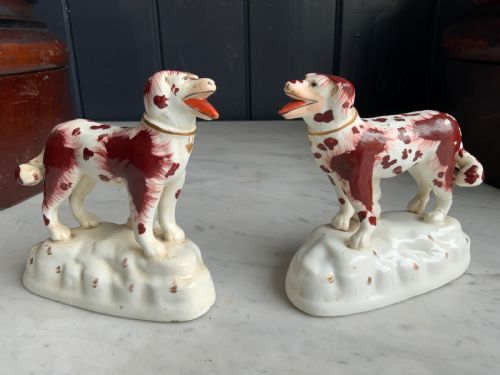
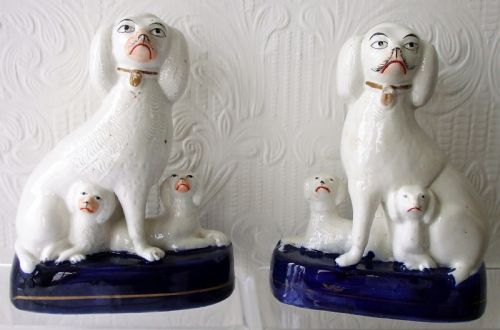
The selections on this page run from Regency pieces through Victorian examples dated around eighteen sixty, eighteen eighty, and eighteen ninety. Alongside spaniels, the groupings include related ceramic figures like poodles with pups, maltese terriers, and black and white dogs.
Most items survive as matched pairs designed to sit at either end of a mantel shelf, though occasional collections of four or six dogs also appear. Their forms range from standard seated postures to mothers with puppies and versions featuring glass eyes.
Materials and construction
Makers shaped these ornaments from earthenware and ceramic bodies, firing the clay before applying surface decoration. Glaze seals the porous ceramic base, giving the figures their characteristic sheen.
English Earthenware Spaniel Ornaments Retail Price Guide 2026
Typical asking prices for english earthenware spaniel ornaments among the pieces listed under this phrase on Sellingantiques today, from the lower quarter to the upper quarter. They describe what is for sale here now, not the wider market.
Listings feature nineteenth century periods, spanning Regency and Victorian eras with specific dates like 1860, 1880, and 1890.
Distinctions in quality
Quality rests in the crispness of the moulding and the care taken with hand painting across the face and coat. Superior examples maintain bright enamel colours and clean gilding without excessive rubbing from age.
The English Earthenware Spaniel Ornaments Glossary
- Earthenware
- A porous pottery body fired at lower temperatures than stoneware or porcelain. It requires a protective glaze to hold liquids and create a smooth surface for painting.
- Comforter spaniel
- A nineteenth century Staffordshire mantelpiece ornament depicting a seated spaniel. These figures earned their name from their role as domestic hearth ornaments.
- Copper lustre
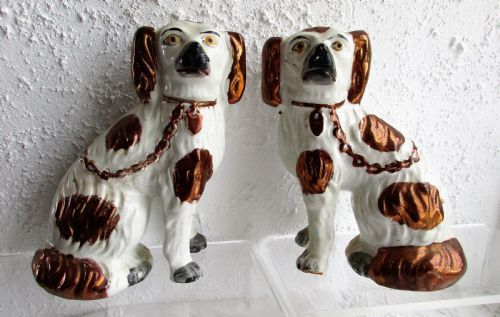
- A metallic glaze technique producing a warm, reflective copper sheen. Potters applied this finish to highlight collars, lockets, and details on ceramic figures.
English Earthenware Spaniel Ornaments: Frequently Asked Questions
What are Staffordshire spaniels?
Staffordshire spaniels are ceramic mantelpiece ornaments modelled after the King Charles spaniel and related breeds during the nineteenth century. Potters produced them in matched pairs to ornament domestic hearths.
These figures typically feature white bodies with patches of black or other colours, often adorned with gilt collars and chains. They served purely as decorative furnishings for Victorian living spaces.
How old are these ornaments?
The pieces listed span the nineteenth century, with specific examples dated around eighteen sixty, eighteen eighty, and eighteen ninety. Some items trace back to the Regency period.
Stylistic details, modelling conventions, and glaze characteristics help distinguish pieces from earlier decades versus the late Victorian era.
Were they always made in pairs?
Many Staffordshire dog ornaments were manufactured as symmetrical pairs designed to sit at opposite ends of a mantelpiece. However, collections of four or six pieces also occur.
Pairs often show slight hand-painted variations since artisans decorated each figure individually rather than using mechanical transfer methods.
What materials are used?
These ornaments consist primarily of earthenware and ceramic bodies finished with a protective glaze. Artisans decorated the surfaces using hand-painted enamels and gilt highlights.
Some variations incorporate copper lustre glazes or inset glass eyes to enhance the lifelike expression of the figures.