


Pair of Dog Statues
A pair of dog statues brings instant character to a mantelpiece or study, offering centuries of sculptural craft in earthenware, bronze, and carved wood.
Pair of Dog Statues
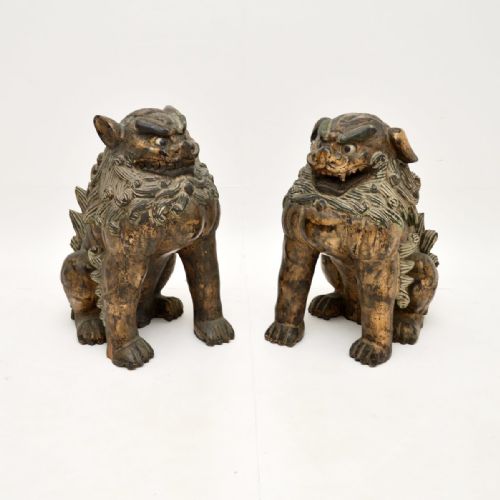
A pair of dog statues comprises matched figures of hounds, poodles, spaniels, and temple lions designed for decorative display across interior spaces. These items appear in formats ranging from small ceramic mantel ornaments to large garden sculptures.
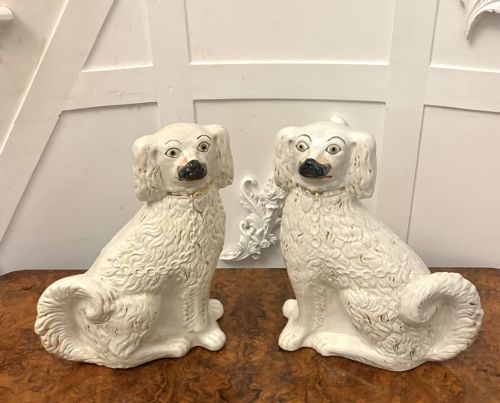
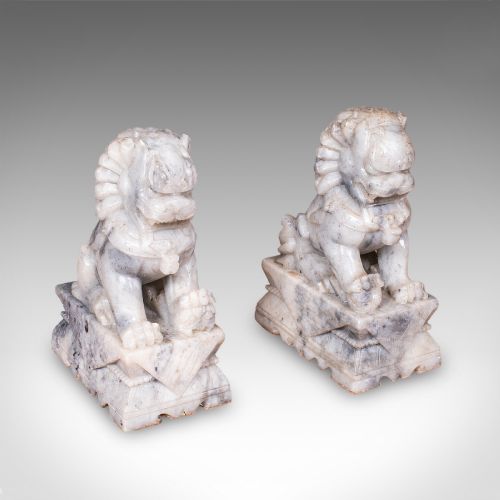
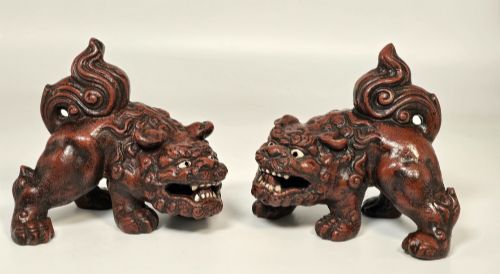
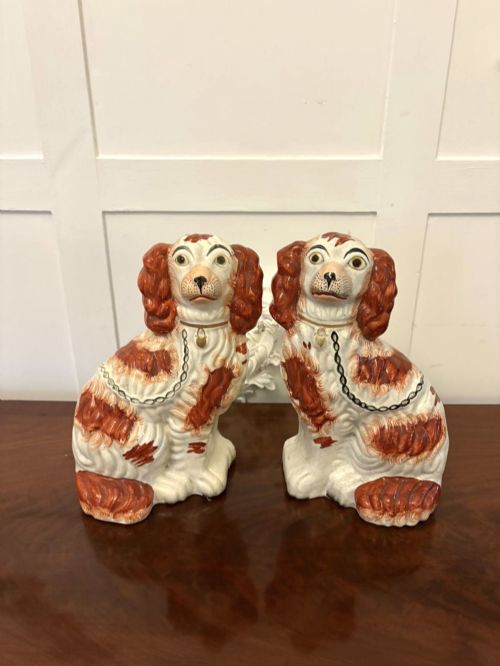
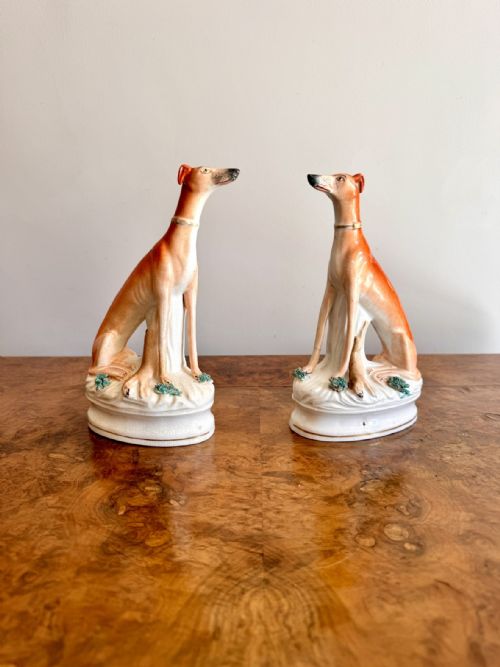
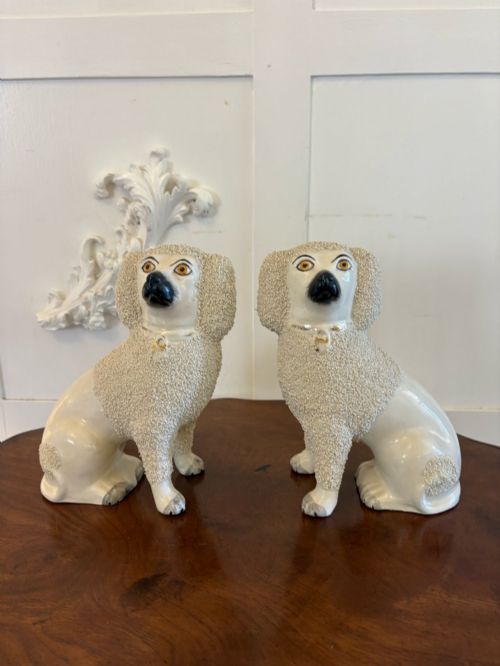
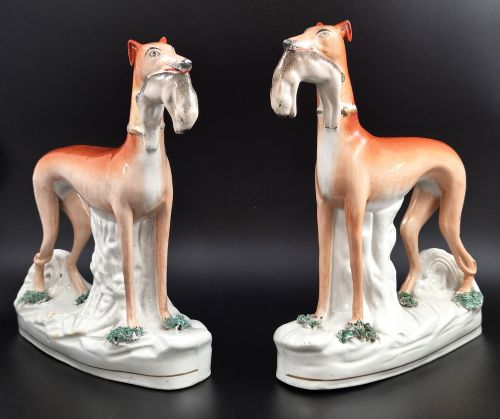
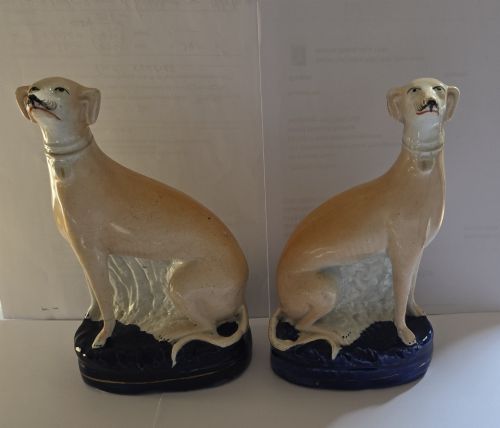
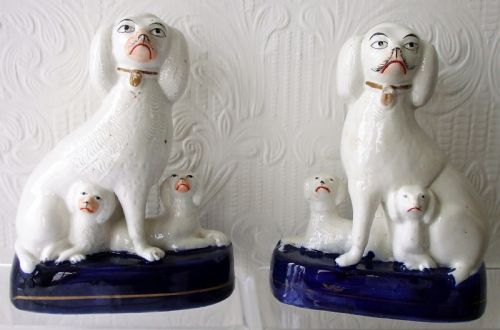
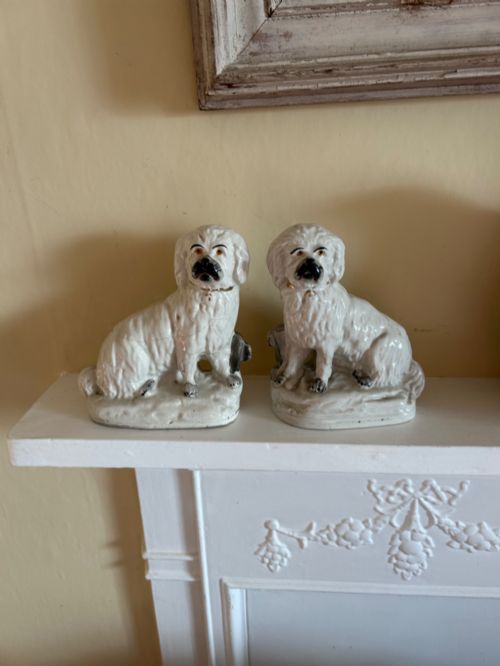
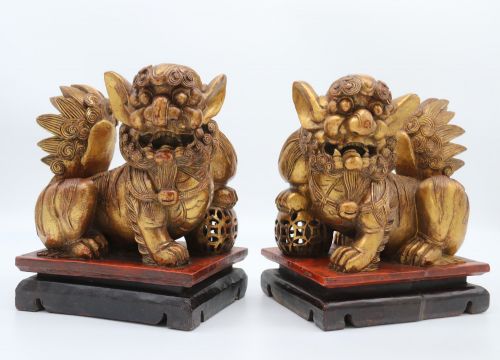
Victorian Staffordshire pottery figures dominate the selection, often depicting poodles, greyhounds, and spaniels with characteristic hand-painted markings. Alongside British ceramics, listings include continental bronzes, carved Chinese Foo dogs, and Italian marble studies.
How they were made
Ceramic examples rely on earthenware and porcelain bodies finished with coloured glaze, enamel, or paint, particularly in Staffordshire and Meissen workshops. Moulded clay forms receive hand-finished details before firing to set the surface pigments.
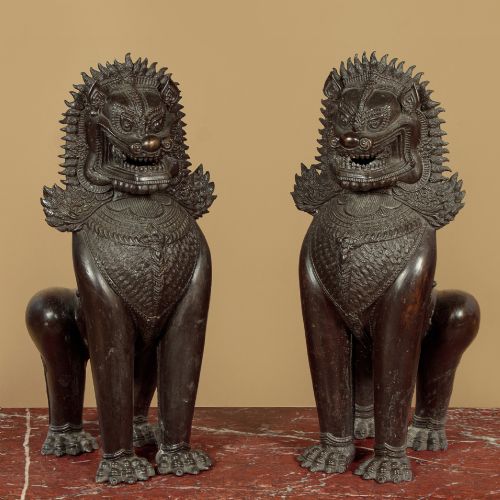
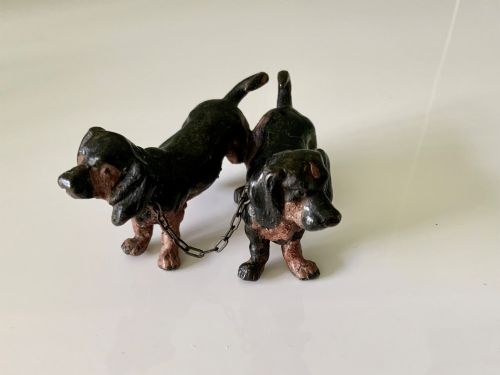
Metal sculptures utilise bronze, brass, and cast iron shaped through casting techniques, sometimes enhanced with cold-painted finishes, gilt, or gold leaf. Carved varieties depend on skilled stonemasons and woodworkers shaping Derbyshire alabaster, serpentine marble, jade marble, and solid wood.
Pair of Dog Statues Retail Price Guide 2026
Typical asking prices for pair of dog statues among the pieces listed under this phrase on Sellingantiques today, from the lower quarter to the upper quarter. They describe what is for sale here now, not the wider market.
Several Victorian poodles arrive sporting remarkably woolly clay coats achieved by pressing tiny ceramic curls onto the earthenware body.
What varies in quality
The degree of hand-finishing determines visual distinction, separating mass-produced mould work from finely detailed carving and careful brushwork. Crispness in the rendering of fur texture, facial expression, and anatomical proportion elevates the standing of a pair.
Material selection and the preservation of original surface treatments dictate the stature of each piece within its period. Intact polychrome glazes, original cold-painted pigments, and patinated metals reflect superior preservation over time.
Bright And Sons·Louis Riche·Karl Hagenauer·Royal Capodimonte Factory
The Pair of Dog Statues Glossary
- Staffordshire pottery
- Earthenware figures produced in the Staffordshire potteries during the nineteenth century, typically moulded and hand-painted. These spaniels, poodles, and greyhounds formed staple ornaments for Victorian mantelpieces.
- Foo Dog
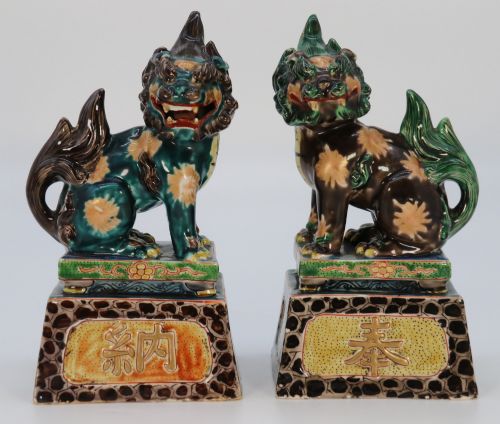
- Stylised guardian lions originating in Chinese art, frequently rendered in pairs as temple statues or bookends. They combine traditional temple iconography with decorative sculpture.
- Cold-painted bronze
- A metal sculpture technique where paint is applied to a cold bronze surface rather than fired in a kiln. This method allows for subtle polychrome detail on figures like dachshunds and greyhounds.
- Serpentine marble
- A green, mottled stone used by Italian carvers to mimic classical antiquity in decorative models. It yields a smooth, variegated surface favored in nineteenth-century decorative arts.
Pair of Dog Statues: Frequently Asked Questions
How do I identify genuine Staffordshire dogs?
Examine the clay body, glaze texture, and hand-painted markings underneath the ceramic surface. Nineteenth-century examples typically show crazing in the glaze and hand-applied secondary colours rather than modern transfer prints.
Look at the underside of the base for vent holes and historical wear consistent with age. Victorian Staffordshire dogs were made as pairs to face one another on either side of a fireplace or window.
Where should I place a heavy pair of bronze temple lions?
Large bronze or cast iron temple lions require a structurally sound foundation, such as a stone hearth, heavy console table, or a protected entryway. Their substantial weight makes them suitable for anchoring larger spaces.
Ensure the display surface distributes the mass evenly to prevent indentation or damage to wooden furniture. These figures were traditionally cast to guard thresholds and important rooms.
What is the difference between Foo dogs and standard dog breeds?
Foo dogs represent mythical guardian lions from Chinese tradition rather than domestic canine breeds. They feature stylised manues, prominent paws, and open mouths intended to ward off negative spirits.
Standard dog statues replicate real animals like greyhounds, poodles, and terriers as observed in domestic life or sporting contexts. Their form follows anatomical study rather than mythological temple iconography.
How should I clean antique earthenware dog figurines?
Dust ceramic figures gently with a soft, dry brush to remove surface particles without disturbing fragile enamel paints. Avoid submerging porous nineteenth-century earthenware in water, as moisture can penetrate old glaze fractures.
Keep them away from direct sunlight and high humidity to preserve the stability of the painted surface. Professional conservation advice should be sought for pieces with significant historical paint.