


Staffordshire King Charles Spaniels
Staffordshire king charles spaniels are iconic ceramic mantelpiece ornaments that bring traditional character and history to any room.

Staffordshire King Charles Spaniels
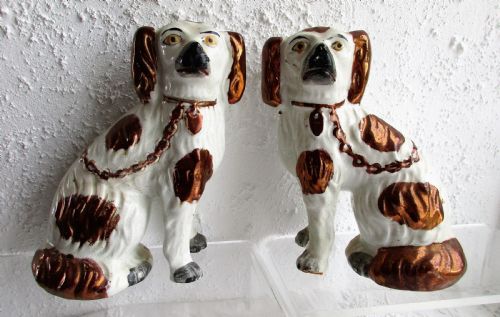
When you search for staffordshire king charles spaniels, you encounter decorative figures that traditionally sat upon Victorian hearths and mantelpieces in pairs. The versions most commonly met on this page are ceramic and earthenware seated dog figurines, often finished with painted details or glaze.
The selections span various periods including the nineteenth century, with distinctive styles such as Victorian and Georgian. Alongside traditional ceramic figurines, related forms like Toby jugs and enamel snuff boxes occasionally appear within the inventory.
These mantle dogs serve purely decorative purposes, historically modelled to mimic the beloved pets of royalty and the landed gentry. Buyers generally find pairs facing inwards towards each other, designed to sit symmetrically on either side of a fireplace.
How They Were Made
Potters shaped these earthenware and ceramic figures using moulds before firing them in kilns to create a solid body. Artisans then applied glazes to seal the porous clay and provide a smooth surface finish.
Listings feature items spanning the eighteenth, nineteenth, and twentieth centuries, incorporating materials like copper lustre, gold paint, and earthenware.
What Varies in Quality
The consistency and depth of the glaze also indicate the standard of manufacture, with smoother, more even surfaces generally representing higher craftsmanship. Additionally, crispness in the moulding determines how sharply defined the fur texture and overall anatomy appear.
Royal Doulton·Beswick
The Staffordshire King Charles Spaniels Glossary
- Earthenware
- A porous type of pottery fired at relatively low temperatures. It requires a vitreous glaze to render it waterproof.
- Copper lustre
- A metallic pottery glaze containing copper that produces a reflective, coppery sheen upon firing. It appears on various decorative ceramics.
- Enamel
- A glassy substance fused to metal surfaces through firing to provide colour and decoration. It is found on small portable items like snuff boxes.
- Gilt
- A thin layer of gold applied to the surface of ceramics or other materials for ornamentation. It accentuates specific details such as chains and lockets.
Staffordshire King Charles Spaniels: Frequently Asked Questions
Why were Staffordshire spaniels made in pairs?
Potters created these dogs as pairs so they could sit symmetrically at either end of a fireplace mantelpiece. This balanced arrangement suited the formal interior design tastes of nineteenth-century homes.
Displaying them facing one another mirrored the traditional domestic placement on either side of the hearth, which remains the preferred way to exhibit them today.
How do I clean antique ceramic dogs?
Dust these figures gently with a soft, dry brush to prevent the accumulation of dirt within the crevices of the glaze. Avoid using water or chemical cleaners, as moisture can damage fragile hand-painted enamel and gilt details.
Handling them infrequently and keeping them away from direct sunlight protects both the ceramic body and the surface decoration from degradation.
Are all Staffordshire dogs spaniels?
While the king charles spaniel is the most common breed represented in this category, potters also modelled other canine types and occasional novelty animals. Collectors often group various nineteenth-century ceramic dogs under the general Staffordshire heading.
Different breeds and companion animals shared similar production techniques and display purposes during the Victorian era.
What is a comforter spaniel?
Comforter spaniels refer specifically to the small toy spaniels kept by nobility as lapdogs and comforting companions. Staffordshire potters replicated these popular pets in ceramic form for households that could not afford live pedigree animals.
The name links the mantelpiece ornaments directly to the real-life lapdogs favoured by Queen Victoria and her contemporaries.