



Victorian Silver Mounted Pitcher
A victorian silver mounted pitcher brings dramatic sparkle and refined ceremony to the dining table through its union of brilliant glass and precious metal.
Victorian Silver Mounted Pitcher
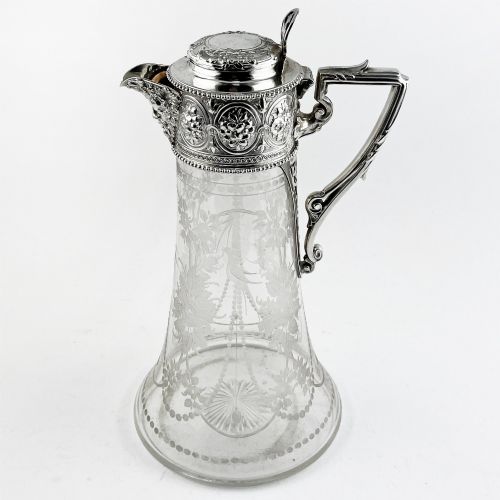
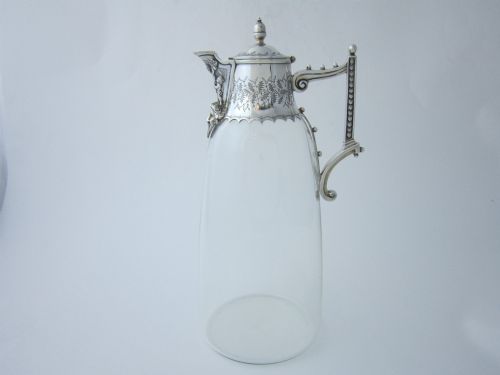
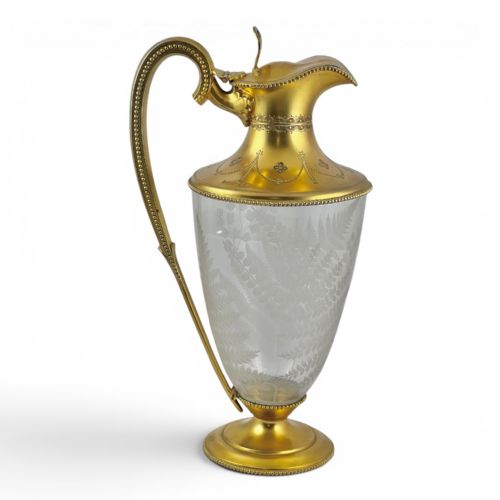
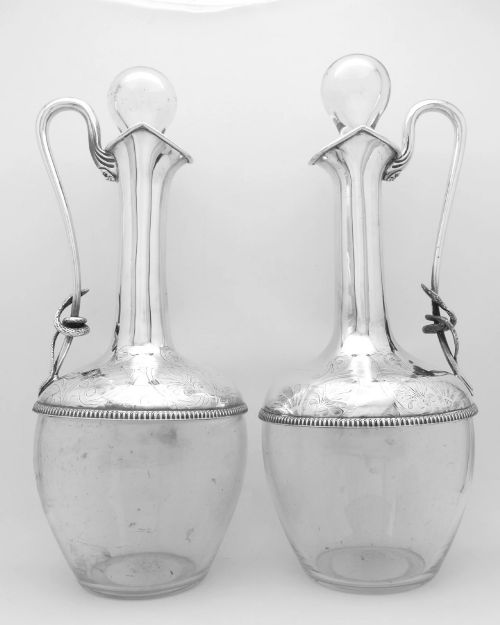
When you search for a victorian silver mounted pitcher, you are looking at sophisticated serving vessels created for wine, water, and lemonade during the nineteenth and early twentieth centuries. The selection on this page centres predominantly on claret jugs and decanters that pair glass bodies with sterling silver or silver plated mounts.
Makers and manufacturers produced these objects in diverse forms, ranging from tall floral engraved ewers to novelty figures and vessels featuring ice tubes. The styles span the Victorian, Edwardian, and Art Nouveau periods, incorporating aesthetic movement influences and French rococo revival details.
How they were made
The construction of these vessels relies on combining blown or moulded glass bodies with fitted metal mounts. Craftsmen utilised clear, cut, etched, and cranberry glass, shaping the vessels into claret jugs, water jugs, and wine decanters.
Mounts, handles, and hinged covers were fashioned from sterling silver or silver plate, frequently incorporating detailed casting and chasing. Artisans secured these metal collars firmly to the glass necks, often integrating elaborate spouts and serpent or bacchus mask handles.
Materials recorded across the inventory include sterling silver, silver plate, cut crystal, etched glass, and cranberry glass.
What varies in quality
Material choice also dictates the tier of the piece, with solid sterling silver mounts and heavy cut crystal or cranberry glass representing the higher end of production. Furthermore, attributed designs from notable firms or progressive designers exhibit superior sculptural ambition compared to standard commercial output.
Asprey and Co. Ltd·Mappin and Webb·Elkington and Co·Hukin and Heath·Dr Christopher Dresser
The Victorian Silver Mounted Pitcher Glossary
- Claret jug
- A specialised pouring vessel designed specifically for serving claret or red wine at the table. These pieces typically feature a hinged metal lid and a handle.
- Silver plate
- A manufacturing technique where a thin layer of silver is fused to a base metal, such as copper or nickel silver, to provide the appearance of solid silver. This method allowed makers to produce elaborate vessels at a more accessible cost during the nineteenth century.
- Bacchus mask
- A decorative motif depicting the face of Bacchus, the Roman god of wine, often adorned with grapes and vine leaves. This classical emblem frequently decorates the spouts or mounts of wine jugs.
- Cut crystal
- High-clarity glass that has been meticulously cut and polished by hand to create multifaceted geometric or floral patterns. The facets refract light brilliantly when filled with wine or water.
- Ice tube
- A central metal cylinder fitted inside a jug to hold ice, chilling the beverage without diluting it. This functional addition appears on specific lemonade and punch pitchers.
Victorian Silver Mounted Pitcher: Frequently Asked Questions
What is a victorian silver mounted pitcher used for?
These vessels were primarily designed for serving claret, wine, water, or lemonade during formal dining and entertaining in the nineteenth century. They brought both utility and decorative elegance to the sideboard.
Today, they function brilliantly as sophisticated decanting vessels for contemporary dining or as striking decorative display objects in a cabinet.
How do I distinguish between silver plate and sterling silver?
Sterling silver mounts carry official British hallmarks indicating the assay office, date letter, and standard of purity. Silver plated versions typically display maker marks or manufacturer stamps that denote plated wares rather than solid precious metal.
Examining the high points of the mounts can also reveal whether the underlying base metal has begun to show through the silver layer over time.
How do I tell Victorian pieces from Edwardian ones?
Victorian examples often lean towards heavier ornamentation, such as elaborate floral engraving, rococo revival curves, or naturalistic bacchus and serpent motifs. The materials frequently include rich cranberry glass and heavily chased silver mounts.
Edwardian pieces tend to introduce cleaner lines, simpler geometric cut glass, and occasional influences from the Art Nouveau style or functional modernist designs.