



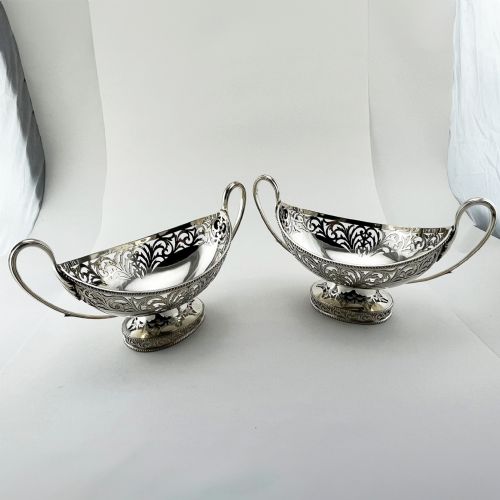


Victorian Silver Bonbon Dishes
Victorian silver bonbon dishes bring small-scale elegance to a table, combining pierced metalwork with coloured glass liners.
Victorian Silver Bonbon Dishes
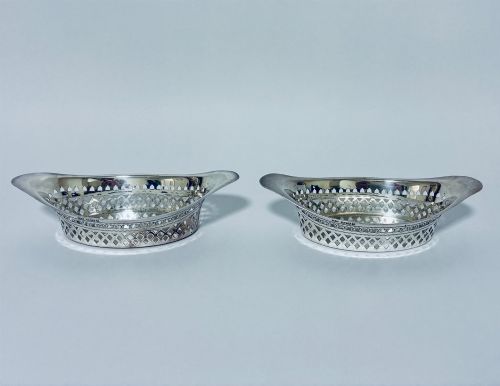
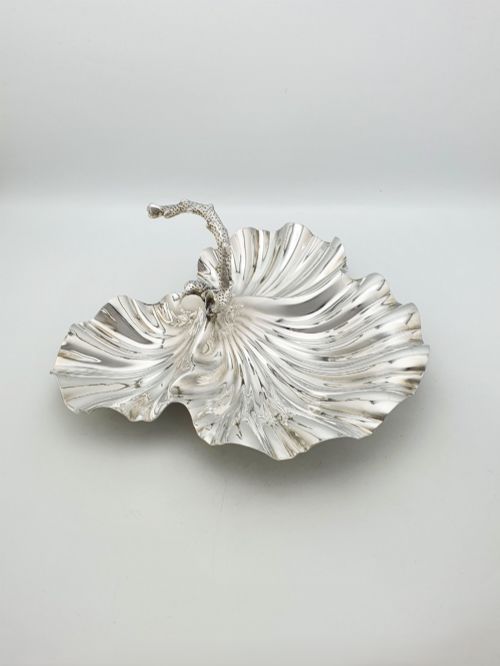
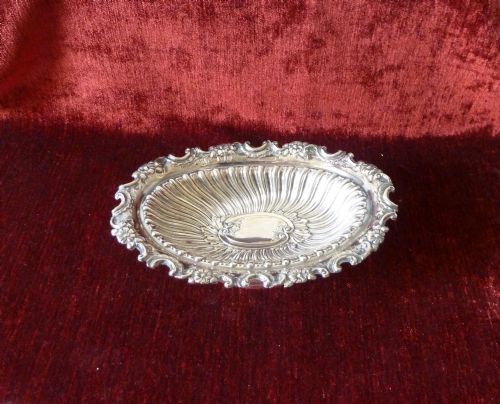
When you search for Victorian silver bonbon dishes, you encounter an array of small open vessels designed for sweetmeats, sugar, and preserves. The pieces on this page span the mid nineteenth century into the Edwardian era, encompassing diverse forms such as handled baskets, shell dishes, and oval serving bowls.
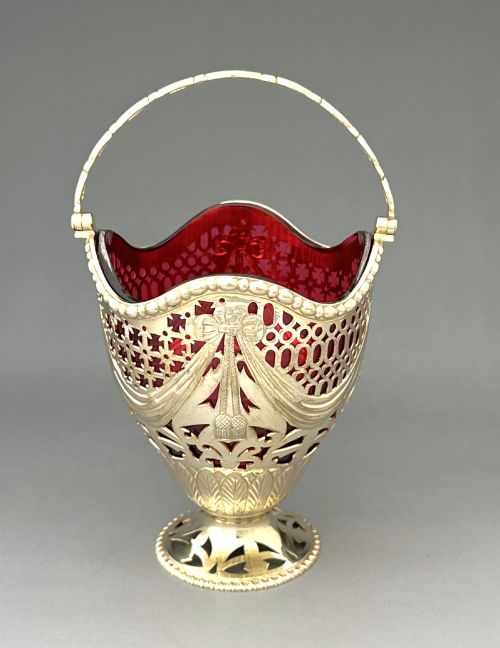
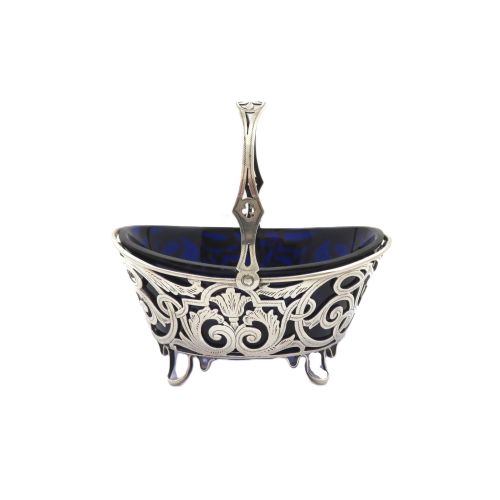
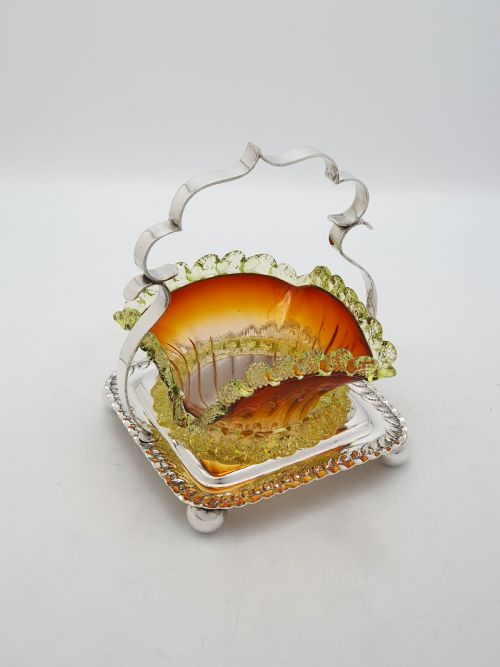
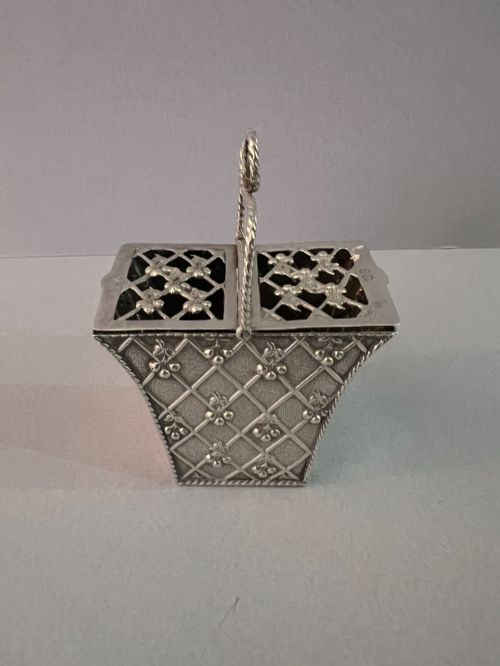
You are most likely to meet sterling silver and silver plated examples paired with colourful glass inserts. Cranberry glass, amber glass, and vaseline glass liners appear frequently within pierced or embossed metal frames, alongside solid silver dishes shaped with floral handles or wickerwork patterns.
The origins of these items stretch from London and Birmingham workshops to Sheffield makers and continental designs. Whether formatted as sweet bowls, potpourri baskets, or condiment stands, they reflect late nineteenth century dining habits focused on decorative table presentation.
Materials and technique
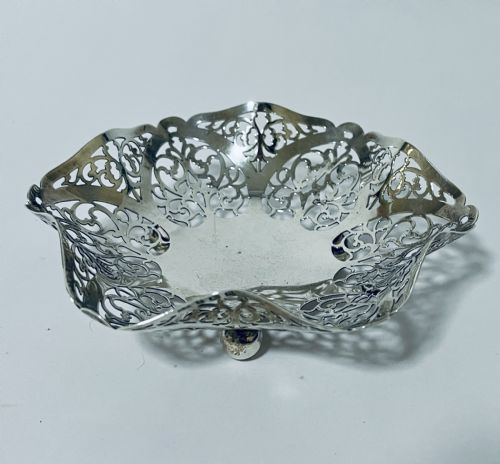
Makers utilised sterling silver and silver plate as the primary structural foundations, often applying silver gilt to achieve a rich, golden interior surface. Piercing, embossing, and cast detailing transformed sheet metal into intricate openwork baskets and shell motifs.
Glass production played an equal role in these pieces, incorporating cranberry, ruby, amber, and vaseline glass for removable liners and frilled dishes. Master craftsmen combined these blown or moulded glass elements with metal frames secured by swing handles or fixed reeded mounts.
Evaluating quality
The distinction between standard production and superior craftsmanship rests in the depth of hand-embossing and the crispness of pierced metalwork. Heavier gauge silver and fully articulated cast floral handles separate the finest workshop outputs from simpler stamped variants.
The integration of the glass liner defines another tier of quality, particularly where original cranberry or vaseline glass fits the silver frame without movement. Pieces bearing clear hallmarks from notable makers command attention for their documented provenance and precision of assembly.
William Comyns·Thomas Bradbury·James Deakin and Sons·Martin Hall·Roberts and Belk·Edward H Stockwell·W M F·George Fox·Minshull and Latimer
The Victorian Silver Bonbon Dishes Glossary
- Bonbon dish
- A small open container used for holding sweets, sugar, or confections during dessert courses. These items frequently appear with swing handles or rests.
- Silver gilt
- Silver that has been coated with a thin layer of gold on its surface. This technique provides a warm, two-tone appearance inside bowls and baskets.
- Vaseline glass
- A type of glass coloured with uranium dioxide that exhibits a distinctive yellow-green hue. It glows under ultraviolet light and commonly forms the liners of Victorian dishes.
- Piercing
- A metalworking technique where patterns are cut out from the sheet metal to create openwork designs. Victorian silversmiths utilised this method extensively for floral and geometric friezes.
- Sweetmeat basket
- A small handled vessel traditionally used for serving preserved fruits and sweetmeats. These pieces often feature glass inserts protected by ornate metal frames.
Victorian Silver Bonbon Dishes: Frequently Asked Questions
What were bonbon dishes used for?
Victorian households placed these small dishes on dining tables to hold sweets, sugared almonds, and small confections during dessert courses.
They also served as sugar baskets or preserve holders, adding ornamental colour to the tea table alongside matching glass liners.
How do I identify a Victorian silver piece?
Examination of the metal surface reveals hallmark stamps indicating the assay office, such as London or Birmingham, alongside a date letter for the year of production.
Sterling silver marks differ from silver plate stamps, which typically denote secondary plating techniques rather than solid precious metal.
Are the glass liners original?
Many surviving pieces retain their original cranberry, vaseline, or amber glass liners, which were individually blown to fit the specific contours of the metal basket.
Checking for consistent wear between the glass base and the interior metal helps confirm whether the insert belongs to the original manufacturing period.
How should I clean silver bonbon dishes?
Maintenance requires gentle washing of glass liners in warm soapy water while keeping moisture away from lined felt bases if present.
Silver surfaces benefit from occasional treatment with a non-abrasive polish applied with a soft cloth to preserve delicate embossed details.