



Pierced Sterling Silver Baskets
Pierced sterling silver baskets bring openwork metal and glass liners to the table across Georgian, Victorian, and Edwardian periods.
Pierced Sterling Silver Baskets
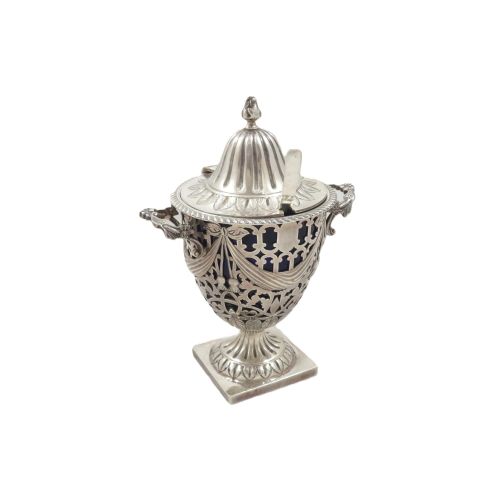
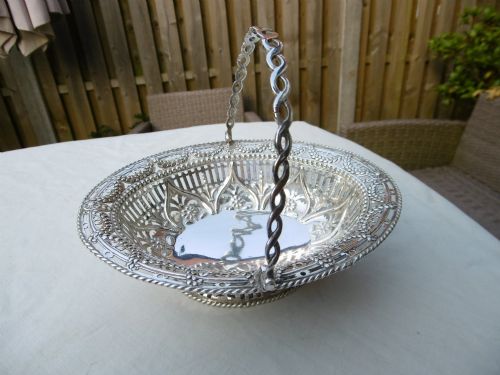
Pierced sterling silver baskets appear in forms such as sugar baskets, bonbon dishes, bread baskets, and centrepiece bowls. They date from the Georgian period through the Victorian and Edwardian eras into the 1930s.
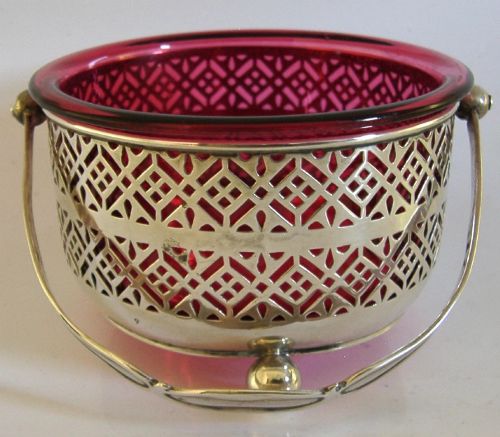
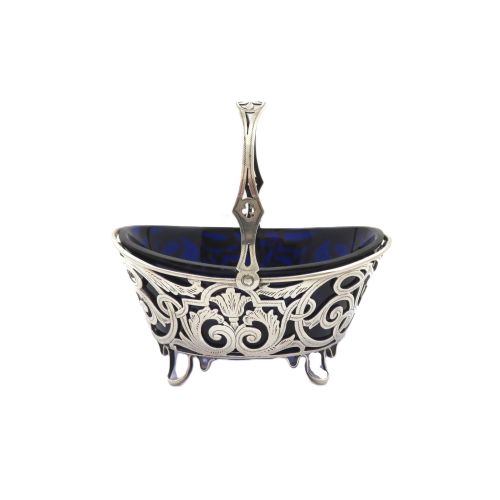
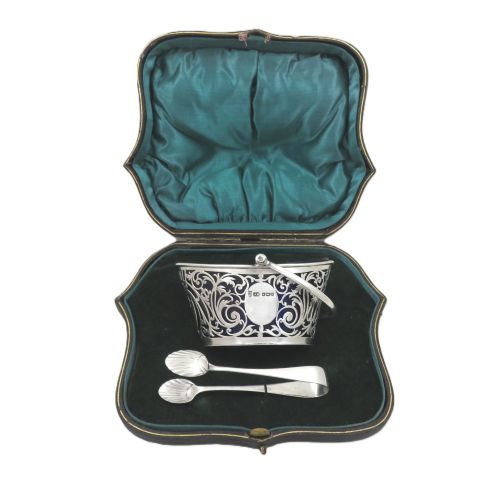
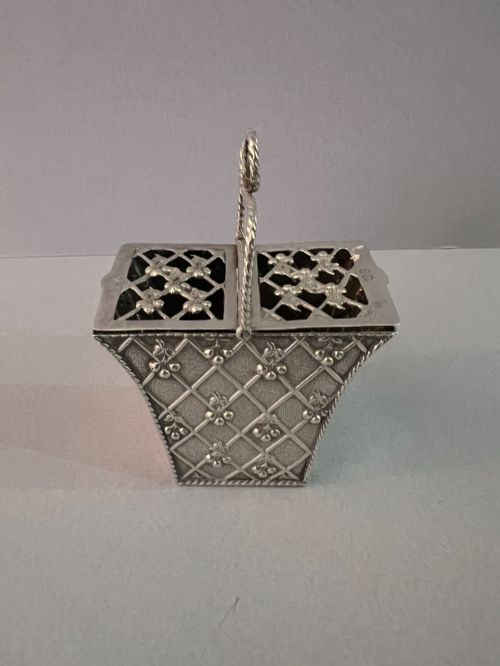
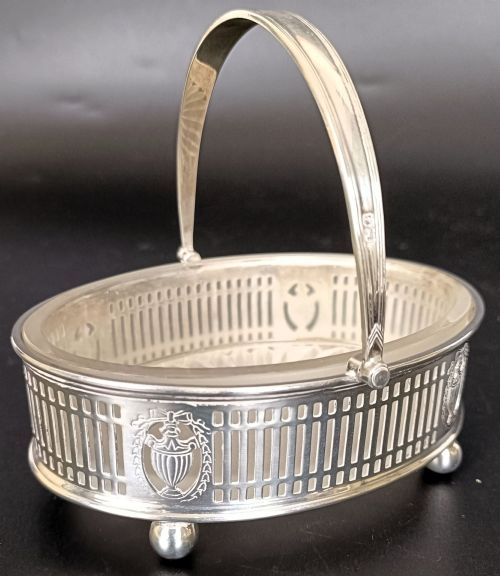
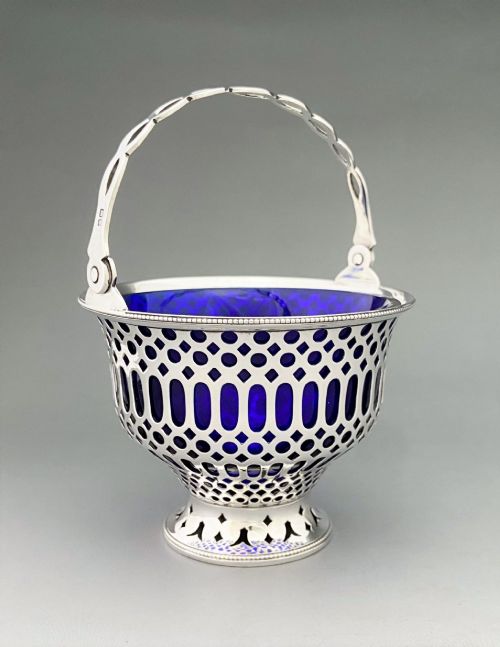
The most common examples on this page are Edwardian and Victorian pieces featuring lattice, fretwork, and pierced-work decoration. Many retain swing handles and fitted glass liners in cobalt, ruby, or cranberry colours.
How they were made
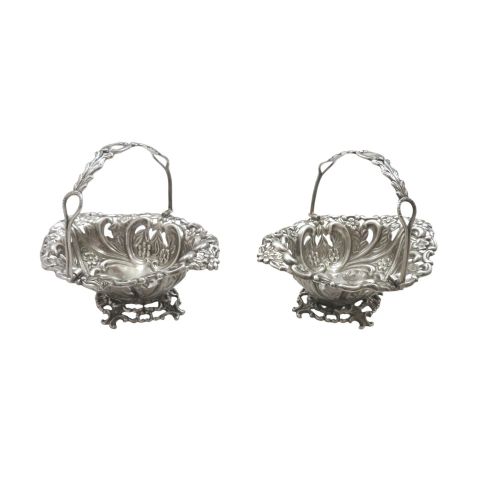
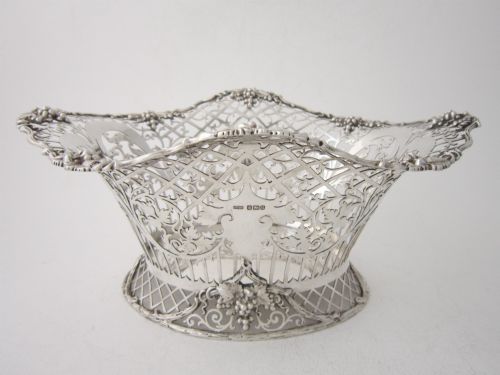
Silversmiths shaped solid silver and sterling silver using techniques of piercing, fretwork, and lattice work to create open metal walls. Cast floral handles and swing mechanisms added structural detail to the pierced bodies.
Makers paired the pierced metalwork with coloured glass liners in cranberry, ruby, and cobalt shades, or finished items with silver gilt.
Materials recorded across the inventory include sterling silver, silver plate, solid silver, and coloured glass.
What varies in quality
Quality rests on the intricacy and precision of the pierced work and fretwork across the silver body. Crisp detail in cast handles and the presence of original coloured glass liners distinguish finer items.
Weight and balance also set pieces apart, from smaller sweetmeat baskets and bonbon dishes to large handled bread baskets and centrepieces.
Aldridge & Green·John Hunt·Fenton Brothers·Joseph Rodgers·Samuel Herbert·William Comyns·Hammond, Creake & Co·William Hutton & Sons·James Dixon & Sons Ltd·Martin Hall·Edward H Stockwell·George Fox
The Pierced Sterling Silver Baskets Glossary
- Pierced-work
- Metal pierced with decorative patterns to form openwork designs. This technique defines the walls of many baskets and dishes on this page.
- Swing handle
- A hinged handle attached to the rim of a basket that moves freely. It appears frequently on Georgian, Victorian, and Edwardian examples.
- Bonbon dish
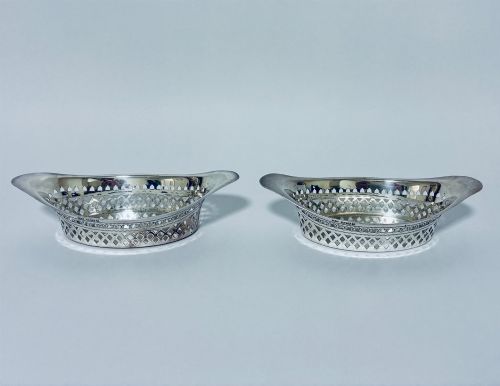
- A small vessel designed for holding sweets or confectionary. These often feature pierced silver walls and match in pairs.
- Silver gilt
- Silver covered with a thin layer of gold on the surface. This finish appears on selected sugar baskets.
Pierced Sterling Silver Baskets: Frequently Asked Questions
What were pierced sterling silver baskets used for?
These vessels served various dining and drawing room functions, holding sugar, bread, fruit, or small confections. Some designs incorporated coloured glass liners to hold items securely.
Larger forms functioned as centrepieces or potpourri containers, while smaller bonbon dishes and sweet stands decorated the table.
How do I date a silver basket?
Hallmarks stamped onto the silver provide the city of assay, the standard mark, and a date letter corresponding to the year of manufacture. Examining the style, such as Georgian neoclassical or Edwardian fretwork, narrows the period further.
Makers' marks also help identify the silversmith and active working decades.
Did all baskets originally have glass liners?
Only specific forms, particularly sugar baskets and certain small dishes, included fitted glass inserts. These liners came in colours like cranberry, ruby, and cobalt glass.
Openwork bread baskets and fruit baskets relied entirely on the solid silver or sterling silver structure without glass.
How should I care for pierced silver?
Gentle cleaning with a soft cloth helps maintain the polish of the sterling silver without harming intricate pierced details. Avoid harsh abrasives that can wear down engraved or fretwork patterns.
Glass liners can be removed and washed separately in warm soapy water.