

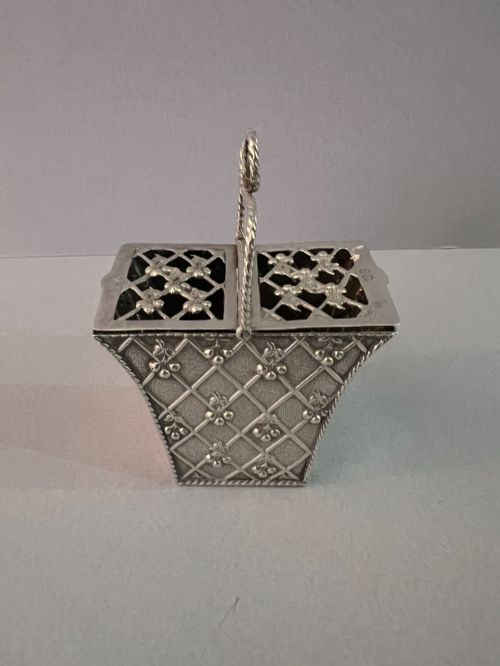

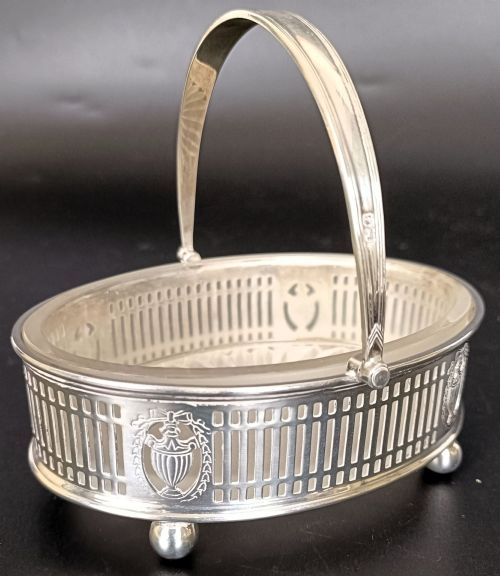
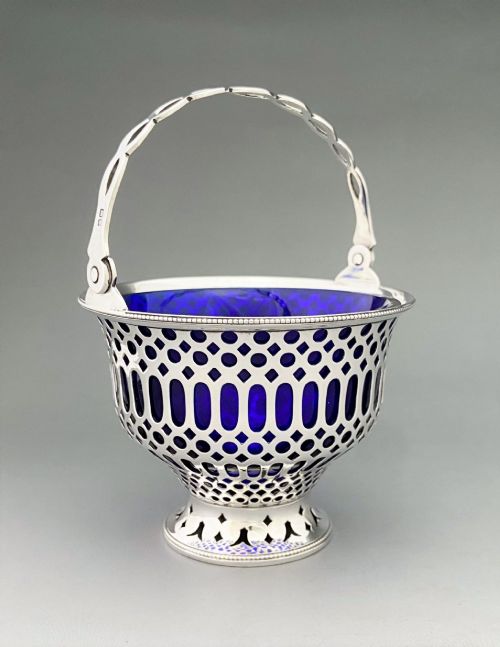


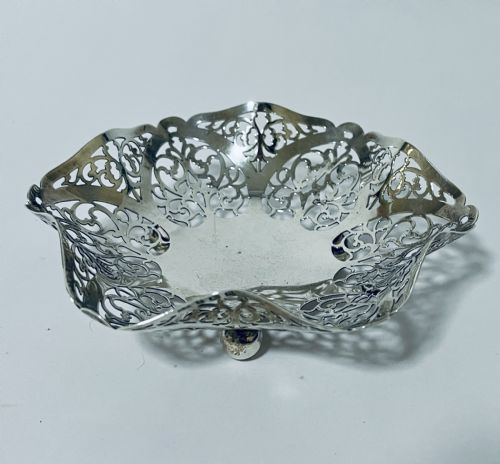
Pierced Silver Sweetmeat Basket
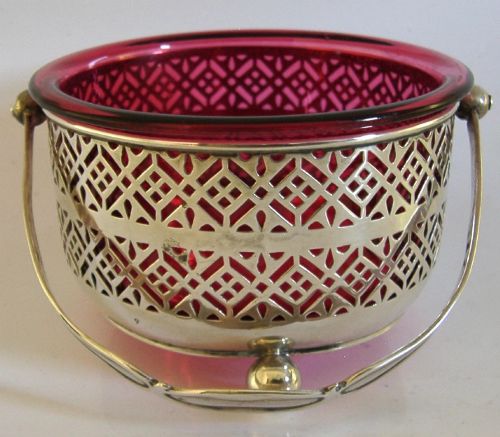
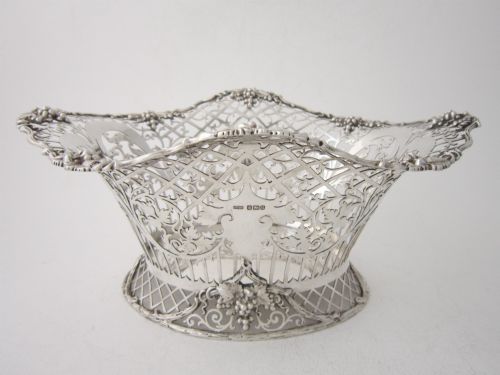
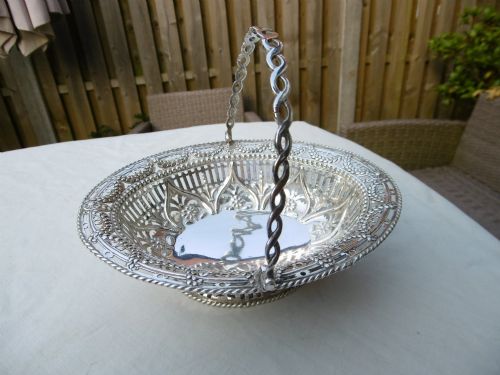
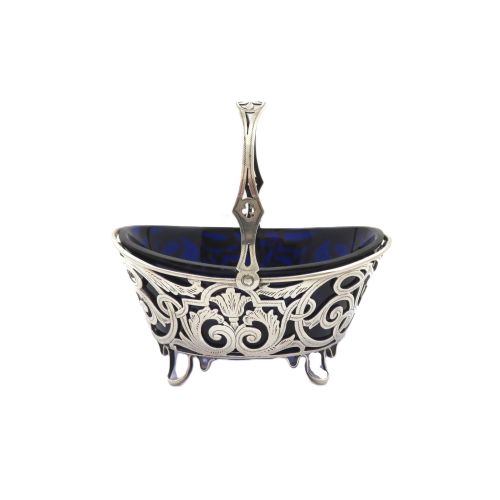
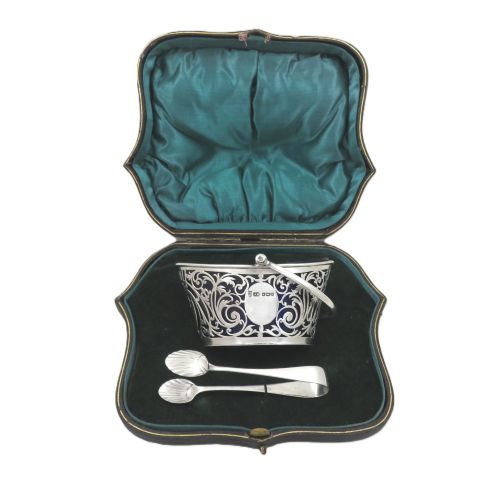
These pieces of pierced silver sweetmeat basket combine delicate metalwork with colourful glass liners to grace a formal dining table.
Pierced Silver Sweetmeat Basket
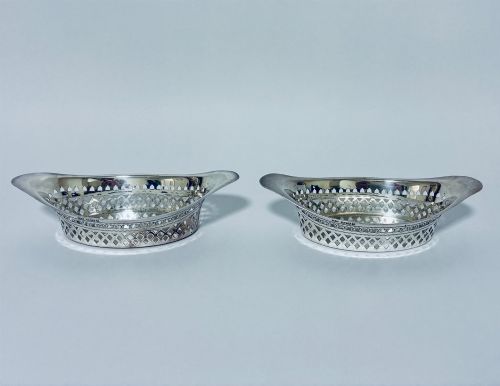
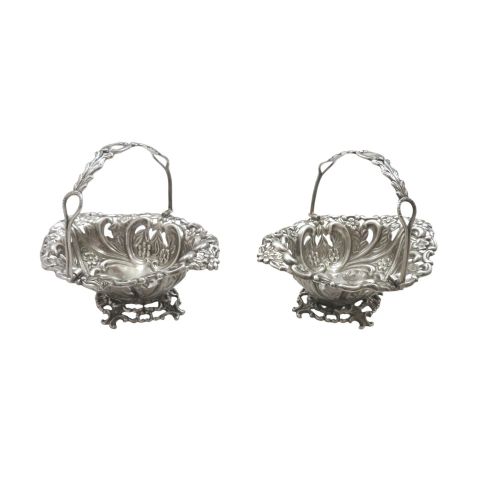
A pierced silver sweetmeat basket serves small confections, fruits, or sugar at the table, taking the form of swing-handled pails, oval bowls, andfooted dishes. These items span from the Georgian period through the Victorian, Edwardian, and Art Deco eras, showing how dining rituals evolved over two centuries.
The version most frequently met on this page is the Edwardian or late Victorian sterling silver basket, often featuring intricate pierced lattice work and a brightly coloured glass insert. Examples range from small bonbon dishes to substantial swing-handled serving vessels made in workshops across London, Birmingham, Sheffield, and Chester.
Materials and Technique
Silversmiths constructed these vessels primarily from sterling silver or silver plate, utilising piercing techniques to cut decorative patterns such as lattices, scrolls, and neoclassical motifs into the metal body. Many examples incorporate cast floral handles, reeded rims, and swing mechanisms to attach the handle securely to the bowl.
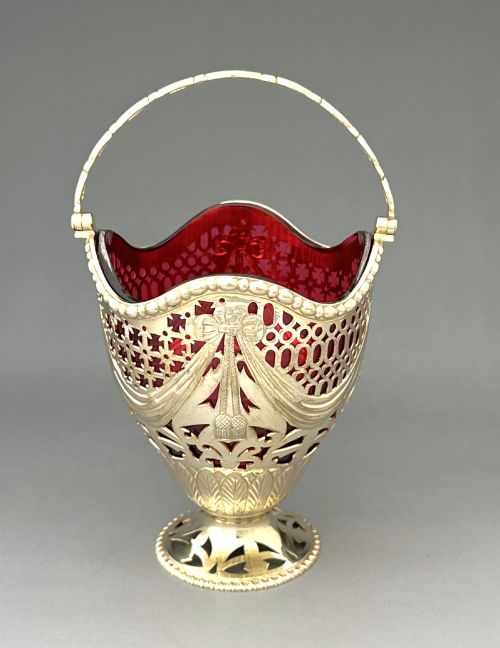
Coloured glass liners in cranberry, cobalt, ruby, or rock crystal frequently accompany the metal baskets, held snugly within the pierced framework to display sweets or potpourri. Some exceptional pieces receive a layer of silver-gilt over the interior, giving a rich golden contrast to the pierced silver exterior.
Materials paired with the silver include cranberry glass, cobalt glass, ruby glass, tortoiseshell, and silver-gilt.
Distinctions in Standard
The fineness and complexity of the pierced work dictate much of the distinction, where hand-cut lattice and detailed chasing demand superior skill compared to simpler stamped designs. Crispness in the casting of handles, feet, and rims separates workshop production from standard commercial output.
The survival and quality of the accompanying glass liner heavily influence desirability, particularly when blown in vibrant cranberry or cobalt hues rather than plain glass. Hallmarks stamped clearly on the silver and the handle provide essential evidence of maker and date, confirming the integrity of the piece.
Aldridge and Green·Thomas Bradbury·Fenton Brothers·William Comyns·James Dixon and Sons Ltd·Martin Hall·William Bond·George Fox·Goldsmiths and Silversmiths Co
The Pierced Silver Sweetmeat Basket Glossary
- Pierced silver
- Metalwork decorated by cutting or piercing patterns through the silver sheet. This technique lightens the weight while creating intricate visual designs.
- Swing handle
- A movable handle attached to opposing sides of a basket via pivots. It drops to the side when the dish sits on the table.
- Sweetmeat basket
- A small vessel designed for serving sweet delicacies, nuts, or preserves after a meal. They frequently include coloured glass liners.
- Silver-gilt
- Sterling silver that has been coated with a thin layer of gold on the surface. This finish protects the interior from corrosive foods and adds a warm tone.
- Hallmark
- A series of official marks stamped onto silver items indicating the maker, assay office, standard of purity, and year of assay.
Pierced Silver Sweetmeat Basket: Frequently Asked Questions
What were sweetmeat baskets used for?
These vessels held sweet confections, dried fruits, nuts, or small biscuits served during dessert courses in formal dining settings. Their open pierced designs allowed guests to view the colourful contents or the vibrant glass liners held inside.
They also functioned as containers for potpourri, releasing fragrance through the pierced metal walls when placed in parlours or drawing rooms.
How do I identify a Georgian basket?
Georgian examples, dating from the eighteenth century, often exhibit neoclassical motifs, Adam style swags, and fine hand-pierced work produced by makers such as William Bond or London silversmiths. They generally rely on heavier gauge silver and carry crisp, older style hallmarks.
Examining the swing handle attachments and the footed base helps distinguish these earlier hand-forged pieces from later mass-produced Edwardian or Victorian equivalents.
Are glass liners original?
Many baskets retain their original blown glass liners in cranberry, ruby, cobalt, or clear rock crystal, shaped specifically to fit the interior curves. Because glass is fragile, replacement liners occur frequently in antiques of this age.
Checking for correct fit against the pierced walls and observing minor bubbles or wear marks helps determine whether the glass matches the period of the silver basket.
How should I clean silver baskets?
Gentle washing with warm soapy water and a soft cloth removes dust from the pierced lattice work without harming the metal. Avoid harsh abrasive dips that strip away the subtle patination built up over decades.
If the piece has a glass liner, remove it before cleaning the silver and dry all crevices thoroughly to prevent moisture damage.