



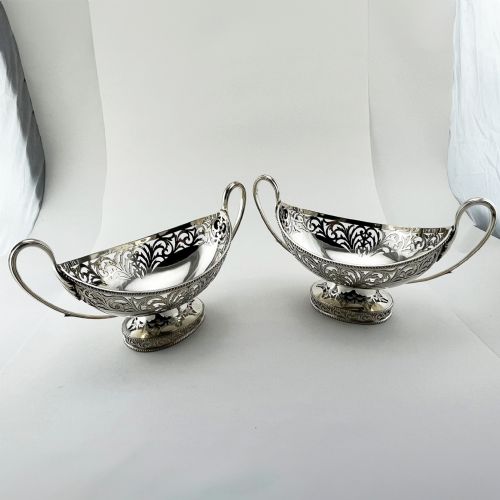


Victorian Silver Bonbon Dish
A victorian silver bonbon dish brings delicate confectionery to the dining table with pierced metalwork and glass inserts.
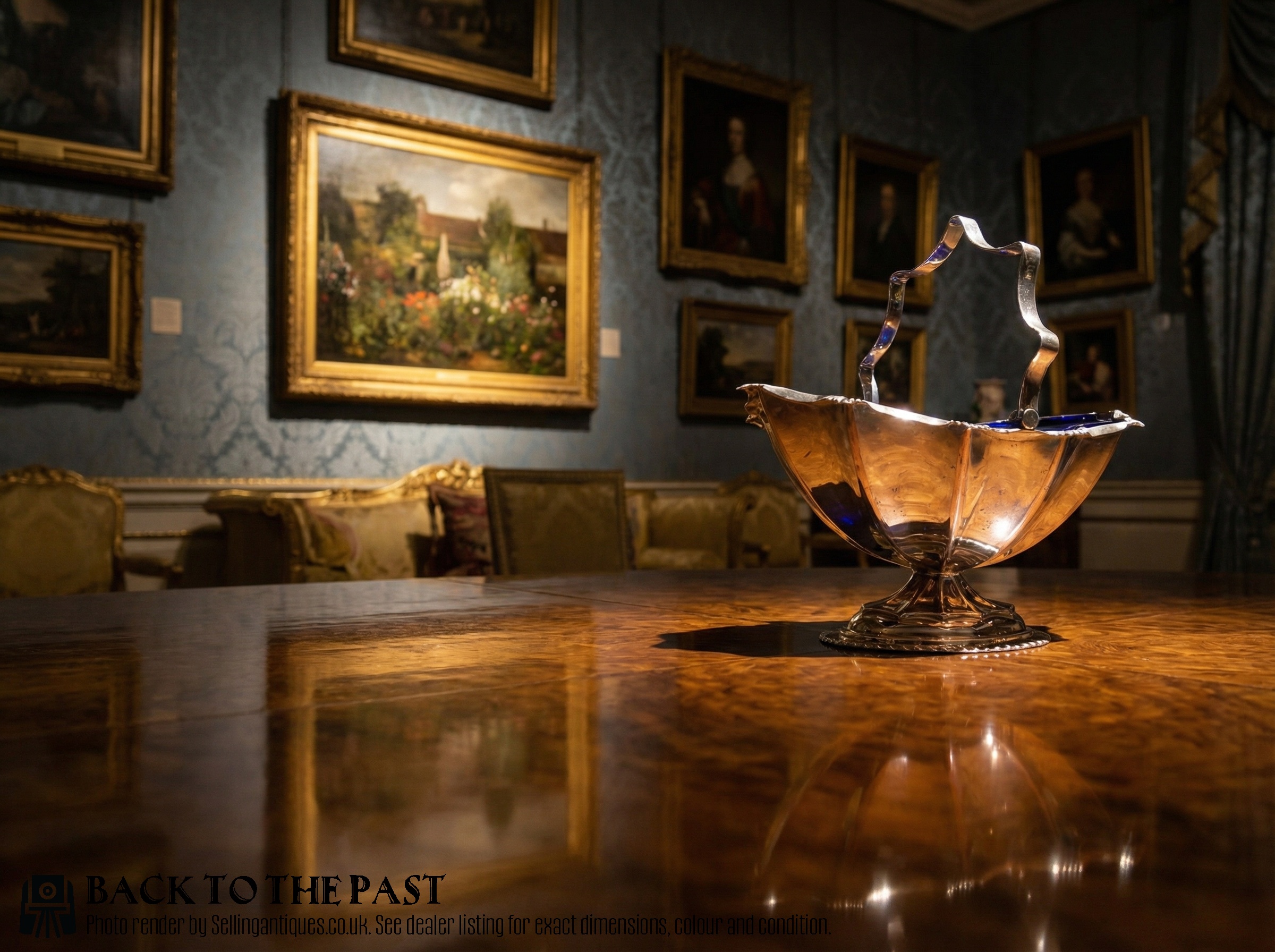
Victorian Silver Bonbon Dish
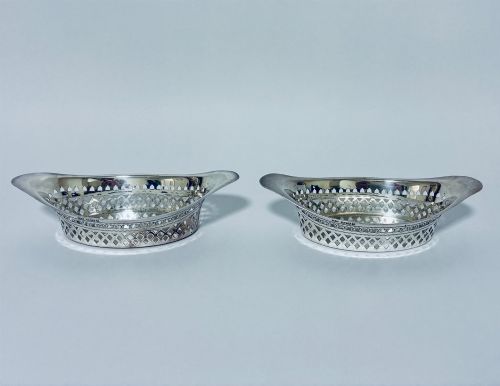
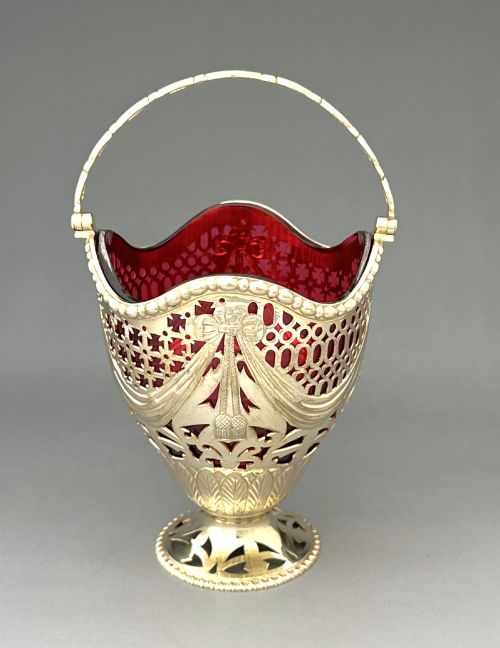
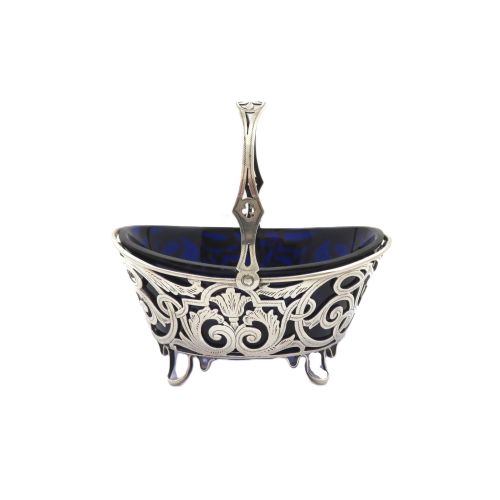
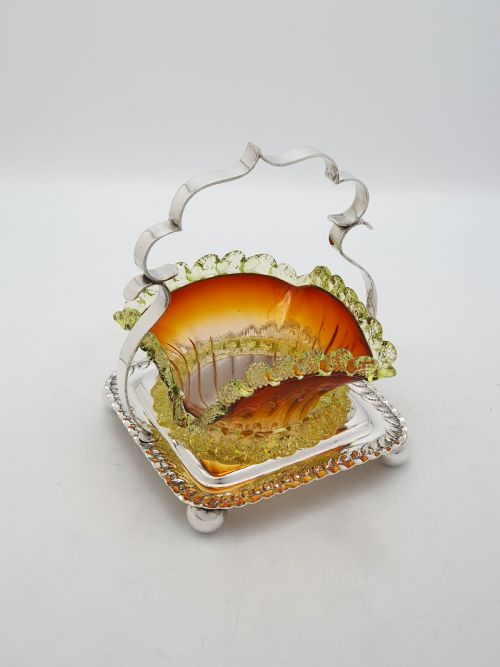
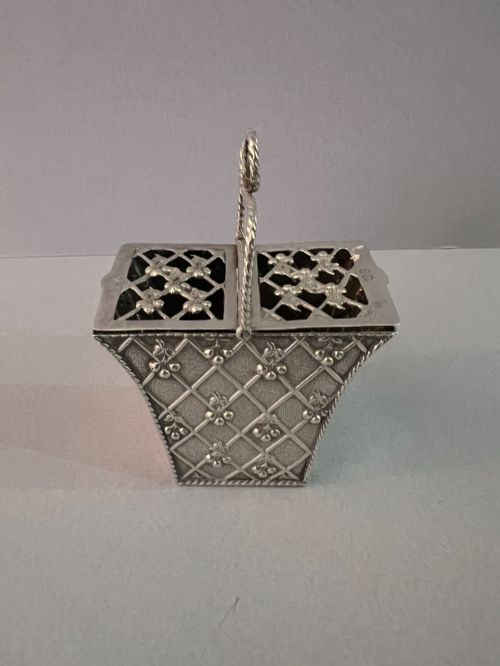
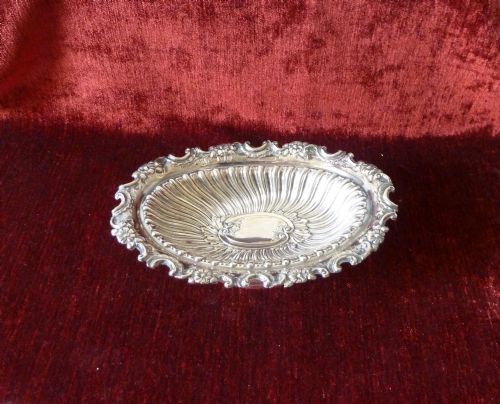
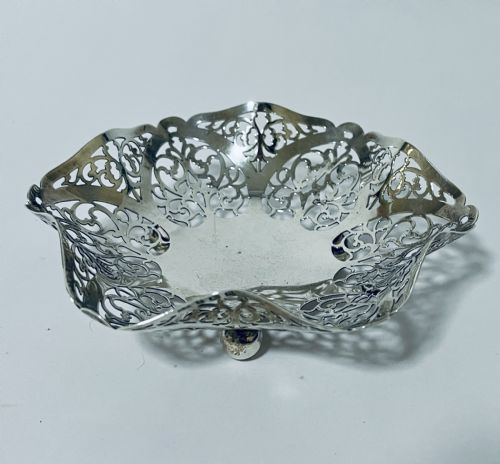
A victorian silver bonbon dish is typically encountered as a small decorative bowl, basket or sweetmeat stand designed for holding confectionery, nuts or small treats on the table. The pieces found here span the Victorian era alongside Edwardian interpretations, taking the form of swing-handled baskets, heart-shaped trinket dishes and pierced oval serving vessels.
Makers frequently combined sterling silver or silver plate with coloured glass liners in cranberry, amber or vaseline tones. Alongside dedicated bonbon dishes, the selection encompasses sugar baskets and miniature sweetmeat stands sharing the same decorative vocabulary.
Materials and Technique
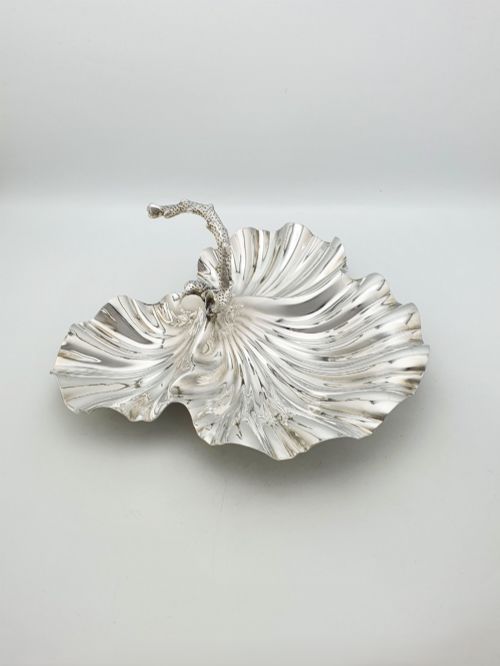
Smiths shaped sterling silver and silver plate through piercing, embossing and casting, producing intricate wickerwork patterns, cast floral handles and stylised coral motifs. Piercing required steady handiwork to remove metal cleanly and form geometric or organic lattice designs.
Glass liners were blown or moulded to fit the metal frames snugly, particularly in vibrant cranberry and vaseline shades that contrasted with polished silver or silver gilt surfaces.
Some delicate sweetmeat baskets feature handles modelled as branching coral or woven wickerwork rendered entirely in solid silver.
Distinctions in Execution
Quality rests upon the crispness of the chasing and the precision of the pierced metalwork, where finer pieces exhibit sharp, deep botanical details rather than soft, shallow stamping. The weight of the silver and the structural integrity of swing handles or soldered feet also separate standard production items from distinguished silversmith output.
William Comyns·Thomas Bradbury·James Deakin And Sons·Martin Hall·Roberts And Belk·Edward H Stockwell·George Fox·Minshull And Latimer·Charles Stuart Harris
The Victorian Silver Bonbon Dish Glossary
- Bonbon dish
- A small ornamental vessel intended for serving sweets, bonbons or small confections during formal dining.
- Silver gilt
- Silver that has been coated with a thin layer of gold on its surface, providing a rich internal or external finish.
- Pierced
- Metalwork perforated with cut-out patterns to create light, open lattice designs across the body of the dish.
- Cranberry glass
- A rich pinkish-red glass produced by adding gold chloride to the molten batch, frequently used for liners.
- Sweetmeat
- An archaic term for a confection, sweet or candied fruit, reflected in the names of miniature serving baskets.
Victorian Silver Bonbon Dish: Frequently Asked Questions
What were bonbon dishes used for?
These dishes held small sugar-coated almonds, chocolates or spiced nuts served at the conclusion of formal meals or during afternoon gatherings.
They sat centrally on the table or were passed among guests as part of the dessert course.
How do I clean silver with glass liners?
Lift the glass liner completely out of the metal frame before cleaning any part of the object. Wash the glass separately in warm soapy water and use a soft cloth with appropriate silver polish on the metal.
Avoid submerging combined pieces so that moisture does not become trapped between the liner and the basket.
What is the difference between sterling and silver plate?
Sterling silver consists of a solid alloy containing a high standard of pure silver throughout the entire object. Silver plate involves a thin layer of silver bonded to a base metal core, such as copper or brass.
Hallmarks stamped directly into the metal typically identify solid sterling pieces.
How can I tell the period from the style?
Victorian examples often feature dense floral chasing, naturalism or traditional Rococo Revival scrolls. Pieces shifting into the Edwardian period and Art Nouveau embrace whiplash lines, organic asymmetry and swing handles.
Assay office marks and date letters stamped on the silver provide definitive confirmation of the production year.