





Victorian Salt Spoons
Victorian salt spoons are small silver or plated utensils designed for open cellars, prized for their fine detail and historical dining customs.
Victorian Salt Spoons
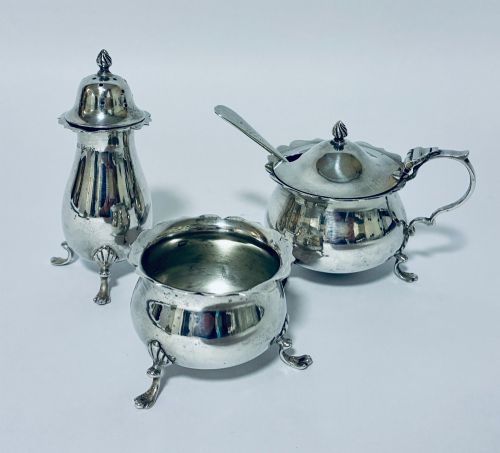
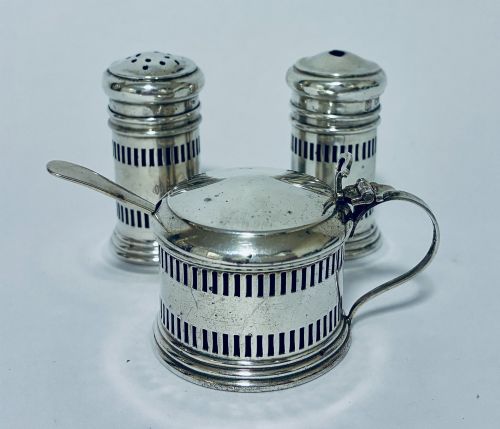
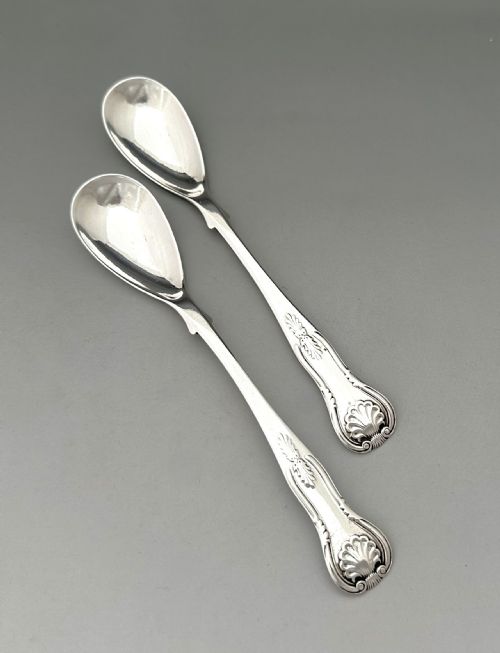
When searching for victorian salt spoons, buyers encounter diminutive utensils created to serve individual open salt cellars at the dining table. These pieces appear both as matched sets alongside silver bowls and as single survivals from larger cruet services.
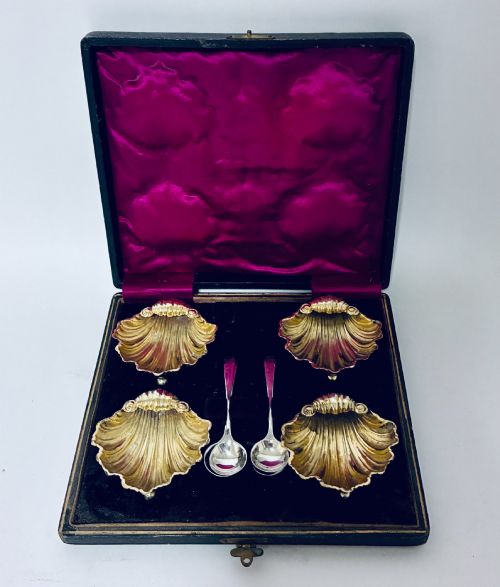
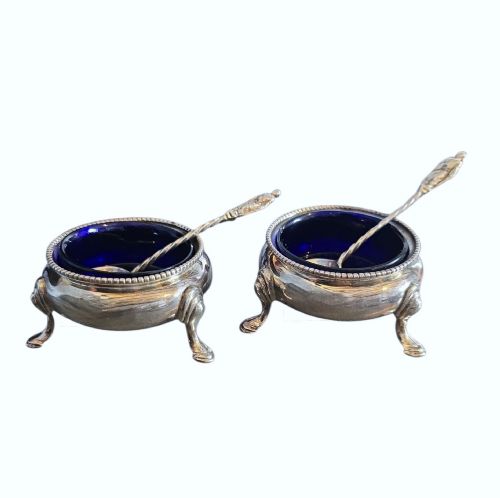
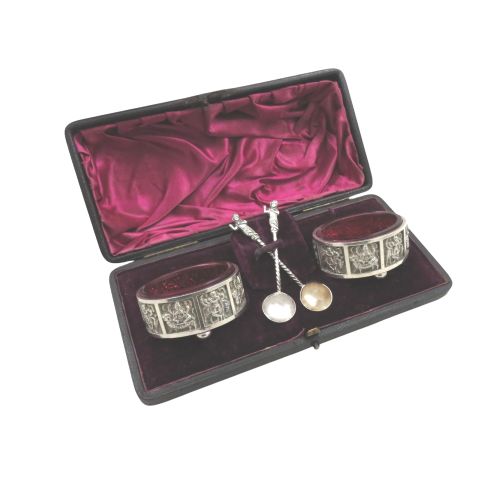
The most common examples on this page date from the nineteenth century, encompassing styles from early Victorian designs through to Aesthetic Movement and Russian Revival pieces. Many feature alongside cobalt glass liners, velvet or silk lined cases, and matching salt cellars.
Formations vary from standard shovel and spoon shapes to novelty designs such as birds, swans, and Hindu deities. Makers utilised sterling silver and silver plate, occasionally pairing them with coloured glass and enamel work.
Materials and construction
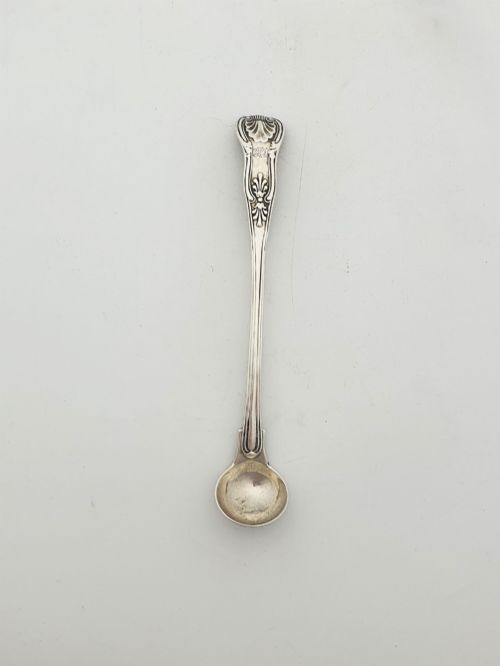
Silversmiths primarily worked with sterling silver and silver plate, shaping the metal through casting, hammering, and piercing techniques. Handles often display detailed chased work, engraving, or cloisonne enamelling.
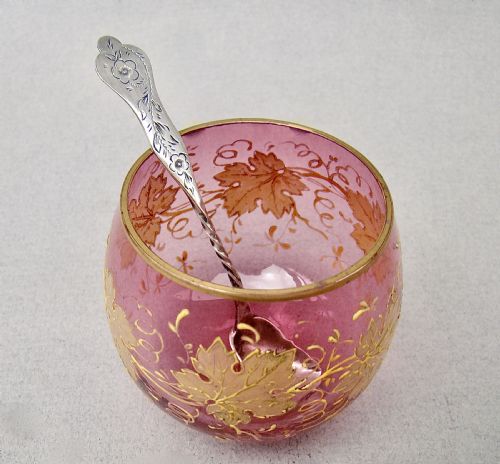
Specialist items incorporate contrasting elements like cobalt glass liners, cranberry glass, and fitted cases lined with silk, velvet, or leather. Metal components frequently carry hallmarks indicating the assay office, year, and maker.
Victorian Salt Spoons Retail Price Guide 2026
Typical asking prices for victorian salt spoons among the pieces listed under this phrase on Sellingantiques today, from the lower quarter to the upper quarter. They describe what is for sale here now, not the wider market.
Some Victorian diners seasoned their meals using silver spoons shaped like swimming swans, hunting birds, and Hindu deities.
Judging quality in silver salt spoons
Quality rests on the crispness of the chasing and the weight of the metal used in the bowl and stem. Superior examples maintain clear, legible hallmarks and retain their original gilding or fitted presentation cases.
Novelty forms and pieces associated with named makers or specific aesthetic movements demonstrate higher craftsmanship than standard utility salt spoons. The survival of matching pairs or complete boxed sets elevates the standing of individual pieces.
Beare Falcke·Hamilton and Inches·Vale Brothers and Sermon·Michael Alexandrovich Romanov
The Victorian Salt Spoons Glossary
- Open salt
- A small tabletop bowl used before free-flowing table salt was invented. Guests used salt spoons to transfer granules to their plates.
- Cruet set
- A matched collection of bottles, jars, and open salts held in a frame or box. These sets included condiment spoons and mustard pots.
- Cobalt glass
- A deep blue glass used for liners inside silver salt cellars. The intense colour shows clearly beneath pierced silver work.
- Cloisonne
- An enamelling technique where thin metal wires form compartments on a silver base. Coloured glass paste fills these spaces before firing.
- Hallmark
- A stamped mark on silver guaranteeing the metal standard. These stamps reveal the assay town, date letter, and maker's mark.
Victorian Salt Spoons: Frequently Asked Questions
How were salt spoons used?
Diners used them individually at the table, taking salt from shared cellars and placing it beside their food. Because salt corrodes metal over time, users washed and dried the spoons carefully after meals.
They formed part of formal dining arrangements, often resting in velvet-lined presentation cases alongside silver salt cellars.
How do I date these spoons?
British silver pieces carry hallmarks that indicate the specific year of assay, the town office, and the silversmith's mark. Cross-referencing these stamps provides an exact date of manufacture.
Stylistic cues such as Aesthetic Movement engraving or Russian Revival enamelling also help narrow down the production period.
Are these spoons made of solid silver?
Listings include both sterling silver and silver plate items, alongside pieces featuring coloured glass, enamel, and gilded bowls. Hallmarks stamped directly onto the metal confirm whether an item is solid silver.
Cases often contain silk, velvet, or leather linings to protect the metalwork from tarnishing and damage.