



Victorian Putti Bowl
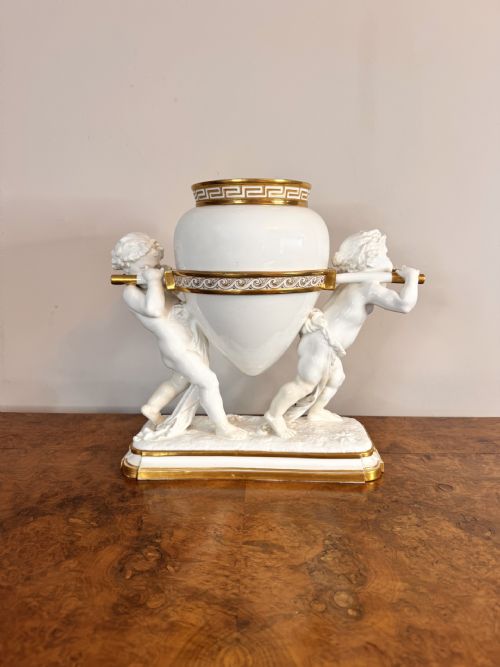
A victorian putti bowl brings figurative charm and grand table presence into a room, combining sculpted cherubs with glass, porcelain or bronze.
Victorian Putti Bowl
A victorian putti bowl sits at the intersection of ornamental sculpture and functional table service, frequently taking the form of a centrepiece, comports or compotes, and centrepiece vases. When people search for a victorian putti bowl, they are looking for nineteenth-century decorative vessels supported or embellished by figures of cherubs or putti.
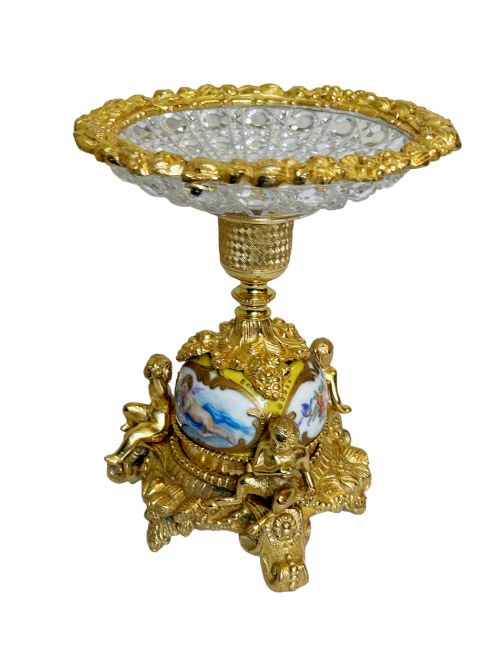
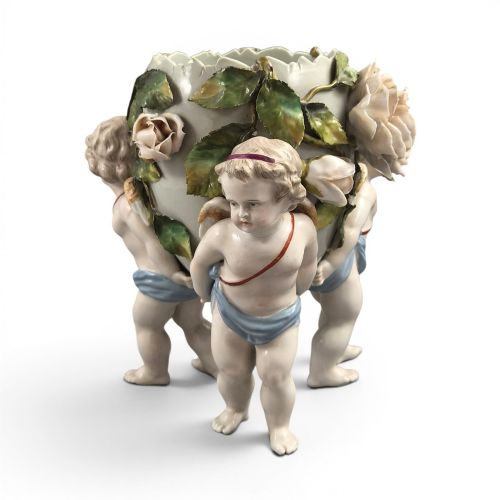
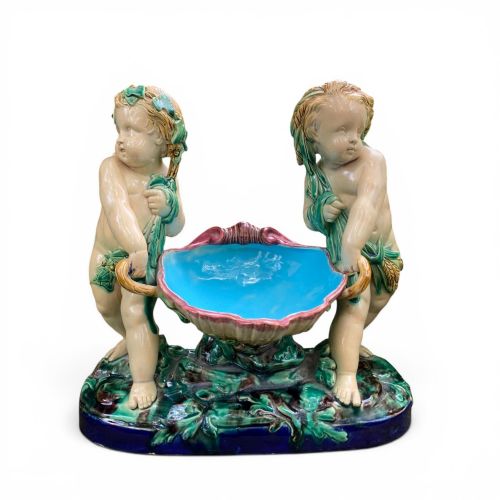
The selections available run from majolica baskets and hard-paste porcelain egg vases to gilt bronze and cut crystal mountings. Origins span English factories like Minton alongside continental European works from Germany and Italy, executed within Victorian, Rococo Revival, and Renaissance Revival styles.
Most examples function as table centrepieces or decorative comports designed to hold fruit or floral arrangements. The cherubs appear climbing the sides, supporting the central basin, or resting upon shells at the base.
How they were made
Makers utilised moulded porcelain, earthenware, and hard-paste ceramic for the figural putti and bowls, often finishing the surfaces with vibrant glazes, enamel, and gold leaf. Modelled figures required careful kiln firing before receiving hand-painted details.
Metal versions combine cast gilt bronze, silver plate, and brass mounts with cut crystal or mother-of-pearl dishes. The structural frames relied on precise metal casting to support the heavy glass and shell basins securely.
Victorian Putti Bowl Retail Price Guide 2026
Typical asking prices for victorian putti bowl among the pieces listed under this phrase on Sellingantiques today, from the lower quarter to the upper quarter. They describe what is for sale here now, not the wider market.
Cherubs occasionally lounge on giant seashells or balance precariously inside musical centrepieces, keeping watch over the fruit.
What varies in quality
Quality rests in the crispness of the modelling in the putti figures and the weight of the supporting bronze or crystal. Finer pieces show subtle facial expressions and detailed hand-painting rather than flat glazes and softened mould lines.
The choice of materials also dictates the standard of the piece, with heavy cut crystal and fire-gilt bronze representing a different tier of craftsmanship from standard earthenware.
Minton·Sitzendorf Porcelain·Plaue Schierholz
The Victorian Putti Bowl Glossary
- Putti
- Plumed or unwinged infant figures, often resembling cherubs, commonly found supporting bowls or climbing the sides of nineteenth-century decorative pieces.
- Comport
- A raised decorative dish or bowl used on a dining table for fruit or sweetmeats, often matching the height of a large centrepiece.
- Majolica
- A type of earthenware coated with an opaque tin glaze and painted with brightly coloured metallic oxide pigments, popular during the Victorian era.
- Gilt Bronze
- Bronze metal coated with a thin layer of gold or gold leaf, used extensively for mounts and structural frames.
- Hard-paste Porcelain
- A durable ceramic composition fired at very high temperatures, producing a dense body and glossy surface characteristic of continental factories.
Victorian Putti Bowl: Frequently Asked Questions
What is a putti bowl used for?
These pieces served as decorative table centrepieces during Victorian dinners, holding fresh fruit, flowers, or sweetmeats.
Today, they function primarily as standalone ornamental displays on sideboards, dining tables, or mantelpieces.
How do I identify a Victorian piece?
Victorian items often display stylistic markers from the Rococo Revival or Renaissance Revival movements, featuring ornate scrolling and classical motifs.
Examining the base material, such as majolica earthenware or cut crystal combined with gilt bronze, helps confirm the nineteenth-century origin.
What is the difference between porcelain and majolica?
Porcelain is a fine, vitrified ceramic fired at high temperatures to achieve a smooth, white body that can be painted with enamel and gold leaf.
Majolica is a heavily glazed earthenware known for rich, saturated coloured glazes and moulded dimensional ornamentation.