


Cherub Compote Dish
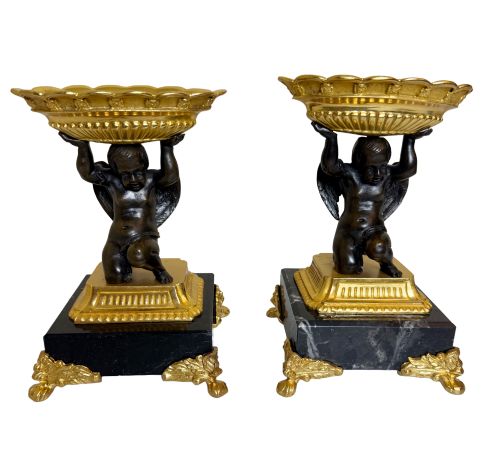
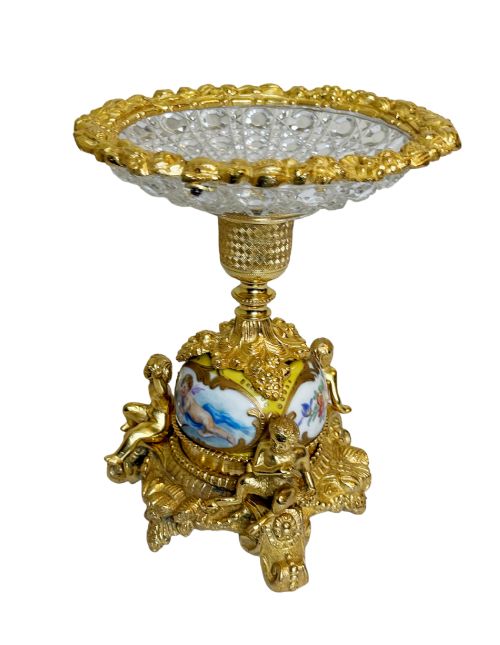
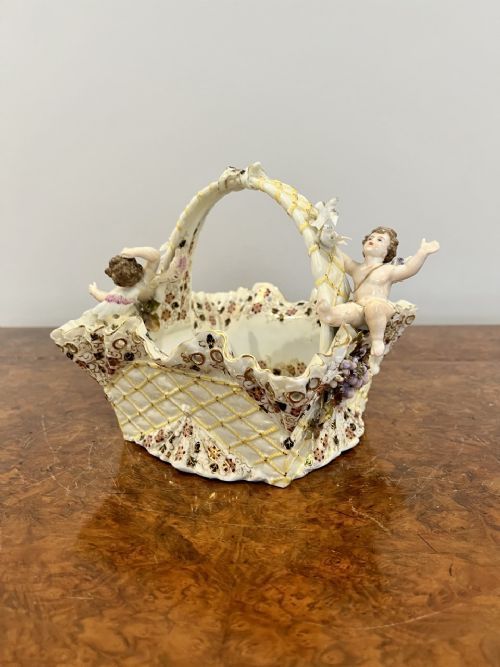
These cherub compote dish pieces bring sculptural charm to a table setting, combining classical figures with decorative vessels for an eye-catching display.
Cherub Compote Dish
A cherub compote dish combines a raised bowl, basket, or tazza with figurative sculpture, typically depicting winged figures, putti, or cupids alongside the main vessel. When searching for a cherub compote dish, a buyer encounters centrepieces and decorative bowls intended for display or fruit service on dining and side tables.
The pieces appearing on this page span several decades and styles, including Victorian, Regency, and Rococo Revival, with examples ranging from the nineteenth century into the twentieth century. Ceramic and porcelain vessels with applied flowers and shell forms sit alongside heavy metal frames cast in bronze and ormolu.
Makers such as Schierholz and Minton produced notable figural centrepieces and tazzas during this era, utilising porcelain and majolica alongside gilt bronze mounts. A buyer is most likely to meet either a continental porcelain compote featuring modelled putti or a gilt bronze and marble tazza supported by classical figures.
Materials and Construction
Metal components involve cast bronze, patinated bronze, and gilt bronze, often paired with cut crystal bowls, marble bases, or mother-of-pearl dishes. Artisans combined these mixed media elements using secure mechanical fasteners or specialised fits to support heavy glass and stone elements.
Ceramic and porcelain pieces utilise moulded earthenware and hard-paste bodies decorated with hand-painted enamels, gilding, and applied floral elements. Potteries shaped putti and cherubs separately before attaching them to shells, baskets, and bowls prior to high-temperature kiln firing.
Current listings feature pieces spanning the 1860s to the 1920s, with a strong representation of Victorian and Edwardian periods.
Distinctions in Quality
Schierholz Plaue·Minton
The Cherub Compote Dish Glossary
- Compote
- A raised bowl or dish used for serving fruit or sweets, typically standing on a central stem and foot. Compotes often feature decorative rims and elaborate figural supports.
- Tazza
- A shallow saucer-like dish mounted on a stem and foot, originating from Renaissance plate forms. These pieces frequently serve as decorative centrepieces on tables.
- Ormolu
- Gilding technique involving the application of finely ground high-carat gold to a bronze base. This finish provides a warm golden sheen characteristic of decorative metalwork.
- Majolica
- A type of earthenware coated with an opaque tin-glaze and painted with brightly coloured metal oxides. Minton utilised this technique for nineteenth-century figural centrepieces.
- Putto
- A plump, naked male child figure frequently found in classical and revival art, often winged. These figures serve as the supporting cherubs on many compotes and tazzas.
Cherub Compote Dish: Frequently Asked Questions
What were cherub compote dishes used for?
These decorative vessels served primarily as table centrepieces during formal dining, holding fruit, sweetmeats, or floral arrangements.
In nineteenth-century drawing rooms and dining rooms, they functioned as display pieces intended to showcase the host's taste and the maker's skill.
How do I style a compote dish at home?
Place a compote dish as a focal point on a dining table, sideboard, or entrance console where its height and sculptural details draw the eye.
Fill the bowl with seasonal fruit, or leave it empty to appreciate the craftsmanship of the cherubs and the contrasting materials of the base.
How can I tell a nineteenth-century piece apart?
Examine the casting quality on metal mounts, the hand-painting on porcelain bodies, and the specific material combinations such as gilt bronze with marble.
Nineteenth-century examples often display specific revival styles like French Rococo or Victorian ornamentation, combined with period ceramic marks or foundational construction methods.