


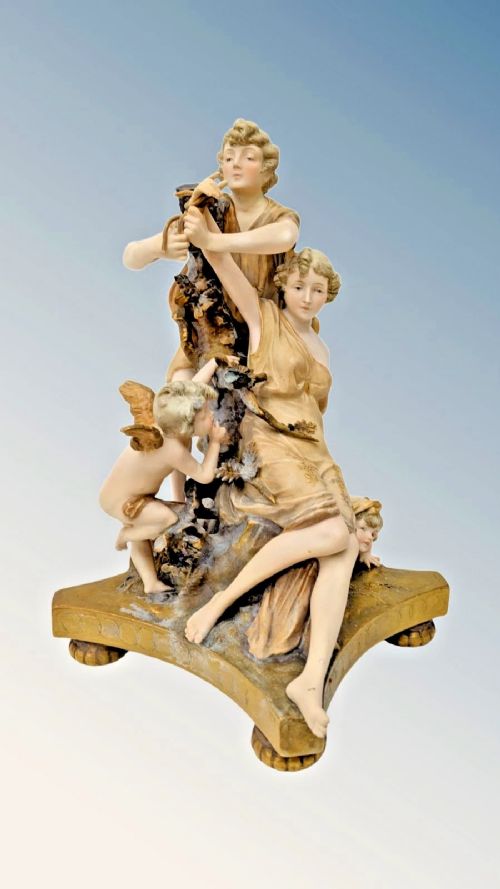


Victorian Porcelain Group
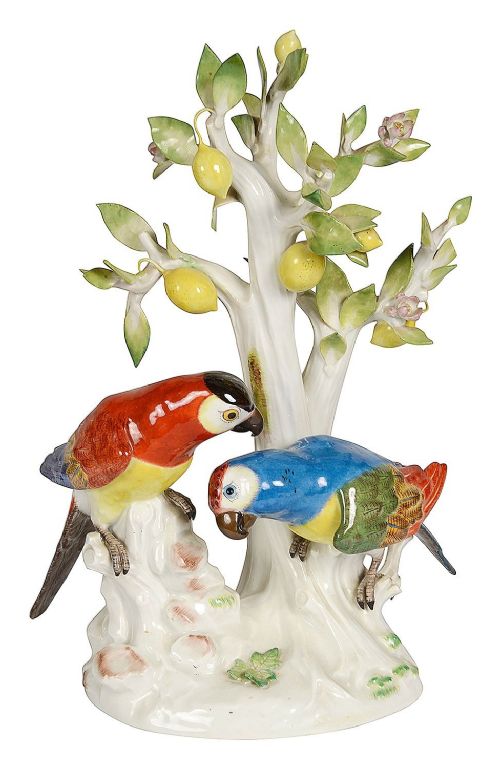
A victorian porcelain group brings sculptural presence to a room, depicting figures, animals, and classical scenes shaped in the nineteenth century.
Victorian Porcelain Group
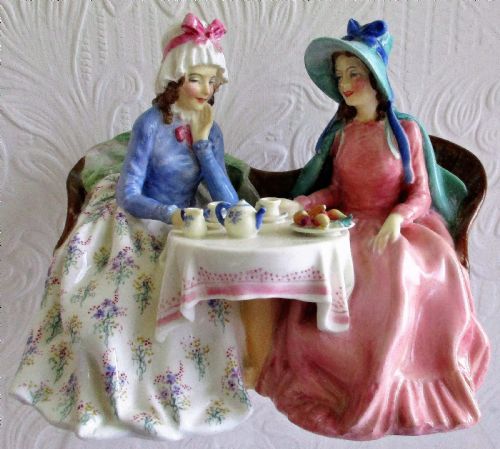
When you search for a victorian porcelain group, you find multi-figure compositions, pairs of animals, and narrative scenes spanning the nineteenth century. These pieces take the form of figurines, spill vases, and flatback pottery modelled in British and continental workshops.
The most common examples on this page are Victorian Staffordshire earthenware figure groups and nineteenth-century continental porcelain works. You encounter subjects ranging from domestic poodles and royal portraits to classical figures and romantic musicians.
Formats vary from single sculptural groups to matched pairs and sets of figures. They function as decorative mantel ornaments and cabinet pieces created across the Victorian period and into the early twentieth century.
Materials and Construction
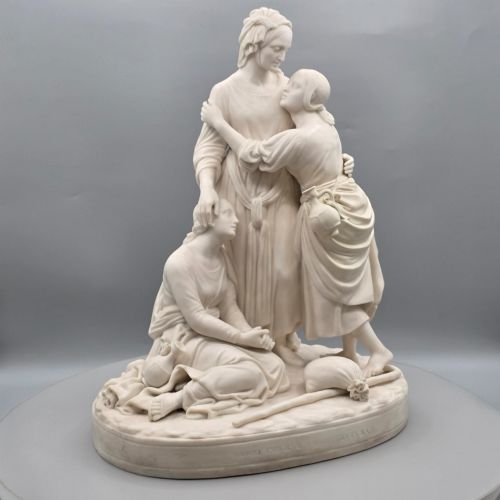
Makers shaped these figure groups using porcelain, earthenware, and parian ware, applying hand-mixed enamel colours and glaze over the fired clay body. Gold leaf accents highlight details on select nineteenth-century continental and English pieces.
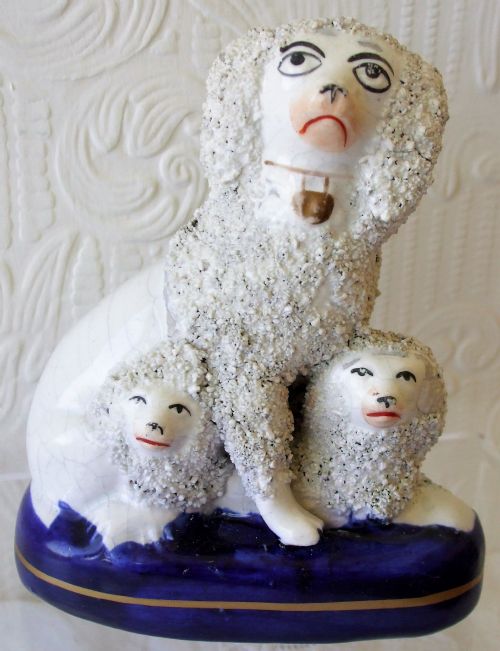
Nineteenth-century Staffordshire potters modelled eager poodles with textured ceramic curls that required meticulous hand-application before firing.
Assessing Craftsmanship
The distinction between standard domestic pottery and finer factory production lies in the weight of the ceramic body and the depth of the glaze. Continental porcelain and marked parian groups often display sharper relief and finer surface detail than unmarked earthenware.
Eugene Clauss of Paris·Triebner Ens And Co·Vion Et Baury·Royal Dux Bohemia
The Victorian Porcelain Group Glossary
- Parian ware
- A fine-grained unglazed porcelain resembling marble, developed in the nineteenth century for classical figure groups and portrait busts.
- Bisque porcelain
- Biscuit-fired unglazed porcelain that presents a matte white surface, often used for detailed nineteenth-century figurines and sculptural groups.
- Spill vase
- A hollow ceramic figure incorporating a small cylindrical holder designed to store wooden spills used for lighting pipes and candles.
- Flatback
- A Staffordshire pottery figure finished with a plain, unpainted rear designed to sit flat against a mantelpiece or wall.
- Hard-paste porcelain
- A durable ceramic compound fired at high temperatures using kaolin and petuntse, producing a vitrified body common in continental workshops.
Victorian Porcelain Group: Frequently Asked Questions
How were porcelain figure groups displayed?
These decorative groupings sat prominently on mantelpieces, credenzas, and salon tables throughout nineteenth-century homes. Flatback pottery figures stood against walls, while fully modelled porcelain groups occupied centrepieces.
Pairs of animals and matching figural arrangements balanced decorative displays in Victorian drawing rooms.
What is a Staffordshire flatback?
A Staffordshire flatback is an earthenware figure modelled with detail to the front and sides while the reverse remains unglazed and flat. This construction allowed the piece to sit securely against a wall or mantel back.
Potters painted these figures in bright enamels to depict royal portraits, animals, and contemporary events.
How do I distinguish parian from bisque?
Parian ware is a specific nineteenth-century porcelain formula developed to mimic carved marble, possessing a dense and slightly translucent quality. Bisque porcelain is biscuit-fired ceramic without a glossy glaze, presenting a chalky and matte finish.
Both materials appear frequently in nineteenth-century figure groups.
What subjects are common in these groups?
Nineteenth-century makers drew inspiration from classical mythology, pastoral scenes, literature, and contemporary royalty. Common subjects include mythological figures, domestic animals like poodles, and romantic musicians.
English potteries often recorded popular culture and political events through portrait figures.