


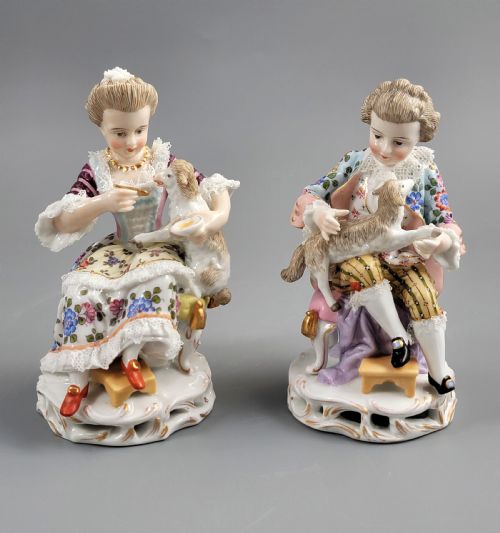


Porcelain Shepherd Figurine
These porcelain shepherd figurines bring pastoral charm to a room, capturing pastoral figures in fine ceramic work.
Porcelain Shepherd Figurine
A porcelain shepherd figurine captures the romanticised pastoral ideal of the eighteenth and nineteenth centuries, depicting shepherds and shepherdesses often accompanied by sheep, lambs, or dogs. When searching for a porcelain shepherd figurine, buyers encounter a range of forms from single figures to grand pairs produced across European kilns.
The evidence shows these figures span the eighteenth and nineteenth centuries, including Georgian pieces, Victorian continental works, and specific factory outputs like Derby, Sitzendorf, and Royal Dux. Forms vary from small cabinet statuettes to large scale sculptures reaching significant heights.
Makers frequently turned to classical pastoral themes influenced by French Rococo Revival and Victorian aesthetics. Buyers will find both glazed and bisque porcelain finishes among the available inventory.
How they were made
Manufacturers utilised hard-paste and soft-paste porcelain, shaping the clay through detailed moulds before applying polychrome enamel decoration. Many examples incorporate intricate hand-painting alongside applied elements such as delicate floral garlands.
Gilt and gold leaf highlights frequently accent the bases and garments of the figures, adding richness to the ceramic surface. Biscuit or bisque porcelain provides an unglazed, marble-like texture seen in French sculptures from the period.
Listings feature porcelain shepherd figurines spanning the eighteenth and nineteenth centuries, encompassing Georgian, Victorian, and Art Nouveau periods.
What varies in quality
The crispness of the moulding and the delicacy of the hand-painted polychrome enamels distinguish finer pieces from standard production. Early works show meticulous attention to facial expressions and botanical details on the bases.
The use of gold leaf and the refinement of subsidiary elements like lambs and tree stumps indicate the skill level of the originating factory, such as early Derby or continental workshops.
Bloor Derby·Sitzendorf·Vion and Baury·Royal Dux·Conta and Boehme
The Porcelain Shepherd Figurine Glossary
- Bisque Porcelain
- Unfired porcelain biscuit that has been fired once without glaze, offering a matte, white finish resembling marble. This finish is common in nineteenth-century French sculptures.
- Hard-paste Porcelain
- A true ceramic composition fired at very high temperatures, durable and naturally translucent. It provides a crisp surface for detailed polychrome painting.
- Soft-paste Porcelain
- An artificial porcelain body fired at lower temperatures, popular in eighteenth-century English factories. It has a warm, creamy tone and a softer glaze.
- Polychrome
- Decoration utilising multiple enamel colours applied to the ceramic body. This technique brings pastoral garments and natural surroundings to life.
- Patch Period
- An era in eighteenth-century Derby production identified by kiln support marks on the base of the figures. These three small circular marks result from the props used during firing.
Porcelain Shepherd Figurine: Frequently Asked Questions
How do I date an old porcelain shepherd figurine?
Dating relies on identifying factory marks, paste types, and stylistic periods such as Georgian or Victorian. Examining the base and the enamel palette provides further clues to the era of manufacture.
Early pieces often feature specific unglazed patch marks, while nineteenth-century continental works display distinct impressed or painted factory ciphers.
What is the difference between Derby and continental figures?
English factories like Derby often utilised soft-paste porcelain in the eighteenth century before transitioning to bone china and hard pastes later on. Continental makers from Germany and France frequently employed distinct sculptural styles and bisque finishes.
German factories such as Sitzendorf focused heavily on ornate Rococo Revival details and vibrant polychrome enamels.
Where should I display these figures in my home?
These statuettes suit mantelpieces, glass cabinets, and side tables where their detailed painting and sculptural form can be appreciated up close. Placing them away from direct sunlight protects the enamel colours and gilt highlights.
Pairing matching figures together recreates the symmetrical aesthetic favoured by nineteenth-century collectors.
Why do some figures have unglazed bases?
Unglazed bases allowed figures to sit stably on kiln furniture during high-temperature firings without sticking to the kiln floor. These areas often reveal the texture of the raw ceramic body and can show historic kiln scars or inventory marks.