

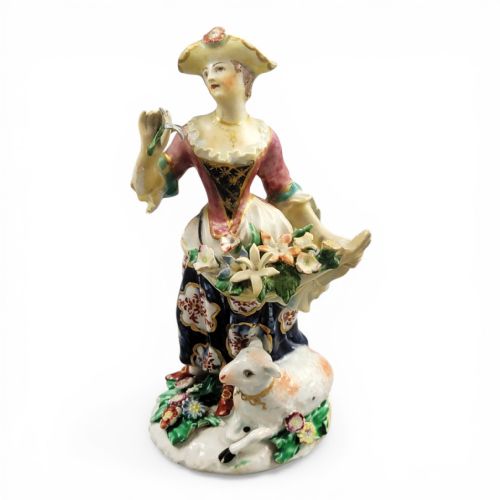


Porcelain Shepherdess Figurine
These porcelain shepherdess figurine pieces bring pastoral charm to a room, capturing rural life in glazed ceramic and gilt detail.
Porcelain Shepherdess Figurine
A porcelain shepherdess figurine depicts pastoral figures accompanied by lambs or flowers, originating in major European centres of ceramic production. The pieces seen on this page span the eighteenth, nineteenth, and early twentieth centuries, reflecting changing tastes in decorative sculpture.
Early examples date from the Georgian period, including works from Derby and Bow, while nineteenth-century items often draw on Rococo Revival styles or Continental manufactories. Collectors encounter both single figures and paired groups depicting shepherds and shepherdesses in idyllic settings.
The forms range from small mantel ornaments to large sculptural groups finished with enamel painting and gilding. These figures embody the enduring European fascination with idealized country life and theatrical pastoral themes.
How They Were Made
The manufacture of these figures relies on soft-paste and hard-paste porcelain, alongside unglazed bisque porcelain favoured by French workshops like Vion and Baury. Artisans shaped the clay in moulds before applying detailed hand-painting and enamel decoration.
Gilt and gold leaf highlights frequently accent the Rococo scrollwork bases and garments, while certain nineteenth-century German and French pieces utilise a smooth glaze finish. Firing techniques determined the ultimate vitrification and translucency of the ceramic body.
Several figures come equipped with diminutive glazed sheep that appear remarkably unbothered by their turbulent eighteenth-century kiln experiences.
What Varies in Quality
The fineness of hand-painted details on the facial expressions and floral garlands separates superior figures from simpler production wares. Crisp moulding that preserves the delicate contours of lace, wool, and foliage indicates a high standard of craftsmanship.
The complexity of the composition, particularly in paired groups or large sculptures involving multiple figures and animals, influences the overall sophistication of the piece. Preservation of original gilding and enamel colours remains a key factor in the assessment of antique figures.
Derby·Bow Porcelain·Samson·Bloor Derby·Vion and Baury·Royal Dux·Conta and Boehme
The Porcelain Shepherdess Figurine Glossary
- Bisque porcelain
- Unglazed ceramic fired to a matte, white finish that resembles marble and was widely utilised for nineteenth-century sculptural figures. This finish highlights fine modelling and facial detail without the distraction of surface gloss.
- Soft-paste porcelain
- An artificial porcelain composition fired at lower temperatures than hard-paste, common in early English factories like Derby and Bow. It possesses a warm, slightly creamy body and a distinctive tactile quality.
- Rococo Revival
- A nineteenth-century design style that revived the asymmetrical scrolls, shell motifs, and ornamental curves of the mid-eighteenth century. This aesthetic frequently frames the bases of Victorian pastoral figures.
- Enamel
- Opaque glass-based pigment applied to the surface of fired porcelain and fixed in a second kiln firing. Enamels provide the vibrant blues, pinks, and greens found on garments and floral details.
- Gilt
- A thin layer of gold applied to the porcelain surface as a decorative accent on bases and clothing. Artisans often burnished the gold to create a contrasting matte and shiny finish.
Porcelain Shepherdess Figurine: Frequently Asked Questions
How do I identify an early Derby figure?
Early Derby pieces typically employ soft-paste porcelain with delicate hand-painted polychrome enamels and characteristic patch marks on the underside from the manufacturing kiln supports.
Examinations of the modelling style and glaze can help distinguish eighteenth-century productions from later nineteenth-century revivals produced in Dresden or France.
Are these figures usually found in pairs?
While many shepherdesses were originally created to stand alongside a companion shepherd figure, surviving examples often appear as single standalone pieces due to separation over centuries.
Matched pairs depicting both a shepherd and a shepherdess remain particularly sought after by collectors of period ceramics.
How should I display antique porcelain figures?
Antique figures require stable placement away from direct sunlight and areas subject to sudden temperature fluctuations to protect their delicate enamel and gilt surfaces.
Enclosed cabinets provide the best protection against dust and accidental knocks for fragile elements like applied porcelain flowers and thin fingers.