



Chelsea Style Figurine
These chelsea style figurine examples bring vibrant nineteenth-century Parisian craftsmanship to any room, offering the charm of earlier porcelain without the extreme rarity.
Chelsea Style Figurine
A chelsea style figurine on this page typically dates from the nineteenth century, drawing direct inspiration from eighteenth-century English models. Makers such as Samson of Paris produced these decorative objects during the Victorian era, reinterpreting historical forms with great technical skill.
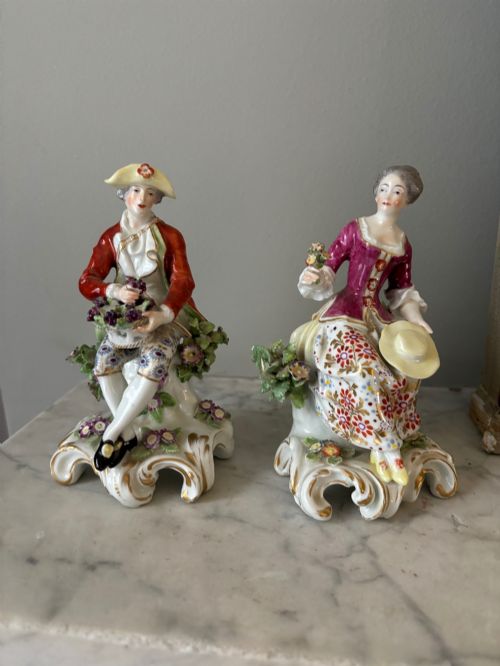
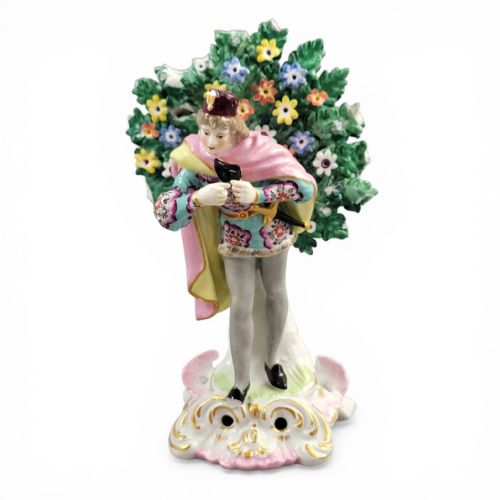
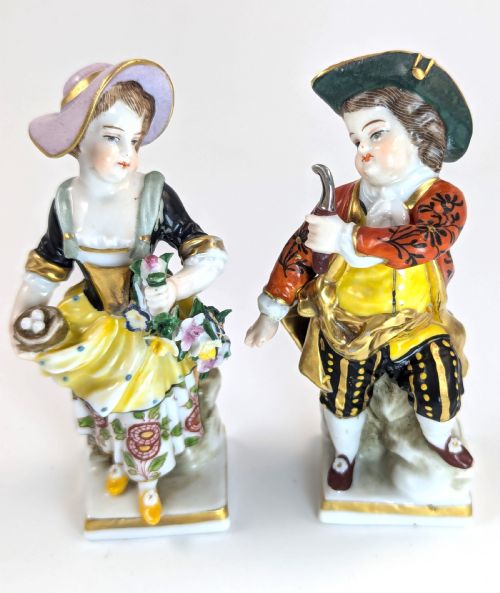
Buyers will encounter various pastoral and allegorical subjects, including shepherds, gardeners, cherubs, and mythological figures like Venus, Cupid, Bacchus, and Mars. Many of these porcelain figurines feature elaborate bocage backgrounds of foliage and flowers, or portray actors and pastoral workers in lively poses.
The objects listed range from single figures to balanced pairs, often bearing simulated anchor marks in gold to evoke the famous eighteenth-century manufactory. These pieces function primarily as decorative cabinet or mantel ornaments rather than utilitarian vessels.
How they were made
Makers utilised hard-paste porcelain as the primary body, shaping the forms through careful moulding before applying detailed hand-painting in enamel colours. The pigments were fired to achieve a glossy finish that mimics earlier English production.
Accents of gold leaf, gilt, and gilding highlight the garments, scrollwork bases, and simulated anchor marks, adding a rich contrast to the painted enamel surfaces. Elaborate floral bocage elements were individually modelled and applied by hand around the central figures.
Listings feature hard-paste porcelain decorated with enamel and gold leaf, predominantly representing the 19th Century and Victorian periods through Rococo Revival forms.
What varies in quality
The complexity of the composition also dictates distinction, with multi-figure groups and dense floral bocage backgrounds requiring significantly more skilled modelling than single standing figures. The application of gold leaf and the subtlety of the enamel palette further separate standard works from the finest workshop output.
Edme Samson·Samson and Cie
The Chelsea Style Figurine Glossary
- Hard-paste porcelain
- A dense, vitrified ceramic material fired at high temperatures, composed of kaolin and petuntse. It provides a durable and smooth white body ideal for detailed figurine production.
- Bocage
- An ornamental background of applied ceramic foliage, leaves, and flowers that frames the central figures. This technique adds depth and a naturalistic setting to nineteenth-century decorative pieces.
- Gilding
- The application of gold leaf or gilt to ceramic surfaces to highlight decorative details and borders. On these figures, it frequently outlines rococo scrollwork bases and simulated factory marks.
- Rococo Revival
- A nineteenth-century artistic style that revives the asymmetrical scrollwork, C-curves, and natural motifs of the mid-eighteenth century. It provides the dominant aesthetic framework for these decorative objects.
- Enamel
- Opaque vitreous coloured paints applied over the porcelain glaze and fixed by a secondary firing. These pigments deliver the vibrant hues seen on garments and natural elements.
Chelsea Style Figurine: Frequently Asked Questions
What is a chelsea style figurine?
These pieces are nineteenth-century ceramic decorative objects produced in imitation of eighteenth-century models from the Chelsea and Chelsea-Derby manufactories. They typically depict pastoral, mythological, or allegorical subjects created for display.
Most examples on this market come from French workshops such as Samson of Paris, which specialised in recreating historic porcelain styles during the Victorian era.
Who made these nineteenth-century figures?
The recorded evidence points primarily to Samson of Paris, a prominent nineteenth-century firm known for producing high-quality interpretations of earlier European porcelain. Other continental and German factories also contributed to this tradition.
These makers often added simulated gold anchor marks to pay homage to the original English prototypes while creating distinct Victorian decorative works.
How were bocage figures constructed?
Bocage figures feature intricate backgrounds made from separately modelled ceramic leaves, flowers, and branches clustered behind the main subject. Artisans applied these delicate elements by hand before the final firing.
This technique required immense patience and skill to ensure the fragile foliage survived the intense heat of the kiln without distortion.
Where should I display these porcelain figures?
These decorative objects suit enclosed cabinets, mantelpieces, or designated display shelves where they remain safe from accidental knocks. Their detailed enamel work and gilt highlights benefit from steady, indirect ambient lighting.
Because nineteenth-century porcelain and applied floral bocage can be delicate, placement in high-traffic hallways or unstable locations is best avoided.