


Rococo Revival Figure
These rococo revival figure selections bring theatrical nineteenth-century charm and elaborate scrolling forms directly into domestic interiors.
Rococo Revival Figure
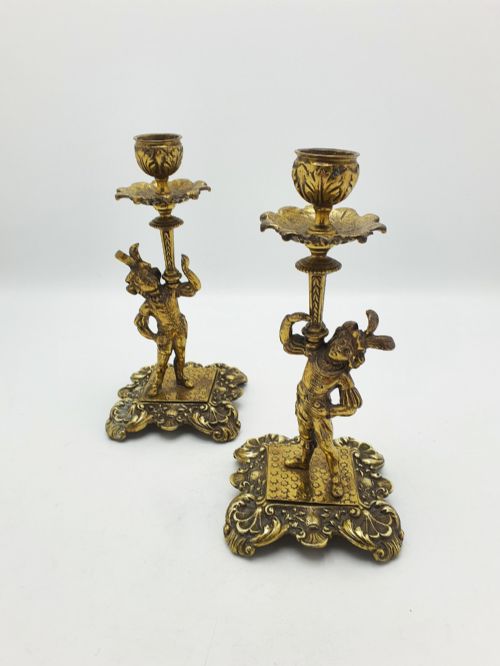
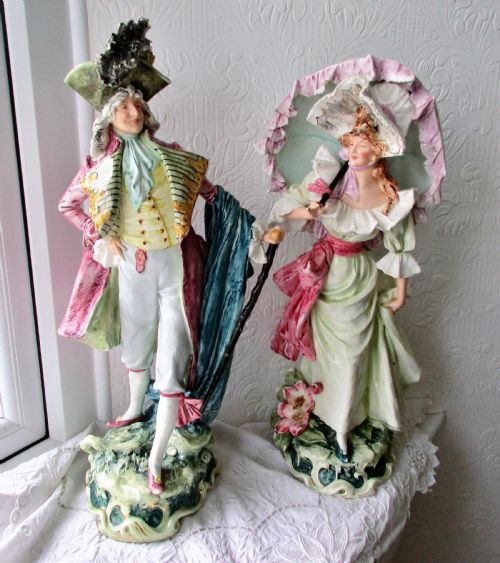
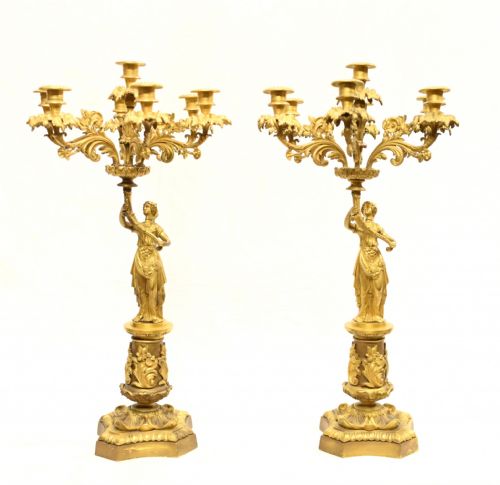
A rococo revival figure captures the theatrical tastes of the nineteenth century, drawing heavily on eighteenth-century French and British models. Buyers encounter porcelain figurines, gilt bronze candelabras, and figural candlesticks produced across France, Germany, and England.
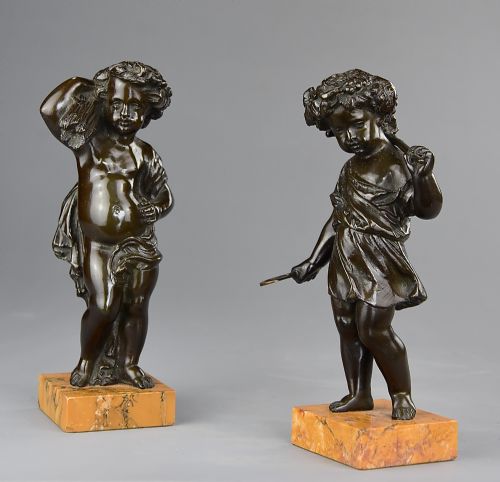
The objects frequently depict gallant courtiers, shepherdesses, musicians, allegorical putti, and children in pastoral settings. Most examples on this page date from the Victorian era up to the early twentieth century.
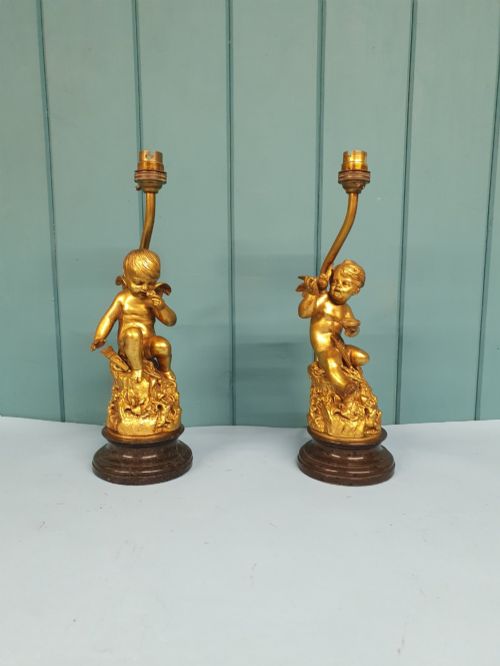
Many of these pieces serve functional roles alongside their sculptural presence, appearing as bases for table lamps, clock garnitures, or candle holders. The scale ranges from cabinet miniatures to substantial candelabras intended for central placement.
How They Were Made
Porcelain figures rely on detailed moulding and hand-painted enamel decoration, occasionally incorporating delicate applied porcelain lace or elaborate bocage backgrounds of foliage and flowers. German and French factories utilised skilled modellers to replicate earlier Meissen, Chelsea, or Derby styles.
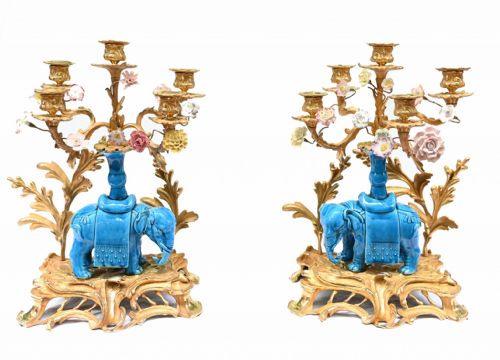
Metal components combine cast bronze, brass, and ormolu with fire-gilded surfaces or gold leaf applications. Clock cases and candelabras integrate these gilded metals with marble bases and porcelain elements.
Makers employed careful assembly techniques, joining separate cast metal sections with threaded pins or securing porcelain figures onto floral-encrusted bases through high-temperature firing.
Harvest putti and children with pet lambs dominate the pastoral scenes, bringing cheerful nineteenth-century domesticity into view.
What Varies in Quality
In metalwork, the crispness of the chasing on ormolu and bronze elements dictates the overall standard. High-grade items display sharp relief and varied surface textures, while lesser pieces rely on flat casting with minimal hand finishing.
The integration of materials also defines the hierarchy, with composite objects showing seamless joins between gilt bronze mounts and porcelain bodies.
Volkstedt·Richard Eckert·Vion & Baury·Ernst Bohne Sohne·Sitzendorf·Helena Wolfsohn·Charpentier Paris
The Rococo Revival Figure Glossary
- Bocage
- An open background of leaves and flowers modelled in porcelain behind a figure. This technique originates in eighteenth-century English factories like Chelsea.
- Ormolu
- Finely chopped high-karat gold applied to a bronze base using a mercury amalgamation process. Nineteenth-century makers also utilised electroplating for similar gilt effects.
- Putto
- A plump, naked male child depicted in classical art, often winged and appearing as a cherub in rococo decorative schemes. They populate candelabras and figural groups.
- Faience
- Tin-glazed earthenware produced across European centres. The technique yields an opaque white surface suitable for painted decoration.
- Biscuit
- Unglazed porcelain fired once to create a matte, marble-like texture resembling fine statuary. Vion and Baury frequently utilised this material for figures.
Rococo Revival Figure: Frequently Asked Questions
How do I clean antique porcelain figures?
Dust porcelain pieces gently with a soft, dry brush to prevent dirt accumulation in intricate crevices like floral bocage. Avoid water or liquid cleaners, especially on painted surfaces or areas with gold leaf.
Inspect the object in good light before cleaning to check for old repairs or fragile applied elements that might dislodge under pressure.
Were these figures meant for lighting?
Many figural groups doubled as functional items, incorporating sockets for candles, oil lamps, or later electrical conversions. Candlesticks and candelabras placed figures beside floral nozzles to combine sculpture with illumination.
Pure decorative figurines remained separate from lighting, serving strictly as cabinet or mantel ornaments.
How do I distinguish reproduction marks?
Factories like Samson in Paris explicitly copied earlier Chelsea and Derby marks during the nineteenth century as deliberate homages rather than direct deceptions. Examining the paste, enamel colours, and weight helps differentiate these revival pieces from eighteenth-century originals.
Consult manufacturer records and stylistic traits to date the modelling accurately.
Where should I display ormolu and porcelain?
Position these items away from direct sunlight and high-moisture areas to protect delicate enamel colours and gilt finishes. Mantelpieces, enclosed cabinets, and sturdy occasional tables offer stable environments.
Ensure metal components rest on protective surfaces to prevent scratching polished furniture tops.