
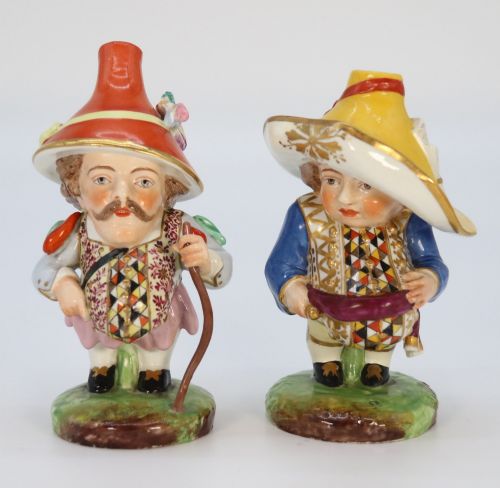
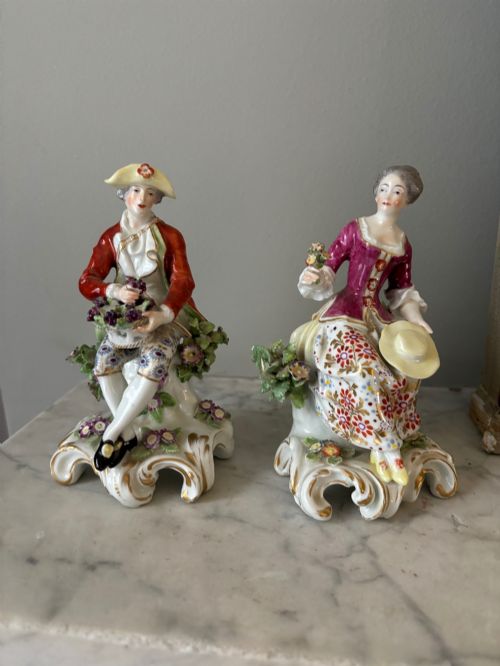


Samson Porcelain Ornaments
These samson porcelain ornaments are masterly nineteenth-century European reproductions and interpretations that bring eighteenth-century ceramic elegance directly to your mantelpiece.
Samson Porcelain Ornaments
Samson porcelain ornaments encompass decorative figures and figurines modelled during the nineteenth century by the Samson firm in Paris. Buyers searching this phrase seek skilled interpretations of earlier ceramic traditions rather than original factory pieces.
The pieces appearing on this page span the Victorian era, specifically the decades between eighteen fifty and eighteen ninety. They frequently adopt the distinct aesthetic vocabularies of eighteenth-century factories such as Chelsea, Derby, and Bow.
Materials and methods
These ornaments rely on hard-paste or soft-paste ceramic bodies shaped into detailed three-dimensional forms through careful moulding. Artisans then apply polychrome enamel colours by hand to capture the painterly detail of earlier models.
Gilding and gold leaf feature prominently across the surface decoration, accentuating garments, scrollwork bases, and rococo motifs. Simulated anchor and gold anchor marks frequently appear painted or gilded on the underside as an homage to historic prototypes.
Nineteenth-century Parisian artisans meticulously painted mock factory marks on the base, occasionally leaving cheerful clues to their own identity.
Assessing quality
Quality rests upon the crispness of the modelling and the precision of the hand-painted enamel work. Finer examples retain sharp facial expressions and delicate hand placement, whereas lesser pieces exhibit softer contours from worn moulds.
The application of gilding and enamel highlights distinguishes ambitious studio output from simpler commercial production. Skilled brushwork on costumes and naturalistic bases elevates the decorative impact of individual figures.
Edme Samson·Samson of Paris
The Samson Porcelain Ornaments Glossary
- Hard-paste porcelain
- A dense ceramic material fired at high temperatures using kaolin and petuntse. It creates a durable, vitreous body capable of holding sharp moulded details.
- Enamel
- Opaque glass-based pigments applied to the glazed ceramic surface before a secondary low-temperature firing. This technique produces vibrant, lasting polychrome decoration.
- Gilding
- The application of gold leaf or powdered gold suspended in a medium onto the porcelain surface. It is often burnished to achieve a bright reflective finish.
- Rococo Revival
- A nineteenth-century design style that revives the asymmetrical C-scrolls, floral abundance, and exuberant curves of the eighteenth-century movement.
- Biscuit porcelain
- Unglazed ceramic fired once to create a matte, white finish resembling marble. It highlights sculptural form without the distraction of surface glaze.
Samson Porcelain Ornaments: Frequently Asked Questions
What are samson porcelain ornaments?
These pieces are nineteenth-century ceramic figures produced by the Samson workshop in Paris, designed to emulate historic porcelain from factories like Chelsea and Derby.
They serve as decorative works that appropriate eighteenth-century styles for Victorian collectors.
Are these ornaments authentic antiques?
Yes, they are genuine nineteenth-century antiques produced during the Victorian era by the Samson firm. They are historical reproductions rather than modern copies.
Collectors prize them for their own fine craftsmanship and faithfulness to earlier ceramic traditions.
How do I identify a samson piece?
Many pieces feature painted marks on the base that mimic historic factories, sometimes combined with the artist's own initials or specific Samson indicators. Stylistic clues include nineteenth-century enamel palettes and rococo revival modelling.
Comparing the paste and gilding against documented nineteenth-century French output helps confirm attribution.
How should I display them?
Place these delicate figurines in secure locations away from heavy vibrations or direct sunlight to protect the enamel colours and gold leaf. Cabinets with glass doors offer protection from dust while allowing clear visibility of the hand-painted details.
Pairing matching pairs together on mantelpieces reflects their original nineteenth-century decorative function.