



Victorian Pollard Oak Table
A victorian pollard oak table brings intense, knotty grain and rich warmth into a room, spanning grand dining pieces and intimate writing desks.

Victorian Pollard Oak Table
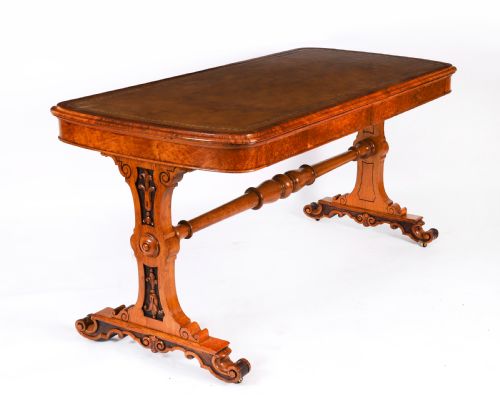
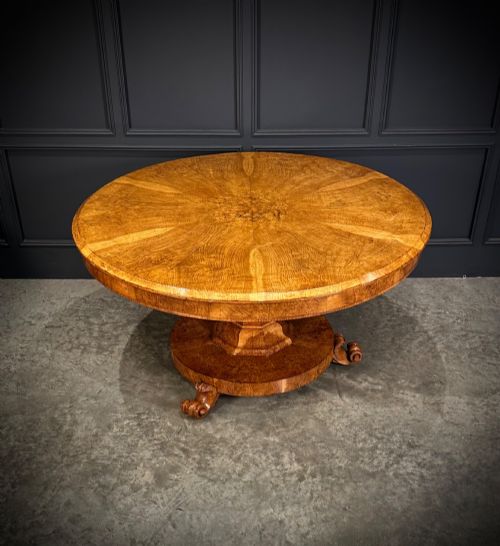
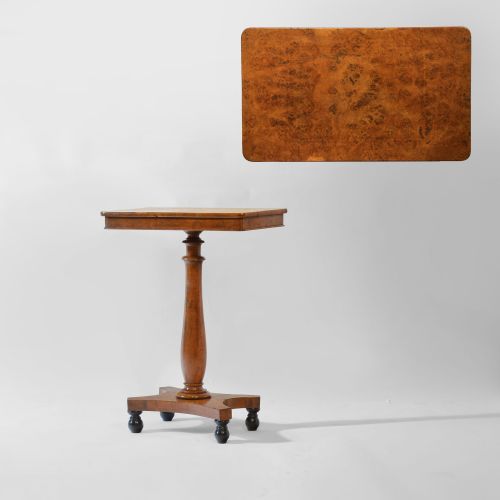
A victorian pollard oak table encompasses a wide variety of domestic furniture types, from massive extending dining tables and partners desks to small cricket tables, work tables, and round breakfast tables. These pieces emerge predominantly from the nineteenth century, including specific decades such as the eighteen-fifties, eighteen-seventies, and eighteen-eighties.
The domestic and formal spaces of the nineteenth century required specialised tables, resulting in surviving examples designed specifically for libraries, card games, serving, and bedside use. Alongside these functional forms, buyers frequently encounter centre tables and pedestal tables where the primary purpose is decorative display.
Makers and workshops of the period adapted the timber to various revival styles, notably Elizabethan Revival alongside standard Victorian designs. The pieces range from compact work tables to extensive dining tables measuring up to eighteen feet, reflecting the diverse scale of Victorian interiors.
The Hierarchy of Quality
Quality in a victorian pollard oak table rests primarily on the density, rhythm, and visual depth of the timber's grain pattern. Tables displaying exceptionally rich, unbroken burr formations command greater attention than those with plain or sparse figuring.
The standard of cabinetmaking and secondary materials further defines the tier of a piece, separating straightforward utilitarian furniture from complex partners desks and signed workshop productions. Integration of high-grade leather, solid brass details, and sophisticated extending mechanisms denotes superior original manufacture.
Listings feature nineteenth-century forms including writing desks, library tables, cricket tables, and extending dining tables up to eighteen feet long.
James Winter and Sons·Boothroyd Sons and Rimmer·Williams and Gibton·Thomas Turner·Payne and Co·Howard and Sons·Maple and Co
The Victorian Pollard Oak Table Glossary
- Pollard oak
- Timber taken from trees that were pollarded by cutting the trunk above animal browsing height, which produces dense clusters of knots and highly decorative grain. This distinctive wood forms the defining surface of the pieces found in this category.
- Partners desk
- A large double-sided writing table fitted with drawers and cupboards on both longitudinal faces, allowing two people to work opposite one another. These substantial desks frequently incorporate inset leather tops.
- Cricket table
- A small, lightweight occasional table typically supported by three splayed legs. In pollard oak, these compact forms highlight the swirling figure of the timber on a domestic scale.
- Extending dining table
- A form engineered with internal leaves and a central mechanism to expand the surface area for large gatherings. Nineteenth-century examples in this timber range from ten to eighteen feet in length.
- Centre table
- A freestanding table designed to be viewed from all sides rather than pushed against a wall. They frequently occupy the middle of Victorian reception rooms.
Victorian Pollard Oak Table: Frequently Asked Questions
How do I care for pollard oak furniture?
Keep the timber away from direct heat sources and strong sunlight to prevent the veneered surfaces from drying out or splitting. Feed the wood occasionally with a appropriate wax to maintain the depth and lustre of the grain.
Avoid using modern chemical sprays or excessive water on the surface, especially near leather inserts or brass mounts. A soft, dry cloth is sufficient for routine dusting.
Were these tables used in offices or homes?
Most surviving examples originated in domestic settings, including formal dining rooms, libraries, bedrooms, and drawing rooms. Specific forms like partners desks served administrative or study functions in large residential households.
Smaller pieces functioned as work tables, wine tables, or breakfast tables for daily family life. Their sturdy construction allowed them to withstand heavy daily use across the nineteenth century.
How do I identify an extending dining table?
Look for a robust structural division across the centre of the frame and internal runners designed to pull apart. These tables often retain original winding mechanisms or slots for drop-in timber leaves.
The exterior apron frequently conceals the mechanism while maintaining a continuous appearance when closed. Matching sets of chairs often accompanied these large dining pieces.
What is the difference between a library table and a centre table?
Library tables generally offer a more utilitarian or scholarly build, often featuring drawers for storage and a substantial rectangular footprint suited to heavy books. Centre tables focus primarily on decorative presence and display.
Library tables frequently incorporate stretcher bases for added rigidity during reading and writing. Centre tables more commonly utilise pedestal supports or four elegant legs designed to catch the light.