
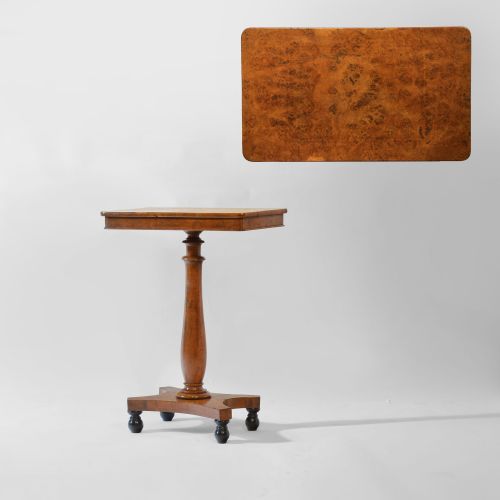


Burr Oak Pedestal Table
These burr oak pedestal table pieces offer the remarkable figuring and sturdy presence that draw collectors to rich timber surfaces.
Burr Oak Pedestal Table
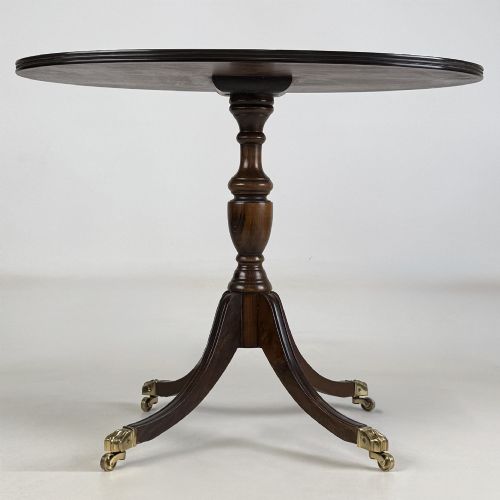
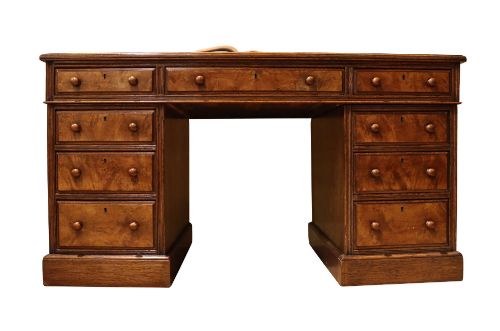
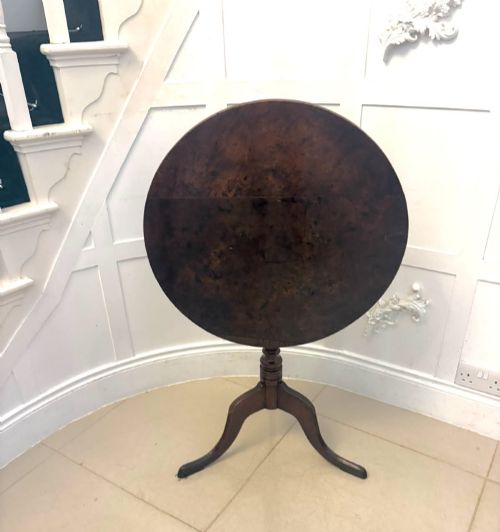
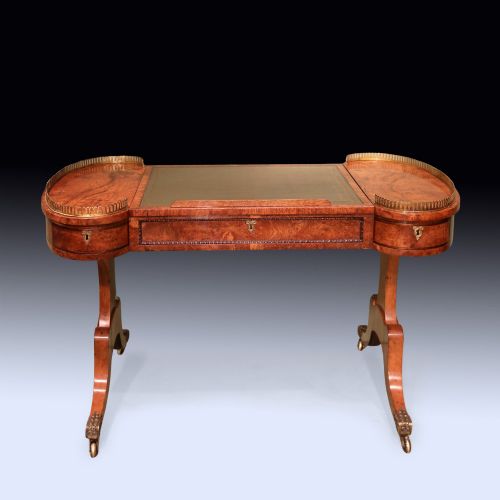
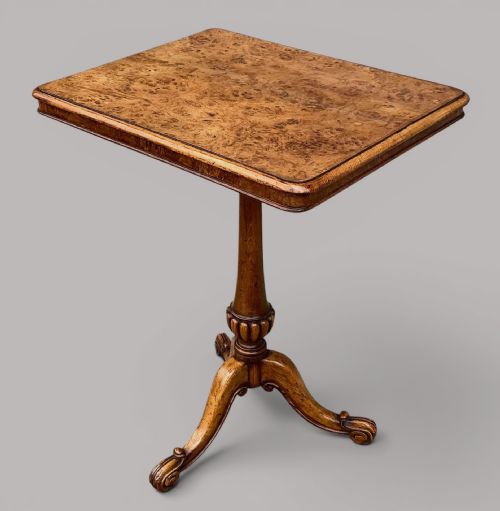
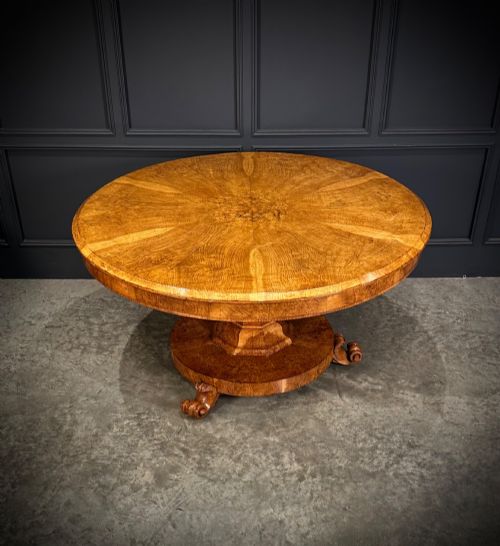
A burr oak pedestal table brings together the dense, knotty growth patterns of burr timber with a central column support, creating a striking focal point in a room. When searching for a burr oak pedestal table, buyers encounter forms ranging from compact tripod lamp tables to larger breakfast and writing tables.
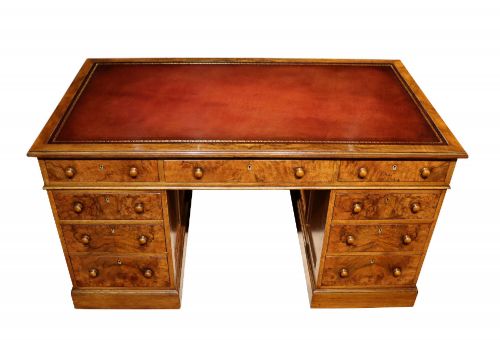
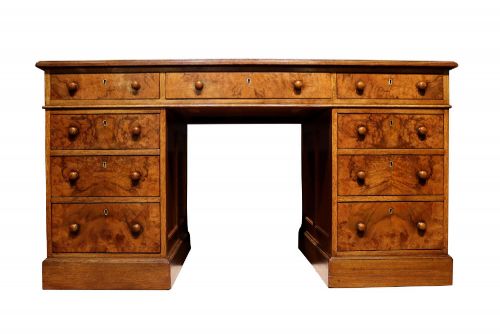
The pieces appearing in this category span several distinct eras, including Georgian, Regency, and Victorian periods. Occasional tables and tripod wine stands appear frequently alongside larger desks and centre tables.
Makers across the eighteenth and nineteenth centuries utilised the distinctive swirling grain of burr oak to cover table tops while employing solid oak or walnut for the underlying framework and pedestal bases.
What varies in quality
The visual impact of a burr oak pedestal table depends primarily on the density and symmetry of the wood figuring across the top. Richness of natural patination and warmth of colour also separate exceptional examples from standard ones.
Construction details such as segmented top designs, fine crossbanding in contrasting timbers, and the proportional balance of the central column elevate a piece from simple utility to high craftsmanship.
Listings feature burr oak alongside related materials like pollard oak, burr walnut, and satinwood across eighteenth and nineteenth century periods.
William Trotter
The Burr Oak Pedestal Table Glossary
- Burr oak
- A growth deformity on an oak tree that produces tightly clustered knots and swirling grain patterns. Cabinet makers slice this timber into thin veneers for decorative table tops.
- Pedestal table
- A table supported by a single central pillar or column rather than four corner legs. This form allows maximum legroom around the base.
- Tripod table
- A small occasional table supported by three legs radiating from the base of the central pedestal. Many examples feature a tilt-top mechanism for convenient storage.
- Patination
- The deep surface sheen and rich colour developed by aged wood through decades of handling, light exposure, and polishing. Good patination is valued by collectors.
- Pollard oak
- Timber harvested from trees that were cut back near the main trunk to encourage dense, highly figured branching growth. It shares visual similarities with burr timber.
Burr Oak Pedestal Table: Frequently Asked Questions
What is a burr oak pedestal table?
It is a freestanding table supported by a central column, featuring a decorative top made from burr oak veneer. These pieces showcase intricate, swirling wood grain patterns.
Craftsmen built them across various historical periods, including the Georgian and Victorian eras, producing forms that range from small lamp tables to larger centre tables.
How do I care for a burr oak table?
Protect the surface by keeping the table away from direct sunlight and sudden temperature changes, which can dry out the antique timber. Use soft cloths for dusting and apply appropriate furniture wax occasionally.
Avoid placing damp items directly onto the wood to preserve the original polish and the delicate burr oak veneer.
Where should I place a pedestal table?
These tables suit smaller spaces as lamp stands or wine tables, where the single central column allows chairs or feet to clear the base easily. Larger versions work effectively as centre tables in hallways or principal rooms.
The distinct figuring of the wood ensures the piece draws the eye wherever it stands.