





Bobbin Leg Dining Table
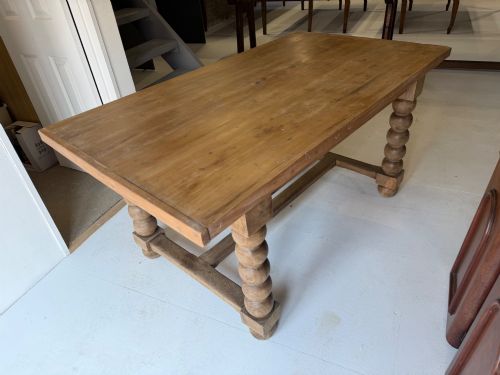
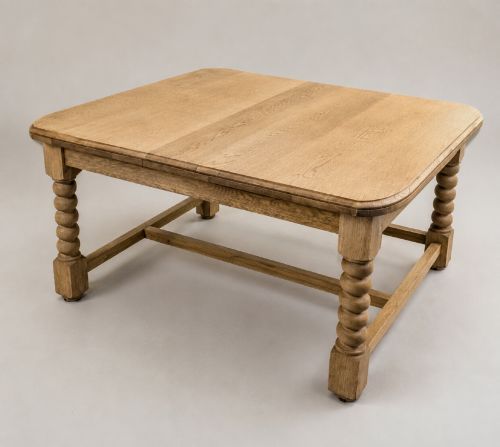
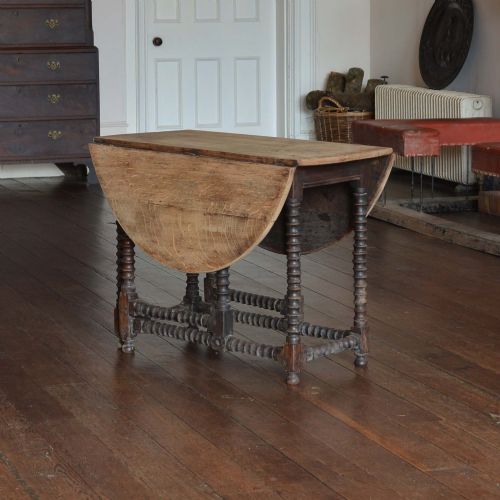
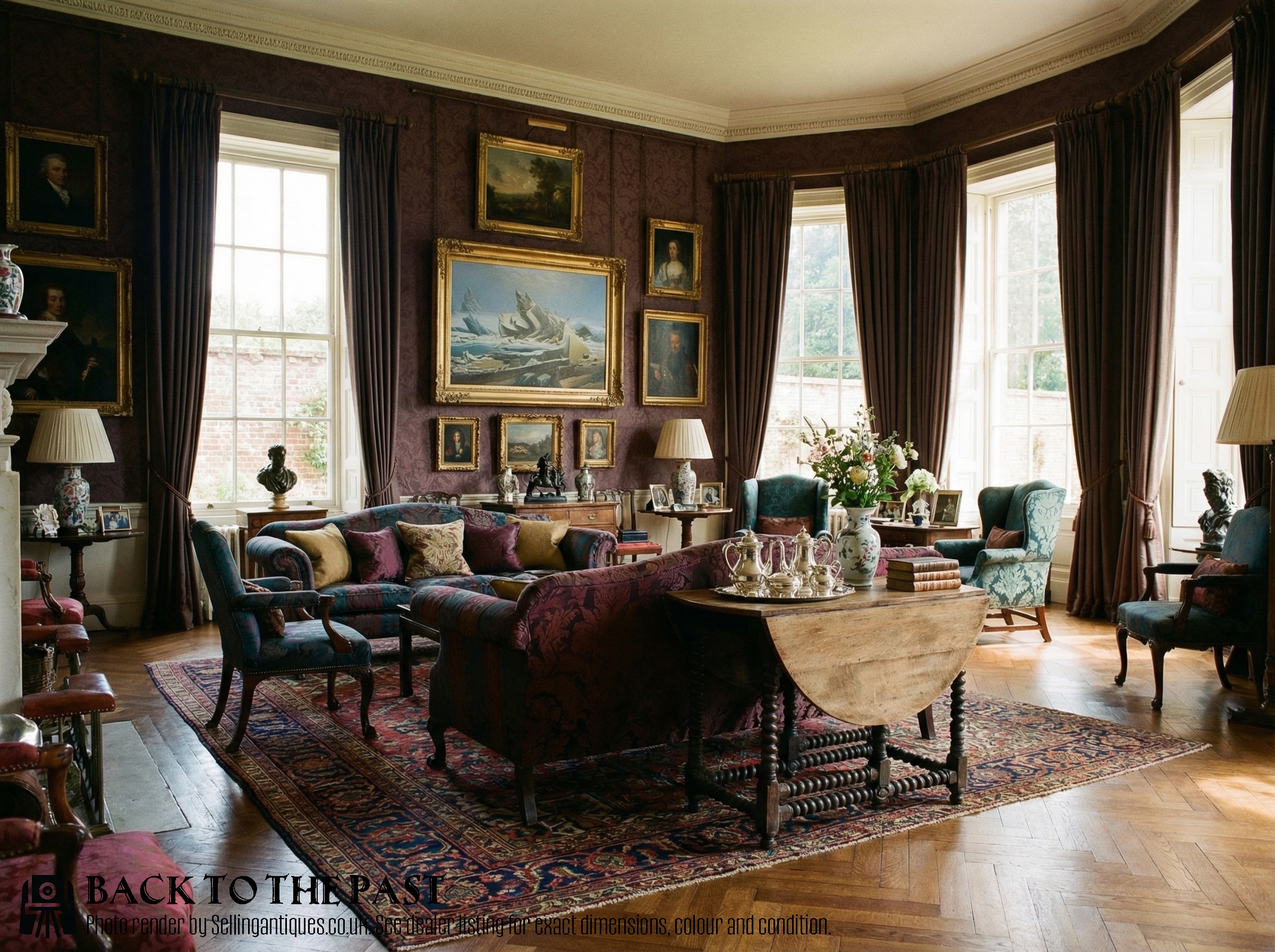
A bobbin leg dining table brings tangible seventeenth-century character to a room through its characteristic spool turnings and drop-leaf versatility.
Bobbin Leg Dining Table
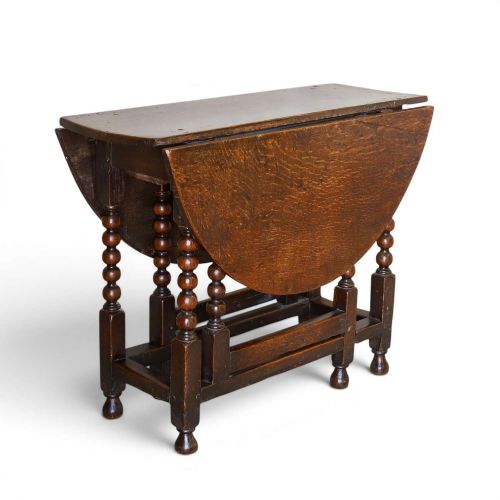
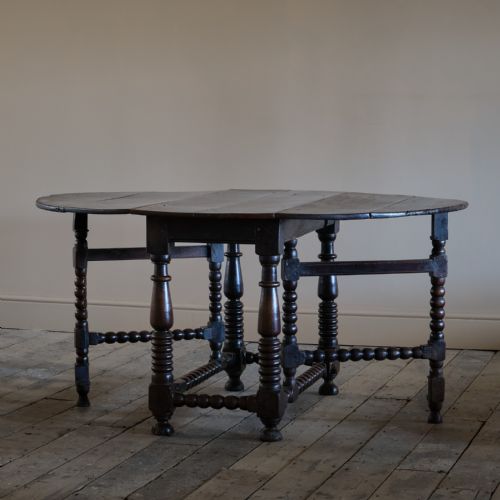
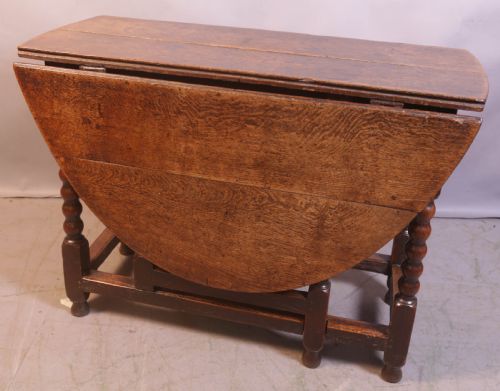
A bobbin leg dining table is defined by its distinctive turned supports resembling reels or spools of thread, predominantly encountered in oak and walnut. These pieces span from the seventeenth century through the Victorian era, utilising gateleg and drop-leaf forms that allow the sides to fold down when space demands it.
How they were made
Makers constructed these tables primarily using native timbers such as oak, elm, beech, and walnut, often combining solid boards for the top with robust turned stretchers and legs. The characteristic spool or bobbin shapes were produced on a lathe, requiring precise hand-turning to achieve uniform repeating bulbs along the length of each leg.
Joinery relied upon traditional pegged mortise and tenon joints to withstand the movement of drop-leaf actions and gateleg frames. Brass hinges and fittings appear on later examples, while earlier pieces depended entirely on wooden framing and pivoting pivot-legs to support the folding leaves.
Every bobbin leg stands ready to steady a hearty feast much as it did when seventeenth-century households first gathered round.
What varies in quality
The distinction between tiers of quality rests upon the crispness of the lathe work and the selection of timber, where tightly turned, evenly spaced bobbins demonstrate superior craftsmanship. Tables retaining their original timber surfaces and patination command greater regard than those subjected to heavy later stripping or rebuilding.
Structural integrity in the gateleg mechanism and the thickness of the top boards further separate standard examples from finer ones. The cohesion between the primary carcase materials, such as oak and elm, dictates the enduring stability of the piece.
The Bobbin Leg Dining Table Glossary
- Bobbin turning
- A form of woodturning where a series of cylindrical or spherical shapes resembling spools are cut along the length of a leg or stretcher. This decorative technique became prominent in seventeenth-century English furniture.
- Gateleg table
- A table featuring hinged leaves supported by one or more legs that swing out like a gate. This design allows the surface area to expand or contract depending on space requirements.
- Drop-leaf table
- A table with a fixed central section and hinged flaps on either side that drop down when lowered. It provides flexible dining capacities in compact rooms.
- Refectory table
- A long, narrow dining table traditionally used in communal dining halls and constructed with heavy stretcher bases. Surviving examples often combine seventeenth-century and later elements.
- Sutherland table
- A narrow drop-leaf table where both flaps fold down almost vertically, supported by swinging gate legs. The form gained popularity during the Victorian period.
Bobbin Leg Dining Table: Frequently Asked Questions
How do I date a bobbin turned table?
Dating relies heavily on timber selection, construction methods, and the style of the turnings. Seventeenth-century examples typically show peg construction and heavy oak framing, whereas nineteenth-century revivals display cleaner machine-cut joints.
Examination of the underside and hinge types also helps differentiate period originals from later Victorian interpretations.
Are these tables practical for daily dining?
These tables adapt well to modern dining through their folding leaf mechanisms. Drop-leaf and gateleg configurations allow the footprint to shrink when not in use.
Care should be taken with historical finishes, using protective mats to preserve the aged timber surfaces against daily wear.
What is a gateleg table?
A gateleg table utilises hinged flaps supported by pivoting leg frames that swing outward. This design provides sturdy under-support for the extended leaves.
When closed, the hinged sides drop downward to create a narrow profile suitable for placement against a wall.
What woods were used for these tables?
Oak remains the predominant timber found in these listings, valued for its durability and structural strength. Elm, beech, and walnut also appear across various periods for both structural frames and decorative tops.
Secondary woods are frequently utilised in the interior framing of drop-leaf mechanisms.