

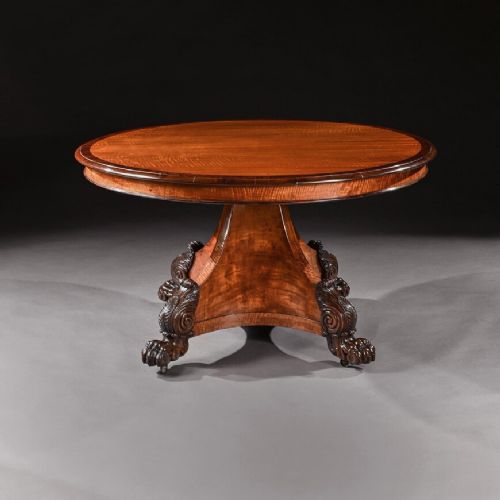
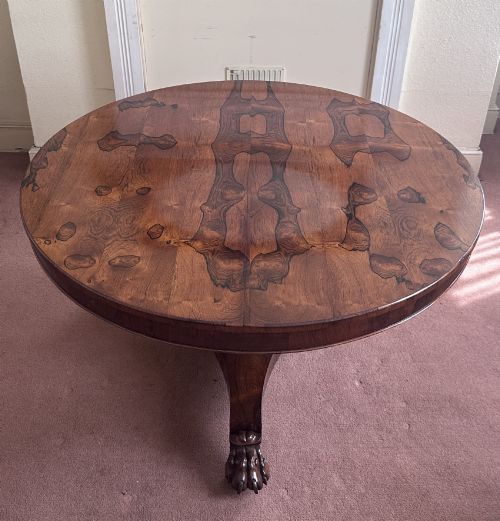
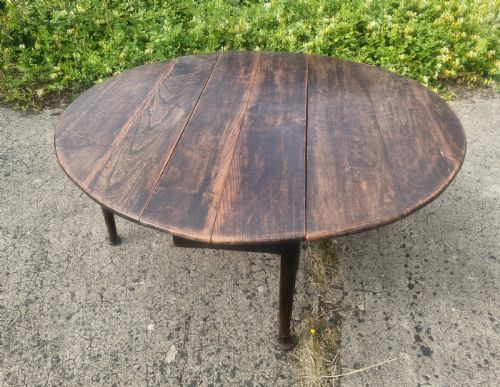
Brown Round Dining Table
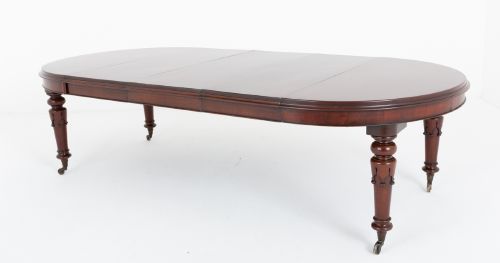
A brown round dining table offers an intimate setting for meals, bringing people together around rich mahogany, walnut, or oak timbers.

Brown Round Dining Table
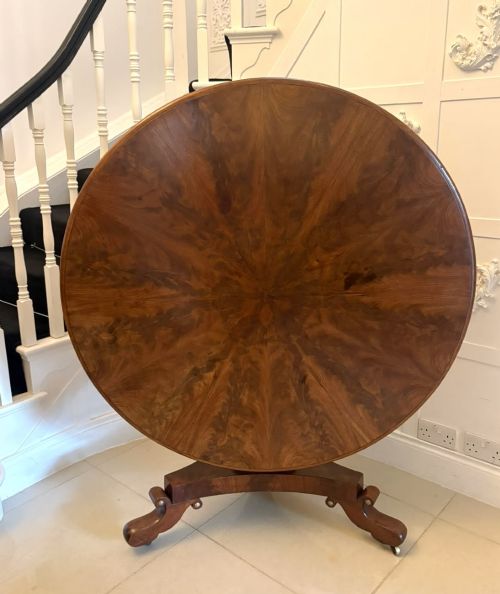
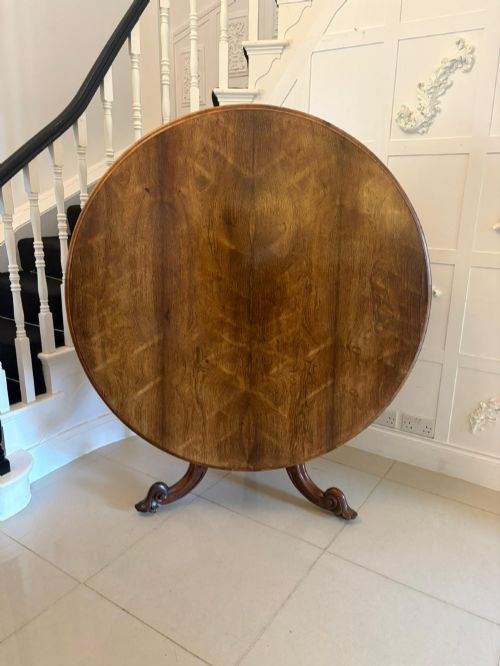
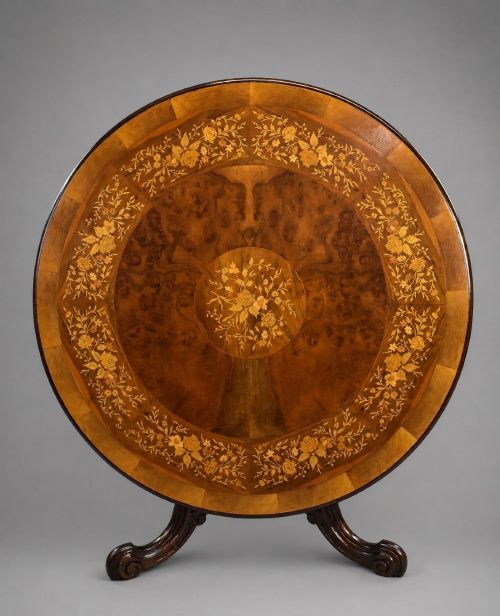
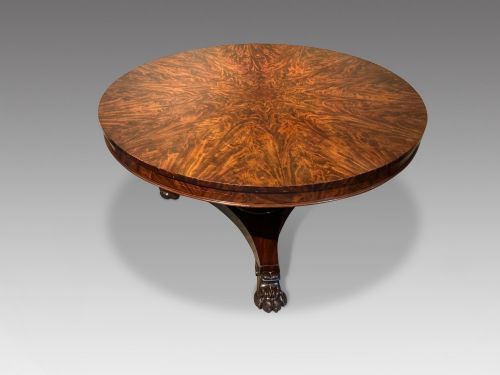
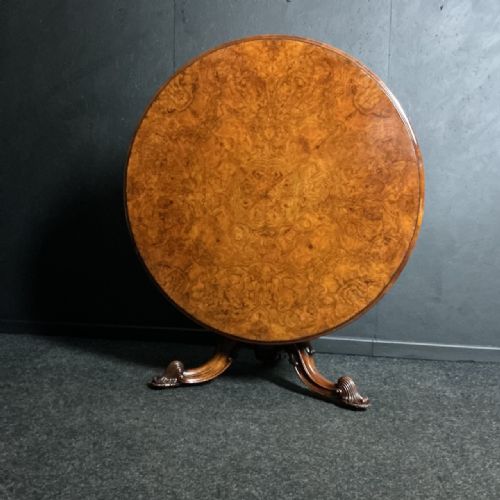
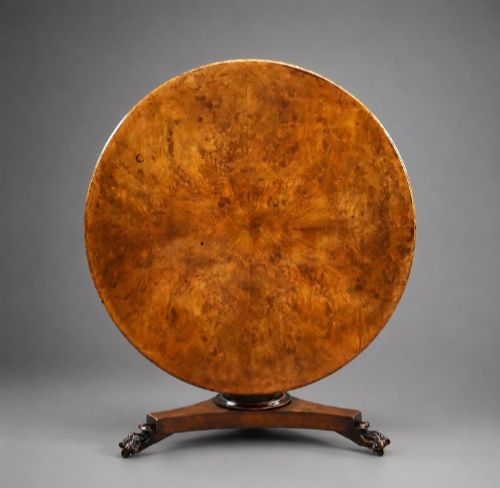
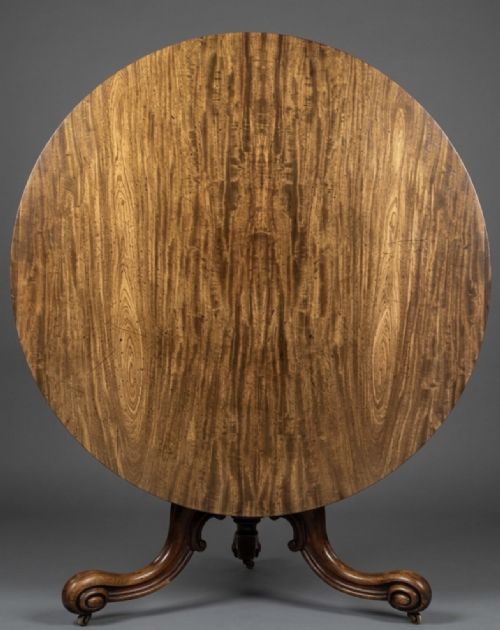
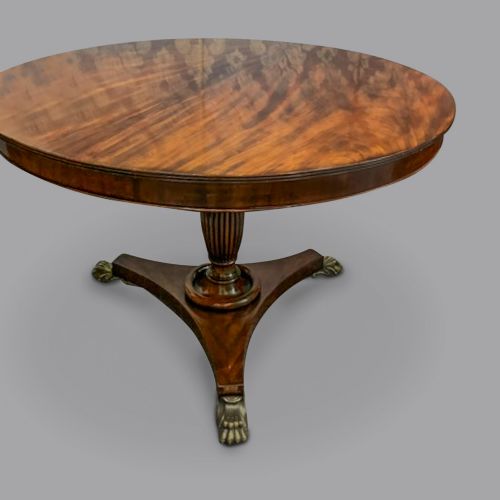
A brown round dining table brings centuries of craftsmanship into a domestic interior, spanning Georgian, Regency, Victorian, and later periods. You are most likely to encounter circular formats in mahogany, walnut, and oak, frequently configured as tilt-top breakfast tables or central pedestal designs.
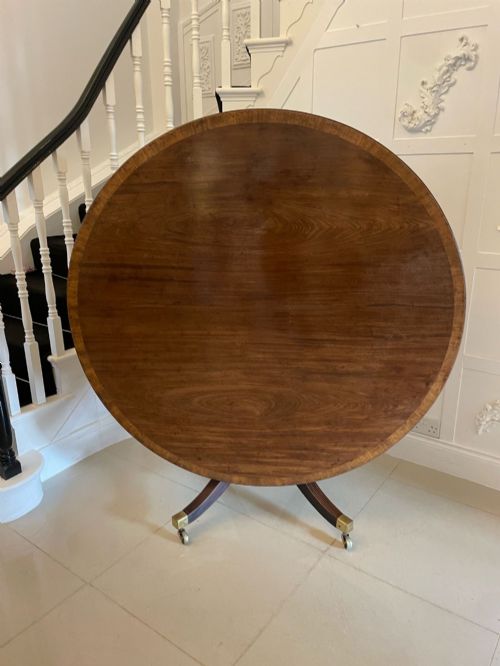
The selections range from country-made elm pieces to grand Regency tables featuring crossbanded borders and figured veneers. These items function as versatile focal points in a room, offering generous seating capacity without sharp corners.
How they were made
Cabinetmakers constructed these tables using solid hardwoods and decorative veneers such as mahogany, rosewood, burr walnut, and satinwood, often applied over stable secondary timbers. Central pillars commonly rest on tripod or platform bases, sometimes enriched with brass casters or intricate carving.
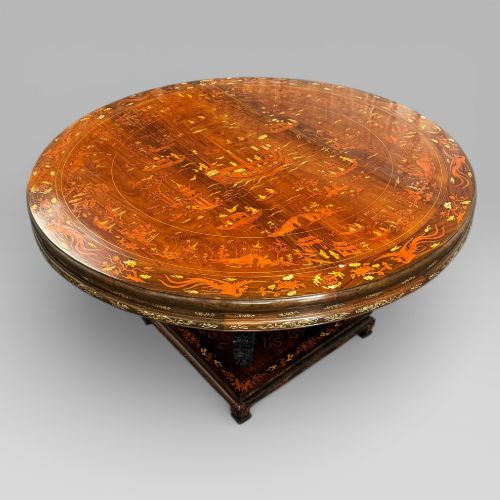
Joinery techniques include traditional mortise and tenon joints for frames, alongside sophisticated veneering methods like crossbanding and marquetry inlay. Tilt-top mechanisms rely on stable wooden or brass catches to secure the circular top when horizontal.
What varies in quality
The distinction between standard and exceptional pieces rests upon the choice of timber figure, such as highly figured mahogany or burr walnut, and the precision of the cabinetmaker's veneer work. Finer examples display harmonious grain matching across the circular top and crisply carved pedestal supports rather than mechanical shortcuts.
Proportion and structural integrity also dictate worth, where balanced pedestal columns and stable weight distribution ensure the table performs its function reliably over generations.
Edwards & Roberts·Sir Robert Stoddart Lorimer·Peters of Genoa
The Brown Round Dining Table Glossary
- Tilt-top
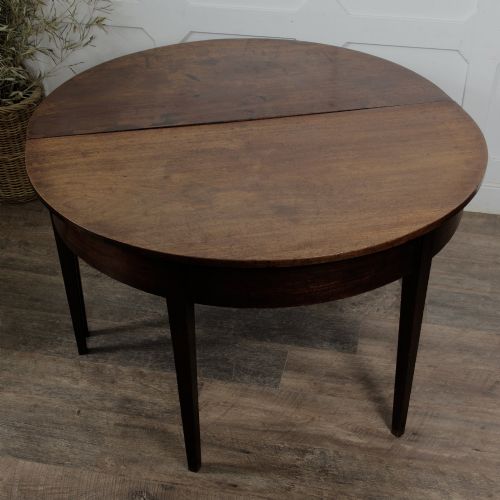
- A table mechanism allowing the circular surface to pivot vertically into a space-saving position when not in use. This clever design was popular in the Georgian and Regency eras.
- Crossbanded
- A decorative border inlay where veneer strips are laid perpendicular to the grain of the main surface. It frames the perimeter of the table top with a contrasting linear pattern.
- Marquetry
- The art of forming decorative patterns using small pieces of coloured wood veneer and other materials. It creates elaborate floral or geometric motifs across walnut tabletops.
- Tripod base
- A three-legged support structure commonly found beneath the central pillar of breakfast tables. It provides stable contact with the floor across uneven surfaces.
- Drop-leaf
- A table design featuring hinged flaps that fold down to reduce the footprint when space is limited. These are frequently supported by swing legs.
Brown Round Dining Table: Frequently Asked Questions
How do I seat six people at a round table?
Circular tables naturally distribute diners evenly, making conversation flow much easier across the centre without the barrier of long rectangular edges.
Ensure you check the diameter of the tabletop against standard chair widths to guarantee adequate legroom between the pedestal supports.
What is a breakfast table used for?
Historically, these versatile circular tables served morning meals in private chambers or functioned as centre tables in grand halls.
Today, they work wonderfully as intimate kitchen dining surfaces or as statement entrance hall tables when dressed with a central floral arrangement.
How do I date a mahogany dining table?
Examine the timber colour, weight, and secondary woods used beneath the surface, alongside the style of the pedestal and any brass fittings.
Georgian and Regency pieces often display rich, faded patination and hand-cut joinery marks that differ visibly from later Victorian or 1920s reproductions.
Are tilt-top tables stable enough for dining?
Period tilt-top tables rely on sturdy brass catches or wooden peg locks to secure the top firmly in its horizontal position during use.
When locked properly, the heavy mahogany or walnut top remains completely steady for daily meals and gatherings.