


Edwardian Regency Revival Table
These edwardian regency revival table pieces bring classical elegance and refined neoclassical lines into modern rooms without the fragility of true antiquity.

Edwardian Regency Revival Table
When you search for an edwardian regency revival table, you are looking at early twentieth-century interpretations of nineteenth-century classical furniture forms. These pieces borrow heavily from Regency and Sheraton aesthetics, scaled for the homes of the Edwardian period and later decades.
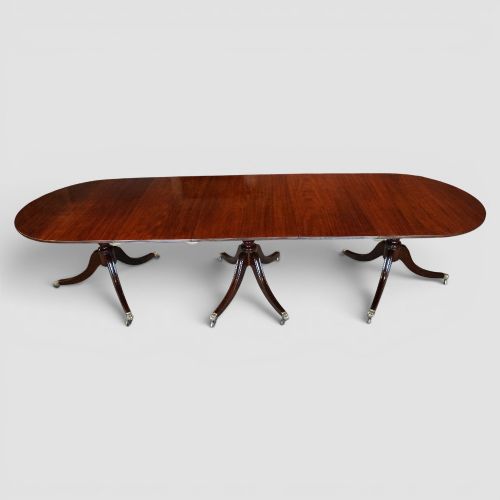
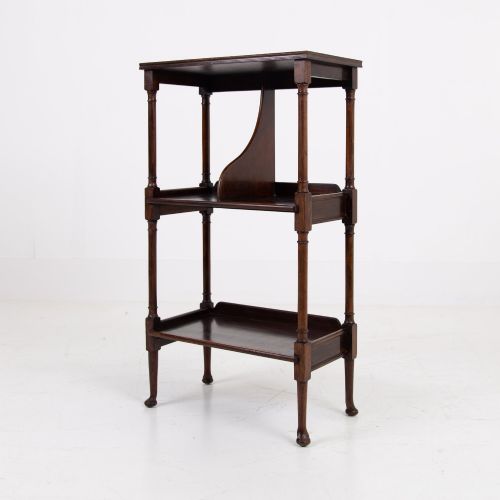
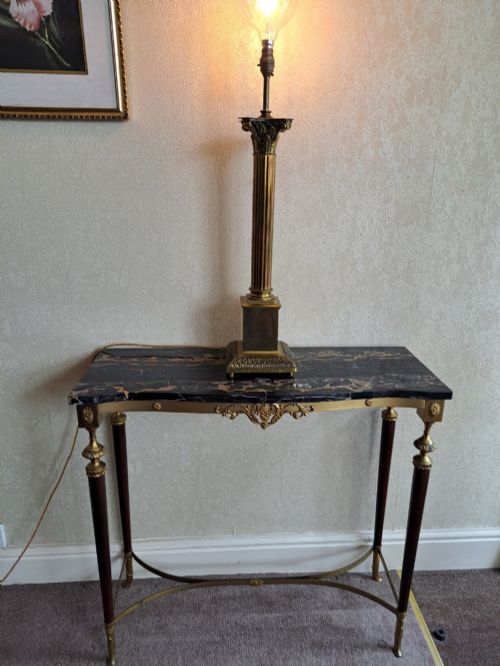
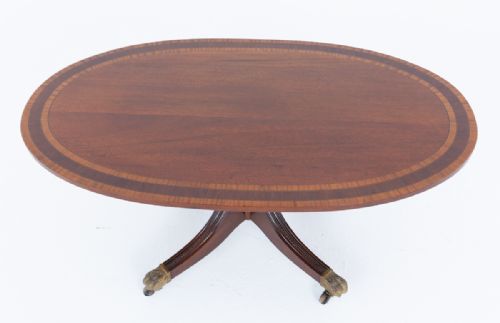
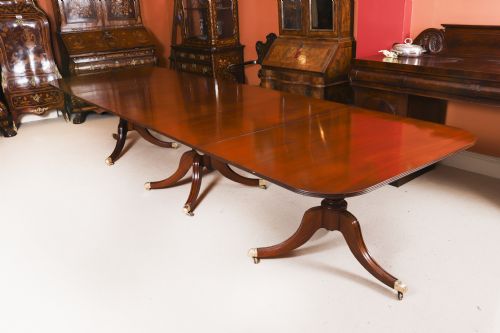
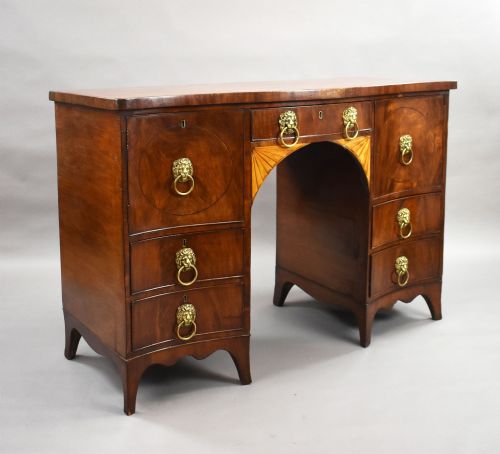
The selection on this page centres heavily on mahogany dining tables, centre tables, and occasional furniture such as coffee tables and lamp tables. You will also encounter lighter woods like satinwood and lacquered finishes alongside traditional forms.
Most items date from the early nineteen hundreds through to the nineteen thirties, capturing a revival era that prized formal symmetry and classical detail. They offer the presence of earlier designs combined with the sturdiness of twentieth-century construction.

How They Were Made
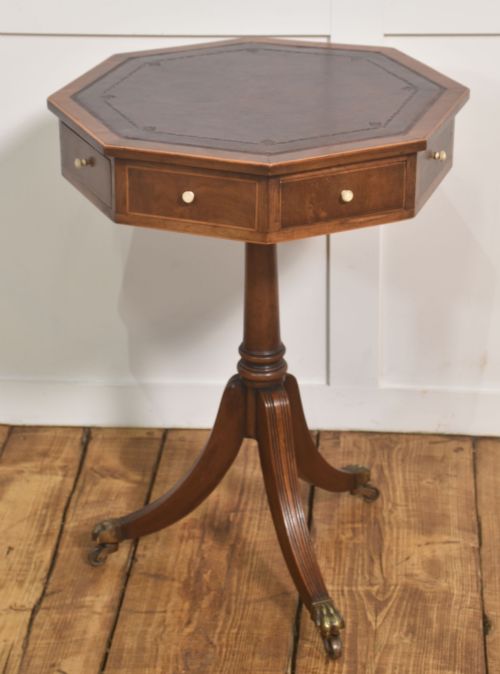
Surface treatments range from polished mahogany grains to lacquered finishes seen on occasional pieces and table lamps. Construction techniques prioritised extendable dining mechanisms, drum table structures, and sturdy pillar supports designed for daily use.
Materials recorded in current and past stock include mahogany, satinwood, brass, boxwood, and lacquer alongside upholstered fabric and leather.
What Varies in Quality
The distinction between standard examples and superior pieces rests on the precision of the timber selection and the crispness of the inlay work. Finer items display carefully matched mahogany grains and delicate boxwood stringing that remains intact across curved edges and folding surfaces.
Proportion and scale also dictate quality, as better workshops maintained balanced dimensions on large triple-pillar dining tables and smaller occasional pieces alike. Original brass mounts and solid pedestal bases further elevate the standing of a piece within this revival style.
Whytock & Reid
The Edwardian Regency Revival Table Glossary
- Regency Revival
- A design movement drawing inspiration from the early nineteenth-century Regency period, popularised during the late Victorian and Edwardian eras. It reinterprets classical symmetry, clean lines, and ancient Greek or Roman motifs.
- Sheraton Revival
- A subset of revival furniture focusing on the lighter, graceful forms associated with designer Thomas Sheraton. This style frequently incorporates satinwood, painted decoration, and tapered legs.
- Drum Table
- A circular table with a deep frieze resembling a drum, often containing drawers around the perimeter. These typically stand on a central pillar with spreading tripod or tetrapod legs.
- Centre Table
- A freestanding table designed to be viewed from all sides rather than pushed against a wall. They often occupy the middle of a reception room and feature finished timber tops and bases.
- Satinwood
- A pale, lustrous hardwood used extensively for veneers and inlay work during revival periods. Its yellow-gold colour provides a striking contrast against darker timbers like mahogany.
Edwardian Regency Revival Table: Frequently Asked Questions
What is an edwardian regency revival table?
These pieces are early twentieth-century reproductions and reinterpretations of nineteenth-century classical furniture designs. They combine earlier Regency and Sheraton aesthetics with the manufacturing standards of the Edwardian era.
Buyers choose them to gain the formal elegance of classical British furniture without the extreme fragility or cost of authentic Regency pieces. The selection includes everything from large dining tables to compact lamp and coffee tables.
How do I date these tables?
Dating relies on timber characteristics, construction methods, and stylistic cues recorded across the period from eighteen ninety to nineteen thirty. Edwardian pieces often show machine-sawn secondary timbers alongside hand-finished details.
Makers of this era frequently reproduced specific Regency motifs, but the overall patina and hardware generally point to the early twentieth century rather than the original Regency epoch.
Where were these tables used?
Original placement depended entirely on the specific form, ranging from grand dining rooms to intimate drawing rooms and hallways. Centre tables and drum tables sat in the middle of principal rooms, while small occasional and lamp tables served sitting areas.
Today, these pieces transition easily into modern homes, serving practical functions as dining surfaces, coffee tables, or display units while maintaining a classical silhouette.
How do I care for mahogany?
Mahogany requires consistent indoor humidity and protection from direct sunlight to prevent the timber from drying out or fading. Regular dusting with a soft, dry cloth preserves the polished surface without building up residue.
Occasional application of appropriate furniture wax helps nourish the wood and maintain the deep reddish-brown tone characteristic of these revival pieces.