


Inlaid Mahogany Tilt Top Table
An inlaid mahogany tilt top table combines timber figure with clever pivoting mechanics, designed to save space when not in use.

Inlaid Mahogany Tilt Top Table
An inlaid mahogany tilt top table is a versatile piece often found in Georgian, Regency, and Victorian forms, spanning the eighteenth and nineteenth centuries. These tables frequently appear as tripod wine tables, breakfast tables, and occasional pieces intended for flexible domestic use.
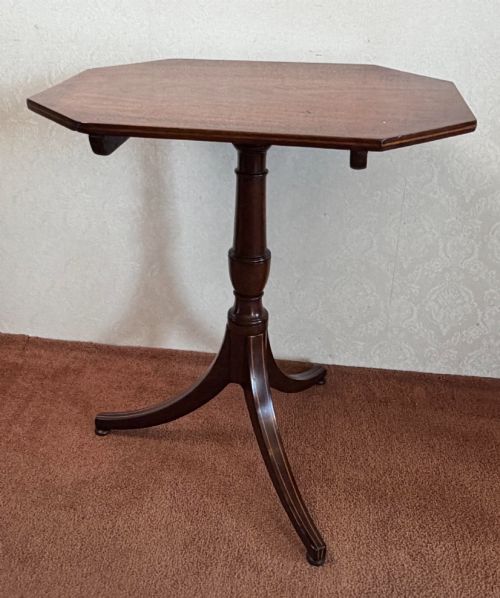
The defining mechanical feature is the birdcage or catch mechanism beneath the circular, oval, or octagonal top, allowing the surface to tip vertically against the pedestal pillar. This ingenious design meant the furniture could be parked flat against a wall in a parlour or drawing room to clear floor space.
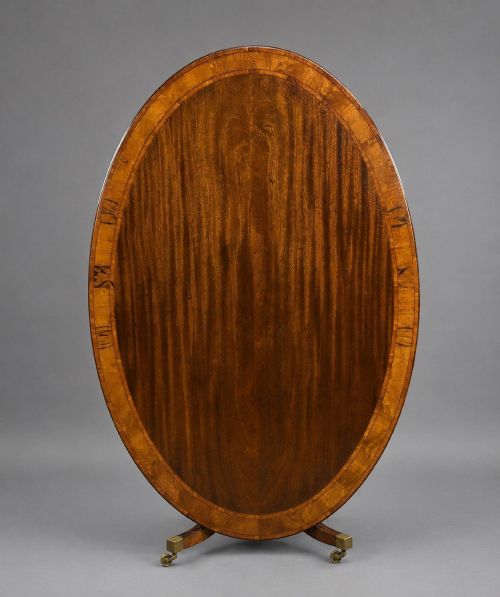
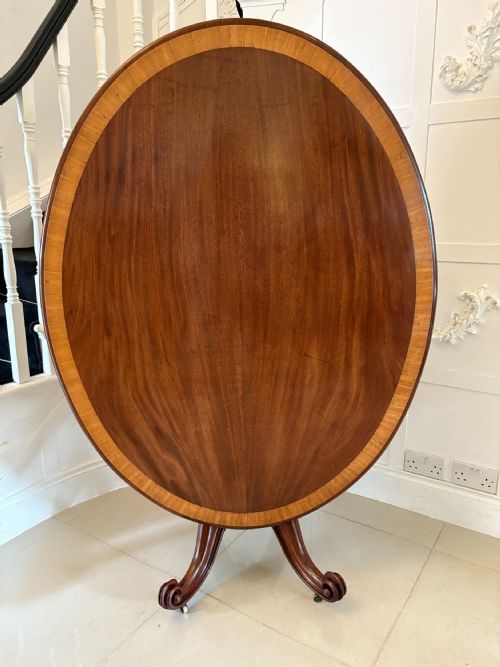
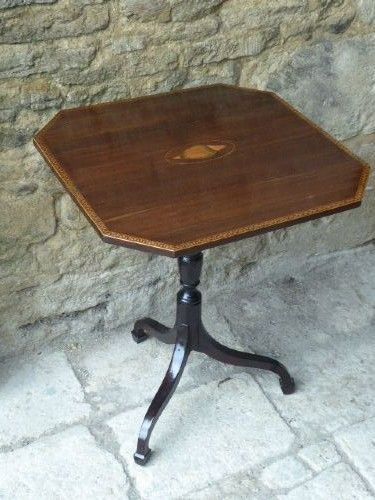
Makers utilised mahogany as the primary timber, enhanced with contrasting stringing, banding, and decorative motifs set into the top. Surviving examples range from small tripod wine tables to larger breakfast or loo tables supported by central pillars and brass or wooden feet.
How they were made
Cabinetmakers constructed these tables using solid mahogany for structural pillars and tripod legs, while table tops often utilised stable mahogany panels veneered to display rich figure. Turning lathes shaped the central pedestals and slender legs, while joiners fitted clever pivot blocks and brass catches beneath the surface.
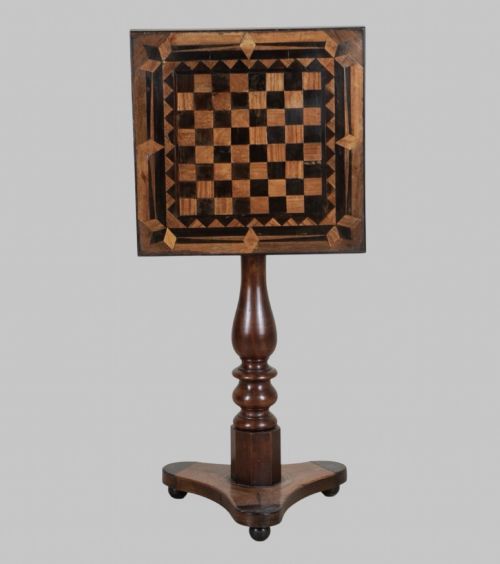
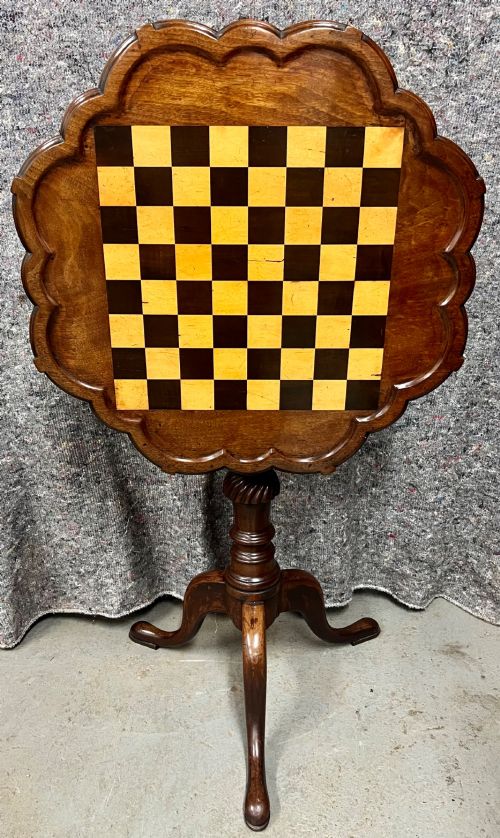
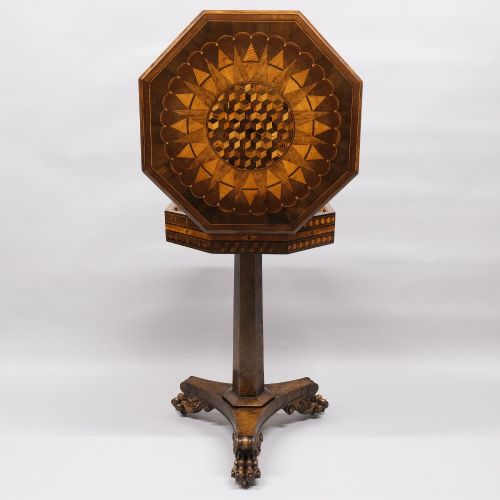
Inlay work required meticulous hand-cutting of contrasting timbers such as satinwood, boxwood, ebony, and lacewood into prepared channels within the mahogany ground. Specimen wood tops incorporated various timbers arranged in geometric patterns, starbursts, or chess boards, secured with animal glues and polished to a smooth finish.
Some nineteenth-century tables arrived complete with built-in chess boards, ready for unexpected parlour tournaments.
What varies in quality
Quality rests heavily on the selection of timber figure, the crispness of the turning on the pedestal, and the precision of the inlay work. Finer workshops employed dense, well-figured mahogany and sharp contrasting stringing that remains flush with the surrounding wood.
Mechanical integrity distinguishes superior pieces, particularly the snug fit of the tilt mechanism and the stability of the block joining the top to the column. A well-balanced tripod base with original brass fittings and unwarped timber indicates careful construction from the outset.
Ralph Turnbull·William Trotter of Edinburgh
The Inlaid Mahogany Tilt Top Table Glossary
- Tilt top
- A table mechanism featuring a hinged block that allows the top to pivot from horizontal to vertical. This configuration enabled easy storage against room perimeters when the furniture was idle.
- Tripod base
- A three-legged support structure radiating from a central turned pedestal. This arrangement prevented wobbling on uneven floors.
- Inlay
- The technique of embedding pieces of contrasting wood into the main timber surface to create decorative patterns. Cabinetmakers used boxwood, satinwood, and ebony for this purpose.
- Stringing
- Thin lines of contrasting timber inlaid in straight or curving channels around table edges and borders. It provides a neat, framed visual boundary.
- Birdcage
- A revolving wooden framework beneath the table top that permits both rotation and tipping. It represents a more complex mechanism than a simple hinge.
Inlaid Mahogany Tilt Top Table: Frequently Asked Questions
How did people use tilt top tables?
These tables served multiple functions in period interiors, acting as wine tables, lamp stands, or breakfast surfaces. When meal times or gatherings ended, occupants tipped the tops upright to clear floor space in smaller rooms.
The pivoting mechanism allowed the furniture to sit flat against a wall, functioning almost as a decorative screen until needed again for service.
How do I spot a Georgian table?
Georgian examples often feature restrained proportions, slender tripod legs ending in pad or spade feet, and subtle boxwood or satinwood stringing. The timber grain tends to show a rich, deep patina developed over centuries of care.
Construction details like hand-cut dovetails and traditional joinery help distinguish these pieces from later nineteenth-century revivals.
What is a specimen wood top?
A specimen wood top incorporates numerous different native and exotic timbers arranged in intricate geometric or pictorial patterns. Makers showcased their skill by combining contrasting grains and colours without paints or stains.
These decorative surfaces often appear on occasional and centre tables from the late eighteenth and nineteenth centuries.
Can I use a tilt top table daily?
These tables adapt well to modern living as bedside stands, lamp tables, or occasional surfaces for drinks. The tilt mechanism remains fully functional on most surviving examples.
Care should be taken to protect the polished mahogany surface from moisture and direct heat, exactly as one would with any antique hardwood furniture.