


Regency Burr Oak Table
A regency burr oak table brings unmistakable warmth and intricate timber figure to a room, offering both practical surface space and distinct period character.
Regency Burr Oak Table
When you search for a regency burr oak table, you encounter diverse forms created across the nineteenth century, including occasional tables, desks, side tables, dining tables, centre tables, card tables, and library tables. The selection ranges from authentic Regency and George IV pieces to later Edwardian examples and Regency Revival interpretations.
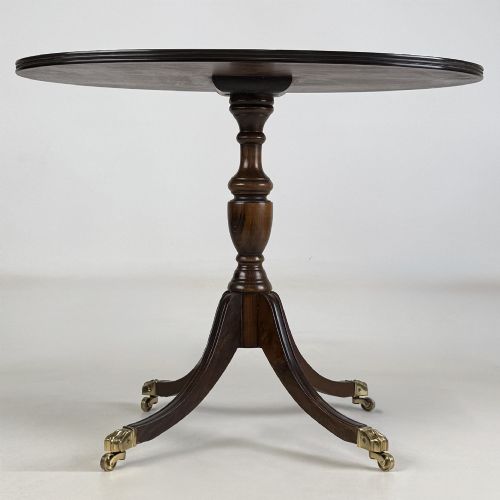
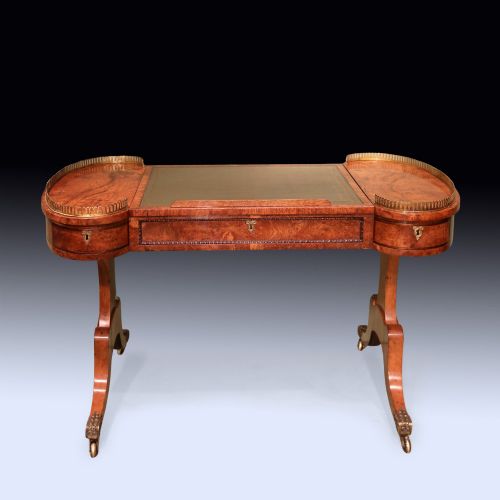
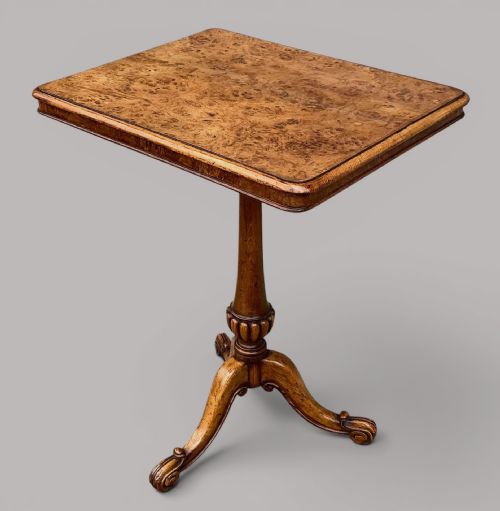
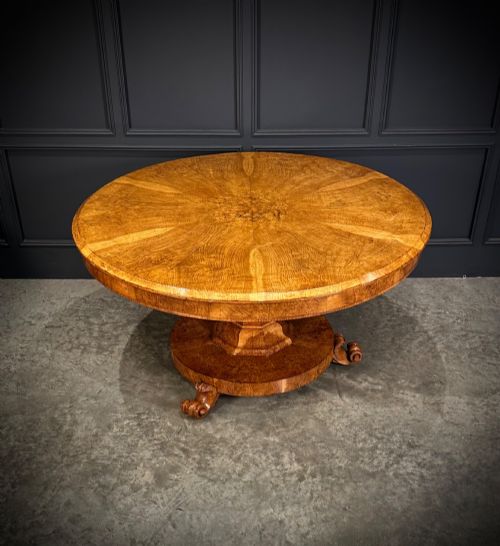
You are most likely to meet circular centre tables and tripod occasional tables on this page, alongside writing tables and card tables. These items reflect the domestic needs of their original owners, serving as designated spaces for writing, card playing, and displaying lamps or decorative objects.
The aesthetic bridges formal Regency design and the heavier proportions of the subsequent William IV period. Makers utilised rich timber figures to create functional furniture that doubles as a focal point in a traditional interior.
What varies in quality
The distinction between ordinary and superior pieces rests upon the selection and matching of the timber figure. Finer examples display symmetrical, richly patterned grain across the entire top surface without awkward joins.
Proportion and structural integrity also separate standard pieces from important works. Tables attributed to documented makers demonstrate meticulous attention to internal framing, brass detailing, and secondary woods like yew or ash.
Some card tables hide secret wells beneath their folding tops, originally intended for hiding losing stakes from watchful eyes.
William Trotter·Williams and Gibton of Dublin
The Regency Burr Oak Table Glossary
- Burr oak
- Timber taken from the growth excrescences of an oak tree, yielding a mottled and swirling grain pattern. Cabinetmakers prized this veneer for high-status surfaces.
- Pollard oak
- Wood harvested from trees that were pollarded, producing dense and tightly patterned growth rings. This material appears frequently alongside burr timber in nineteenth-century furniture.
- Centre table
- A freestanding table designed to be viewed from all sides rather than pushed against a wall. These forms often anchor the middle of a principal room.
- Card table
- A folding table with a hinged top that opens to reveal a baize or leather-lined surface for playing games. They often incorporate swivel tops and concealed storage wells.
- Cross-banding
- A decorative border technique where veneer strips are laid perpendicularly to the main grain of the tabletop. This frames the central panel and provides visual contrast.
Regency Burr Oak Table: Frequently Asked Questions
What is a regency burr oak table?
A regency burr oak table is a piece of nineteenth-century furniture characterised by decorative burl wood veneers and classical revival proportions. These items encompass dining, writing, and occasional tables produced during the Regency era and subsequent revival periods.
Craftsmen utilised the irregular grain of burr timber to create striking visual patterns on table tops. Such pieces remain sought after for their combination of utility and decorative presence.
How do I identify a genuine period piece?
Identifying an authentic period example involves examining construction methods, secondary timbers, and the nature of the veneer. Nineteenth-century pieces typically exhibit hand-cut joints and timber movement consistent with age.
Attribution also relies on stylistic markers associated with Regency and George IV cabinetmaking. Comparing the piece against documented examples helps confirm its era of origin.
Where should I place a centre table?
A centre table works best in an open space where its design can be appreciated from every angle. Placing it in the middle of a principal room or a large hallway allows it to function as a focal point.
These tables provide a surface for lamps, books, or floral arrangements while maintaining accessibility around the perimeter. Ensure adequate clearance for movement when positioning larger examples.