
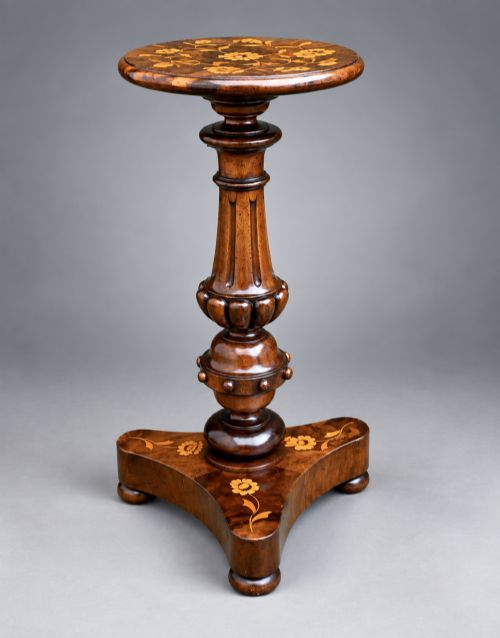
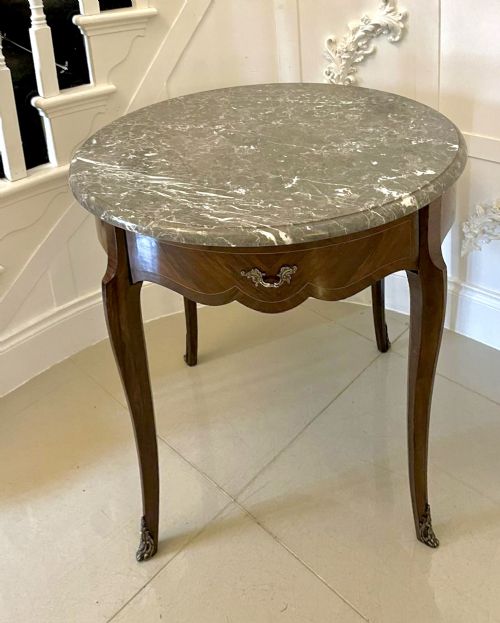
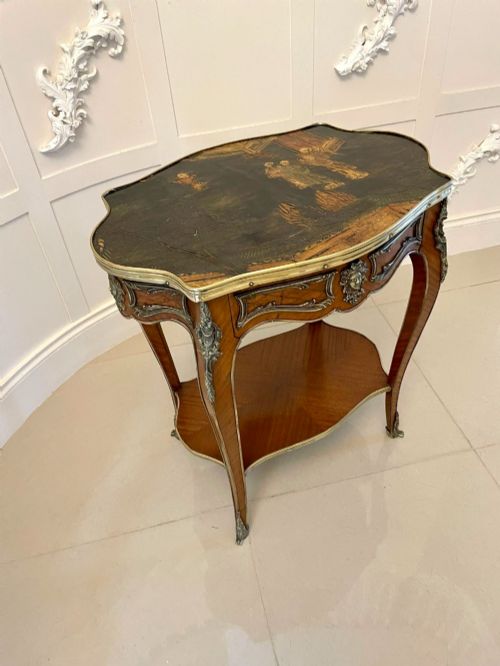
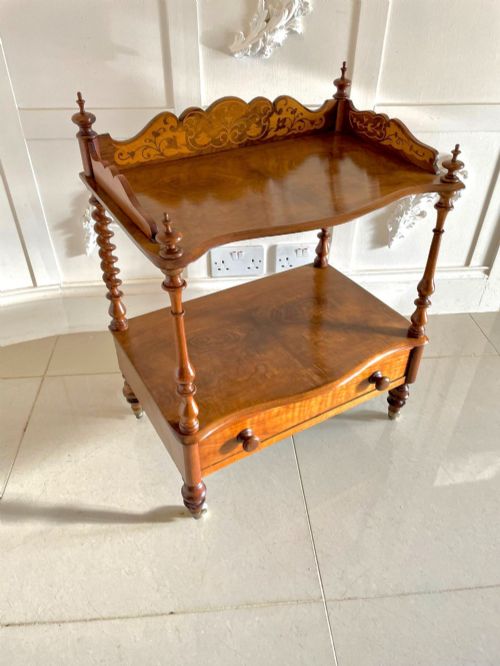
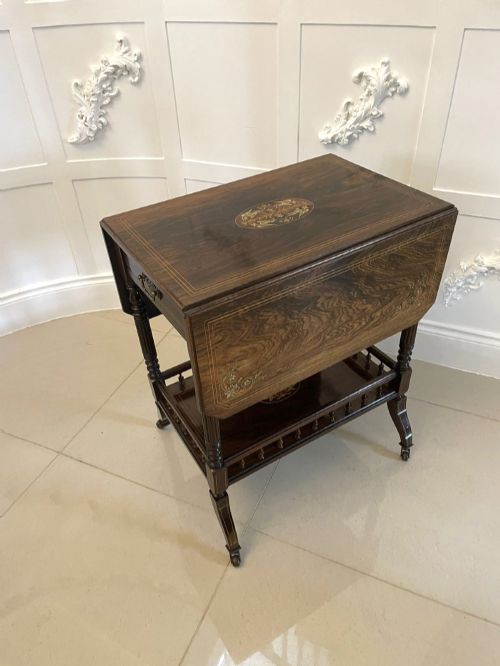
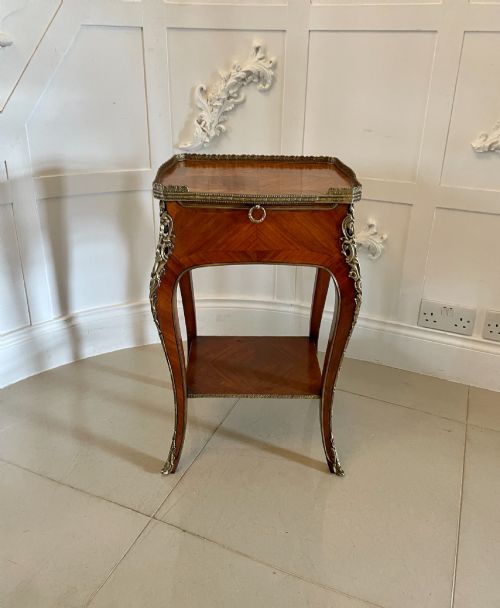
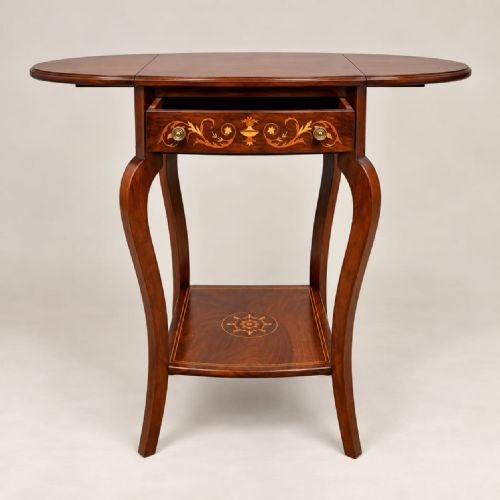

Victorian Marquetry Occasional Table
A victorian marquetry occasional table brings patterned wood and portable elegance to a room.
Victorian Marquetry Occasional Table
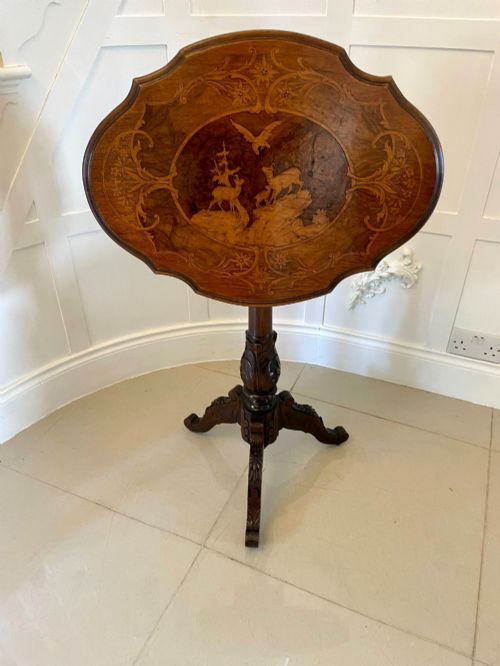
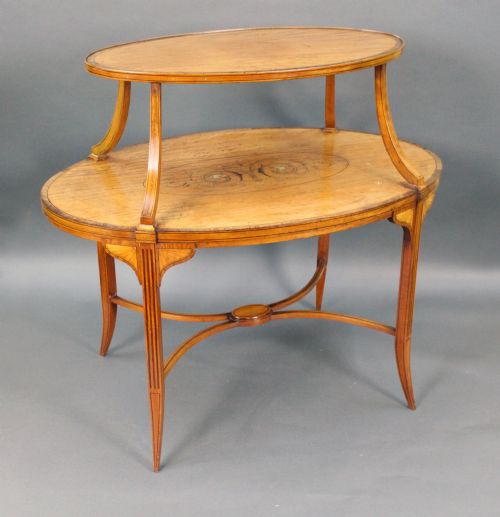
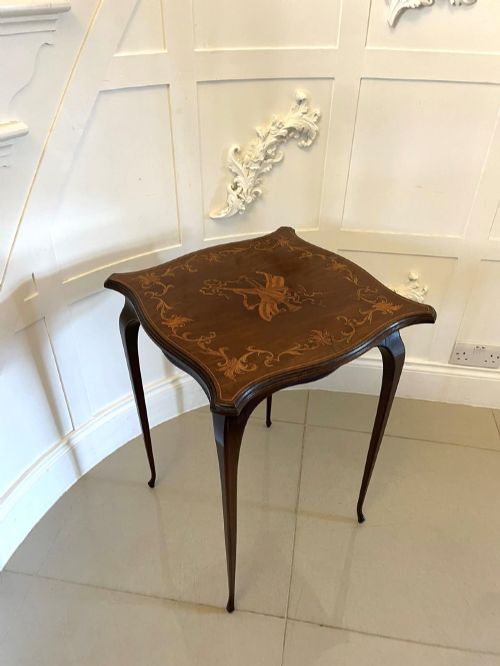
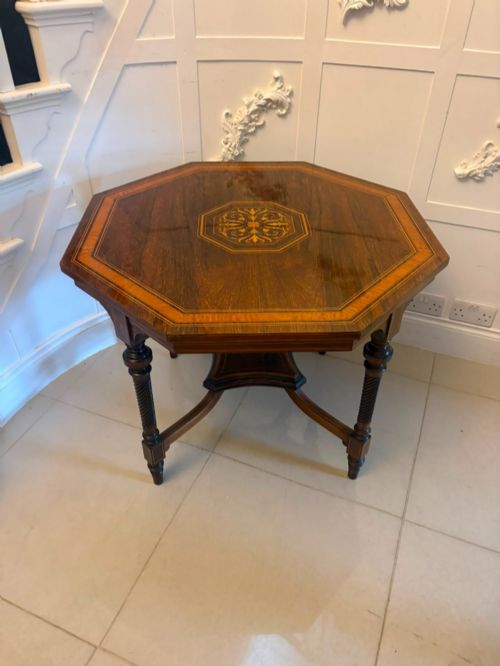
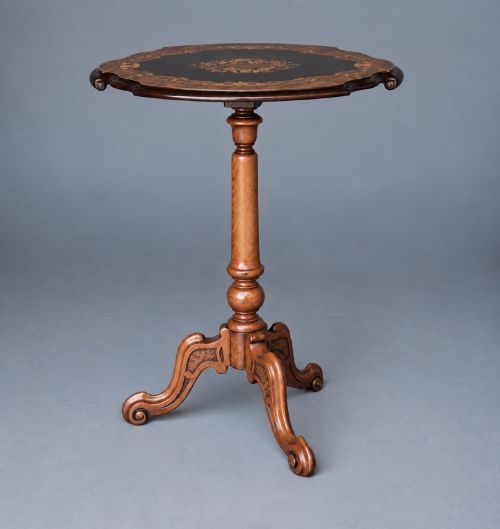
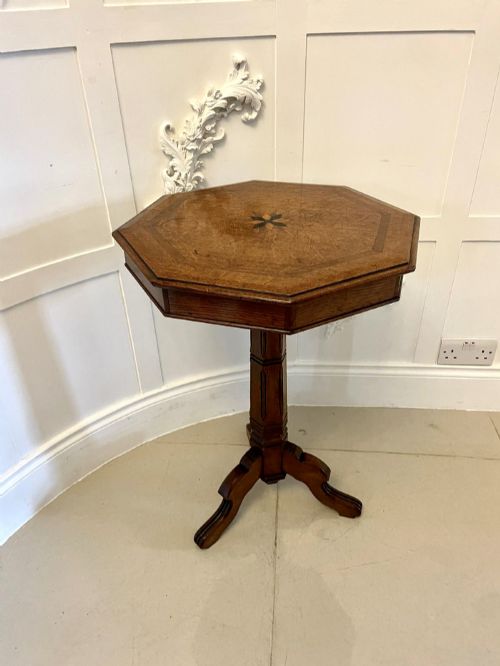
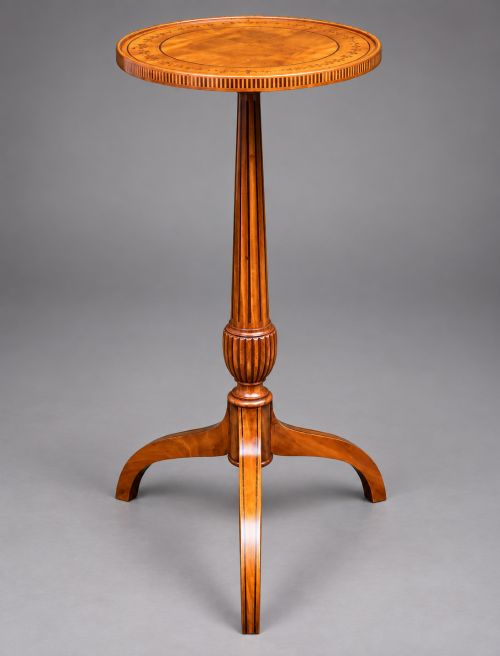
A victorian marquetry occasional table combines practical smaller scale surfaces with intricate wood inlay work from the nineteenth century. These pieces include lamp tables, wine tables, centre tables, and etagere forms.
Most examples date between eighteen fifty and eighteen ninety, reflecting periods like the Victorian era alongside revival movements such as Sheraton and Louis XV. Walnut, burr walnut, rosewood, and mahogany form the primary timber foundations for these decorative designs.
How they were made
Cabinet makers utilised solid woods like mahogany, walnut, and rosewood for structural integrity while applying contrasting veneers of satinwood, kingwood, and burr walnut. Marquetry inlay required precise cutting of diverse timber species to create floral or geometric pictorial motifs.
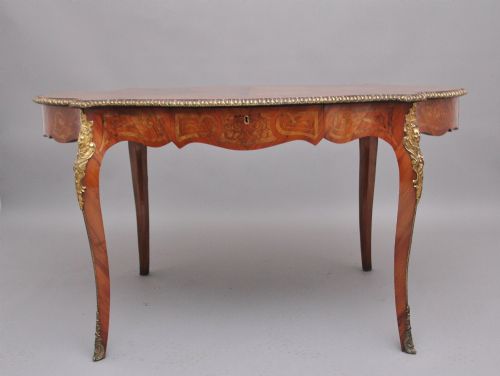
Metal accents such as brass and ormolu mounts added structural reinforcement and decorative contrast to French style freestanding tables and étagères.
The inventory includes occasional tables, lamp tables, wine tables, centre tables, etagere tables, and side tables.
What varies in quality
The precision of the wood inlay work and the choice of underlying timber dictate the grade of a piece. Dense burr walnut and figured satinwood indicate higher workshop standards than plain domestic woods.
Sophisticated mechanisms, fine ormolu mounts, and branded maker attribution separate standard production furniture from exceptional examples.
Edwards & Roberts·Gillows·Liberty & Co·Anton Seuffert
The Victorian Marquetry Occasional Table Glossary
- Marquetry inlay
- Decorative patterns formed by fitting contrasting veneer pieces into a prepared wooden surface. This technique creates pictorial floral or geometric designs across the tabletop.
- Occasional table
- A small, portable table designed for specific, intermittent use around a home. These forms include lamp tables, wine tables, and side tables.
- Étagère
- A set of open shelves for displaying small objects. These tiered tables often incorporate marquetry and brass mounts.
- Ormolu
- Gilded bronze used for decorative mounts and furniture trim. This material appears frequently on French revival pieces.
- Centre table
- A freestanding table finished on all sides to stand in the middle of a room. These larger surfaces often feature elaborate floral inlay.
Victorian Marquetry Occasional Table: Frequently Asked Questions
Where did people place these tables?
These pieces served as movable surfaces in nineteenth century drawing rooms and parlours. Owners placed them beside seating to hold lamps, books, or drinks.
Larger versions operated as centre tables in the middle of a room, while tiered etagere designs held small decorative objects.
How do I care for inlaid wood?
Keep these surfaces away from direct sunlight and heat sources to prevent the natural veneers from drying or splitting. Regular dusting with a dry cloth maintains the finish.
Apply occasional appropriate wax polish to nourish the timber without harming the delicate marquetry details.
What is the difference between marquetry and inlay?
Marquetry covers the entire surface in a mosaic of veneer pieces forming a pictorial design. Inlay typically inserts wood or metal into a solid recessed cavity.
Victorian pieces frequently combine both techniques to build complex floral and geometric tabletop motifs.
How can I tell the period?
Examine the timber choices, construction methods, and stylistic revivals present in the design. Burr walnut, rosewood, and satinwood predominated during the Victorian decades.
Look for specific revival cues such as Sheraton satinwood or Louis XV kingwood and ormolu mounts.