
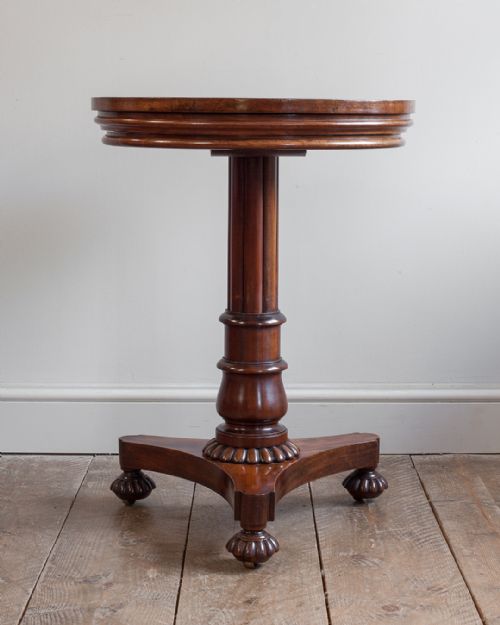
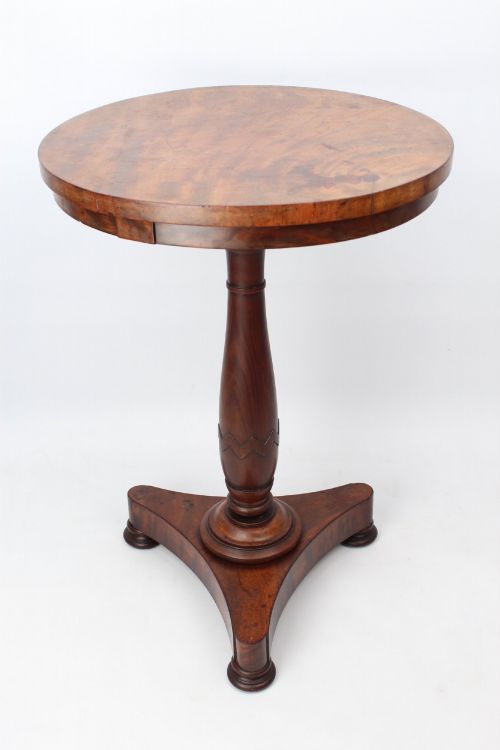
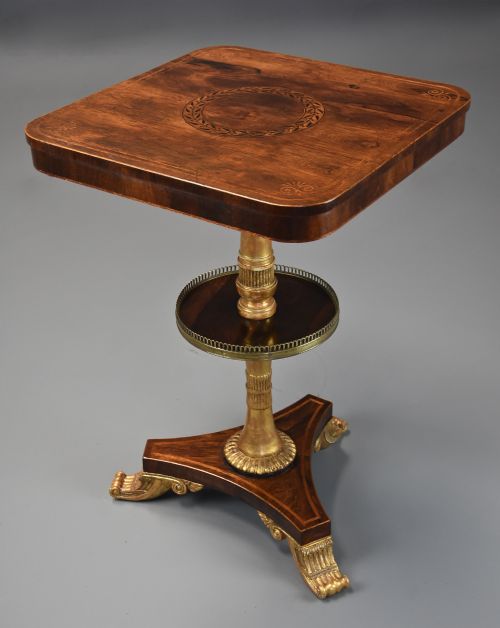

Pedestal Base Lamp Table
A pedestal base lamp table brings a sturdy central column and compact surface to a room, holding a light or resting beside a chair.
Pedestal Base Lamp Table
A pedestal base lamp table stands on a single central support, offering a compact surface suited to a corner or beside seating.
The selections span the nineteenth century, Regency, and Edwardian periods, appearing alongside later twentieth-century Art Deco examples.
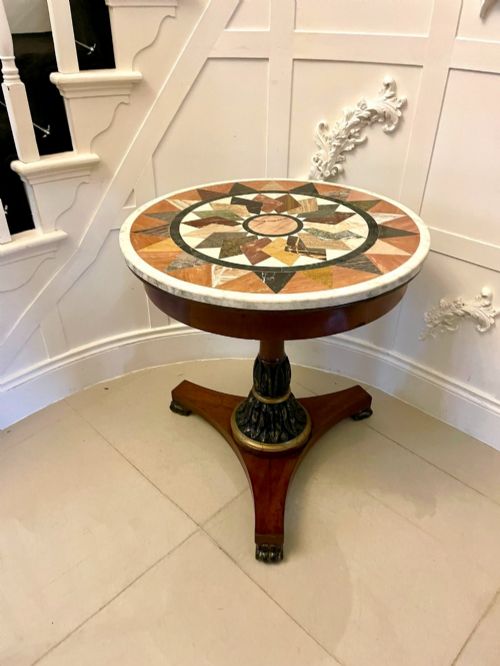
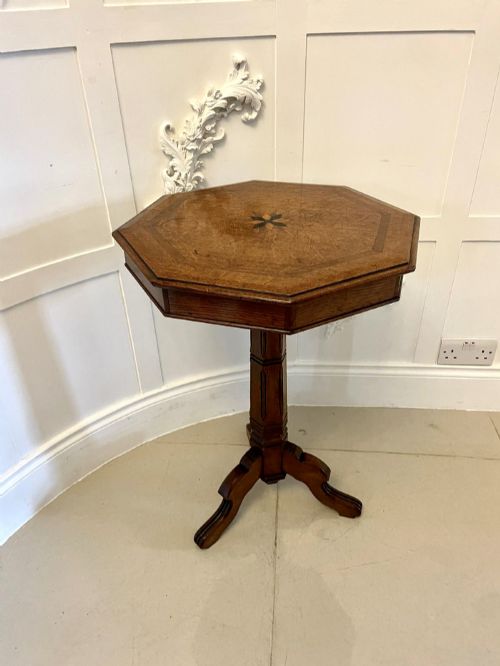
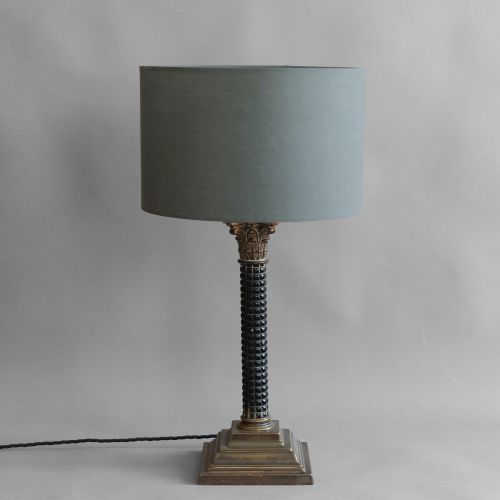
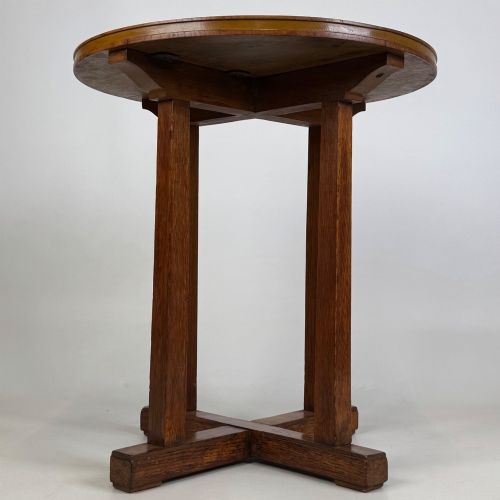
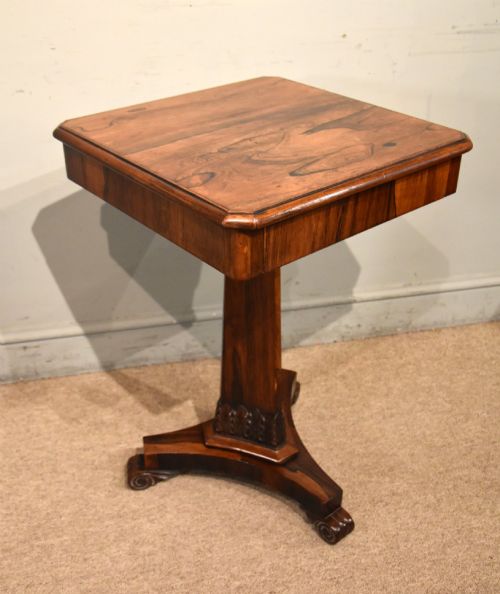
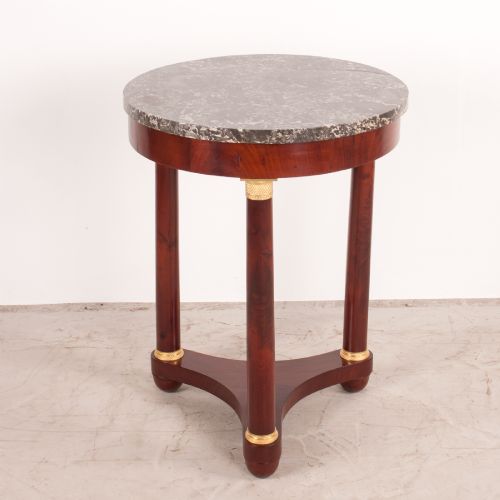
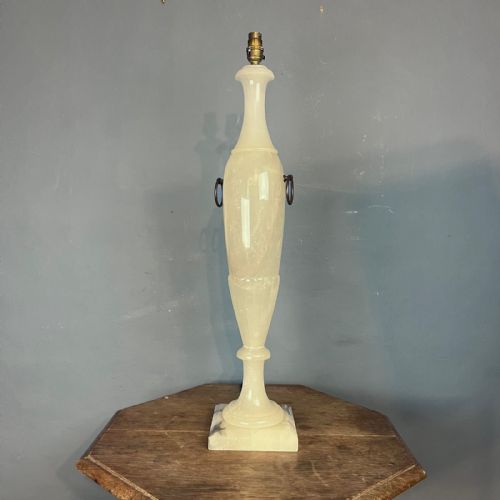
Makers utilised woods such as mahogany, rosewood, and oak, alongside brass columns, marble tops, and occasional bronze or alabaster elements.
Construction and Materials
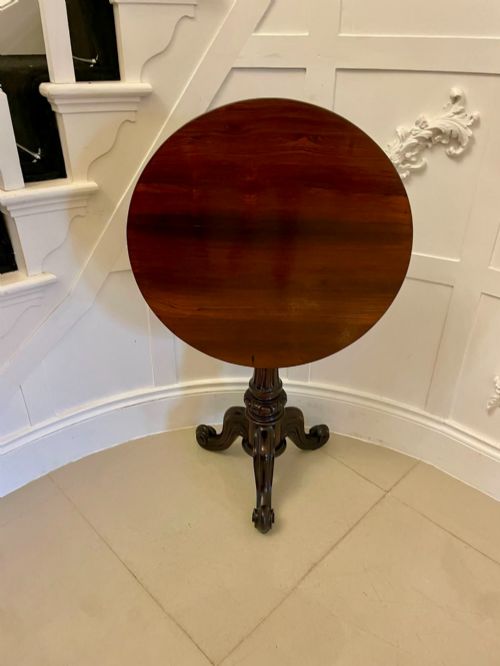
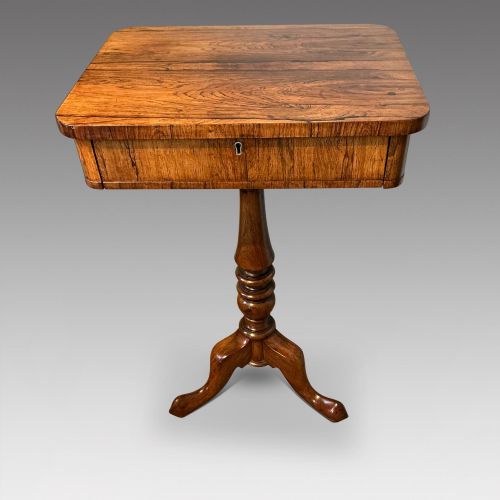
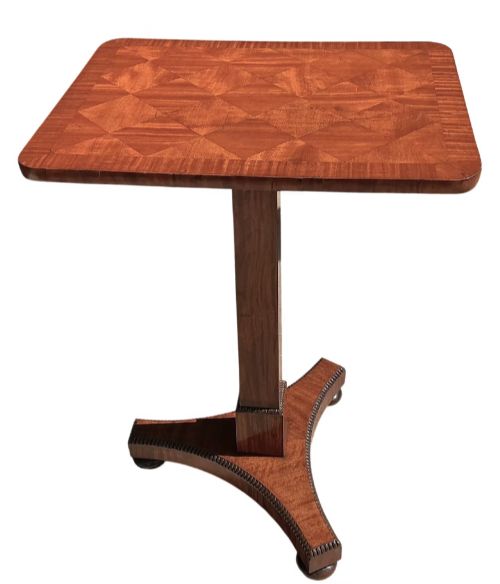
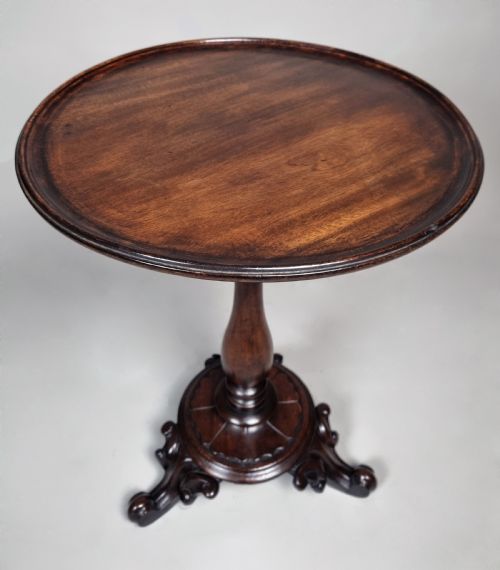
Tables are constructed from dense timbers like mahogany and rosewood, often turned on a lathe to form the central pedestal and supported by tripod feet or circular bases.
Metal components utilise brass and bronze, cast into columns or decorative mounts, while stone variants incorporate polished marble and alabaster tops.
One listed lamp incorporates a bronze Japanese elephant holding up the light source.
Quality Variations
Quality rests in the selection of timber veneers and solid stock, where well-figured rosewood or flame mahogany displays rich grain patterns across circular and square tops.
Joinery and stability dictate the merit of a piece, separating sturdy, well-balanced pedestal bases from those showing looseness in the central column or tripod joints.
Holland and Sons·George Bullock
The Pedestal Base Lamp Table Glossary
- Guéridon
- A small French occasional table, often with a circular top supported by a central pillar. These pieces commonly feature marble tops or decorative wood veneers.
- Tripod table
- A small stand supported by three legs radiating from a central column. They appear frequently in nineteenth-century British and continental furniture.
- Wine table
- A small occasional table designed to hold glassware or a bottle, typically featuring a dishtop or circular top on a pedestal base.
- Ionic column
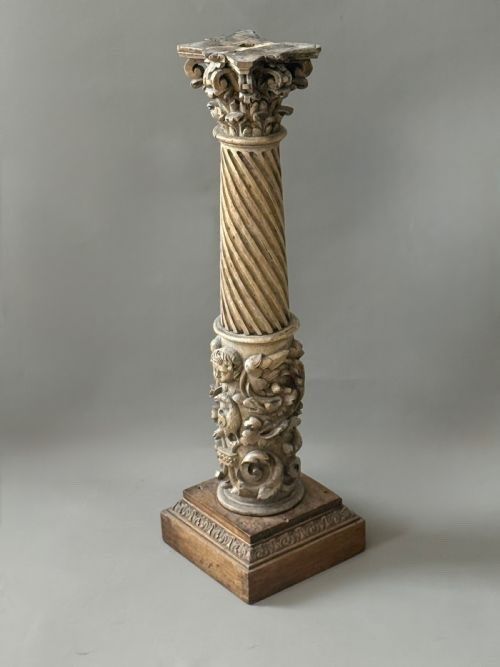
- A classical architectural column style featuring scroll capitals, frequently adapted for metal or wooden lamp bases of the Victorian period.
- Regency
- A style period spanning the early nineteenth century characterised by classical restraint, inspired by ancient Greek, Roman, and Egyptian forms.
Pedestal Base Lamp Table: Frequently Asked Questions
What is a pedestal base lamp table?
A pedestal base lamp table is a small stand with a single central column supporting a tabletop, designed to hold a light or sit beside seating. They provide a stable surface without taking up much floor space.
These pieces appear in various historical periods and materials, ranging from nineteenth-century mahogany and rosewood to twentieth-century brass and marble designs.
How were these tables used?
Historically, these small tables served as movable stands for oil lamps, candles, wine, or sewing equipment in sitting rooms and bedrooms. Their compact nature allowed them to be placed easily beside chairs or in corners.
Today, they continue to function as convenient surfaces for modern table lamps, drinks, or decorative objects within living spaces.
How do I tell a Regency table from a Victorian one?
Regency tables often display cleaner classical lines, simpler geometric forms, and restrained brass or rosewood ornament dating from the early nineteenth century. They frequently show influence from ancient classical motifs.
Victorian pieces, produced later in the nineteenth century, often incorporate heavier carving, darker ebonised finishes, or more elaborate ornamental details influenced by various revival styles.
Are these tables solid wood or veneered?
Makers utilised both solid timbers and decorative veneers depending on the style and period. Many circular tabletops feature finely figured rosewood or mahogany veneers laid over a secondary wood core.
Structural parts like the central pillars and tripod bases were typically turned from solid hardwoods to ensure stability and weight at the base.
How should I care for a wood and marble table?
Wood surfaces benefit from occasional dusting with a soft cloth and minimal exposure to direct sunlight or sudden changes in temperature. Maintaining consistent indoor humidity helps protect antique timber and veneers.
Marble tops require prompt wiping of liquid spills to prevent staining, using mild soap and water rather than abrasive chemical cleaners.