


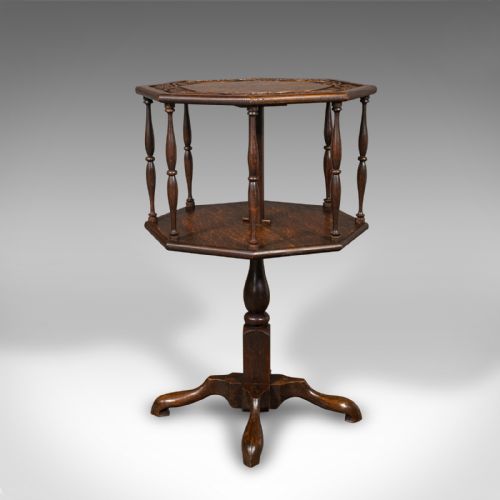

Octagonal Oak Wine Table
An octagonal oak wine table brings sturdy timber and practical geometry to a corner, offering a compact surface suited to daily use.
Octagonal Oak Wine Table
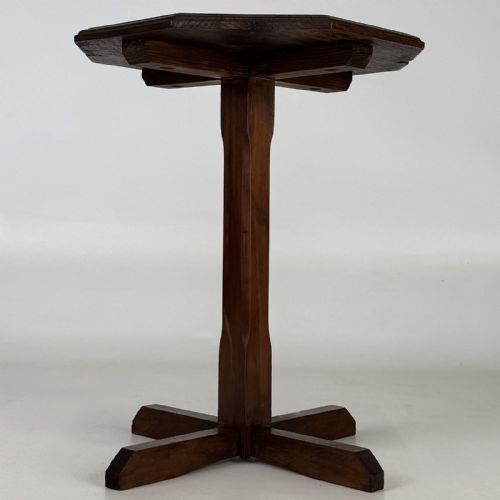
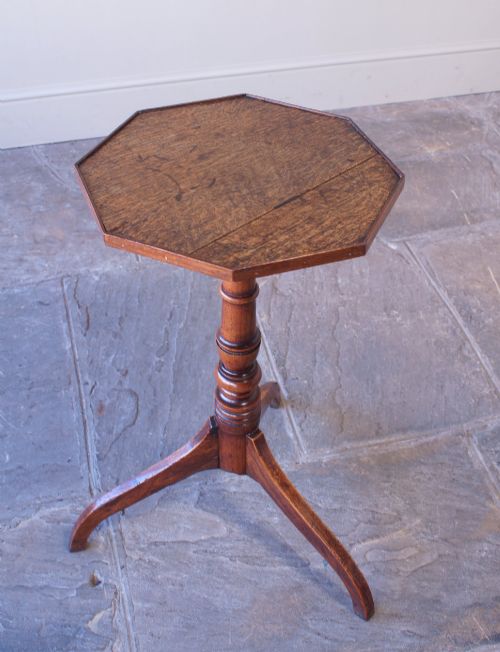
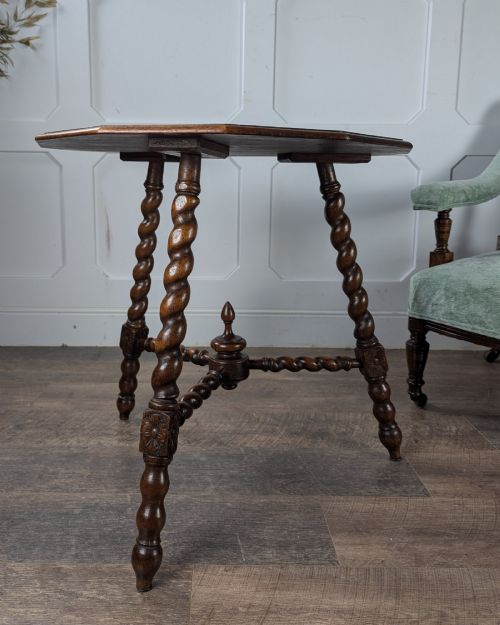
An octagonal oak wine table combines a polygonal top with robust timber, functioning primarily as a small occasional piece, lamp stand, or candle holder. These items appear in formats ranging from simple eighteenth-century tripod designs to later Victorian and Edwardian examples featuring shelves or barley twist legs.
The versions most commonly met on this page span the eighteenth century up to the nineteen-thirties, reflecting influences such as the Georgian era, Gothic Revival, and Arts and Crafts movements. Forms alternate between slender column supports with tripod bases and heavier four-legged occasional frames.
Buyers seek these pieces for their geometric tops and dependable wood grain, which fit neatly beside seating or in hallways. They serve practical domestic roles while displaying historical characteristics from various British periods.
Materials and construction
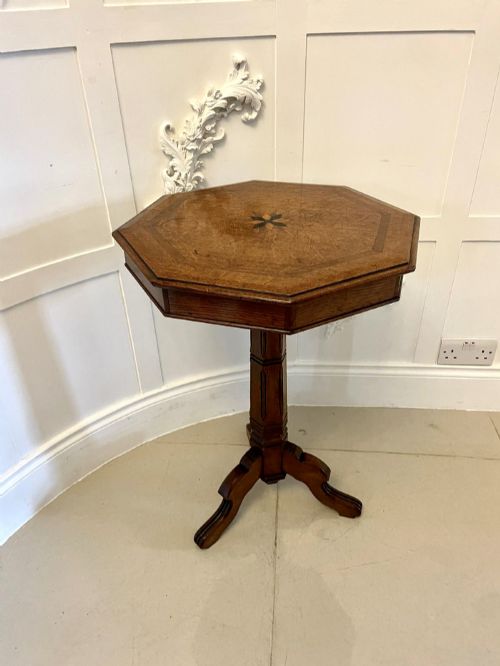
Makers built these tables predominantly using solid oak, often supplemented by elm for contrasting elements or burr oak and burr wood for decorative grain patterns on the top surfaces. Wood inlay appears on certain interpretive styles, adding visual texture to the polygonal tops.
Structural techniques include traditional tripod leg arrangements and turned supports such as barley twists, reflecting the prevalent joinery methods of each respective period from the eighteenth century onwards.
Current listings feature oak, elm, and burr wood across periods spanning from the eighteenth century through to nineteen-thirty.
Judging quality
Quality rests upon the selection of timber, particularly where figured burr wood or substantial solid oak is utilised to form the polygonal top. Better examples show careful integration of carved details or turned components like barley twist legs that remain stable and well proportioned.
The refinement of the joinery and the integrity of the base, whether a tripod configuration or a four-legged frame, determine the overall execution. Pieces influenced by specific movements such as Arts and Crafts or Gothic Revival demonstrate distinct stylistic commitment in their shaping and surface treatment.
The Octagonal Oak Wine Table Glossary
- Octagonal
- Having eight sides and eight angles. This geometric shape defines the top surface of the tables listed here.
- Barley twist
- A turned wooden column resembling a twisted rope. This decorative support appears frequently on nineteenth and twentieth-century legs.
- Tripod base
- A three-legged support structure. Many eighteenth-century candle stands and small tables utilise this configuration for stability on uneven floors.
- Burr oak
- Wood taken from a tree growth where grain swirls meet knots. It produces richly patterned surfaces utilised on select tabletops.
- Occasional table
- A small, movable table intended for specific, intermittent use. These pieces function easily as lamp or wine stands.
Octagonal Oak Wine Table: Frequently Asked Questions
What is an octagonal oak wine table used for?
These pieces serve as compact surfaces for holding drinks, lamps, or candles beside seating areas. Their small footprint allows them to fit easily into corners or narrow spaces.
Historically, similar tripod stands held illumination or small vessels during evening gatherings. Today, they function well as decorative accents and practical furniture.
How do I identify an eighteenth century table?
Eighteenth-century examples often feature simpler, utilitarian tripod structures or plain timber tops shaped by hand. Joinery methods and patination on the oak or elm provide clues to their age.
Later Victorian and Edwardian pieces frequently incorporate decorative turnings like barley twists or additional lower shelves. Comparing the leg style and overall proportion helps clarify the period.
What is burr oak?
Burr oak comes from a specific tree growth that creates intricate, swirling patterns in the wood grain. Furniture makers prized this material for tabletops to add visual depth.
It appears on select refined pieces where the natural texture of the timber serves as the primary decoration. The figuring makes each top completely unique.
Are these tables sturdy enough for daily use?
Solid oak and elm construction gives these small tables a durable core suitable for holding everyday items like lamps and books. Their compact weight also makes them simple to reposition around a room.
Tripod bases and four-legged frames distribute weight evenly, provided the joints remain tight. Regular placement on flat flooring ensures long-term stability.