


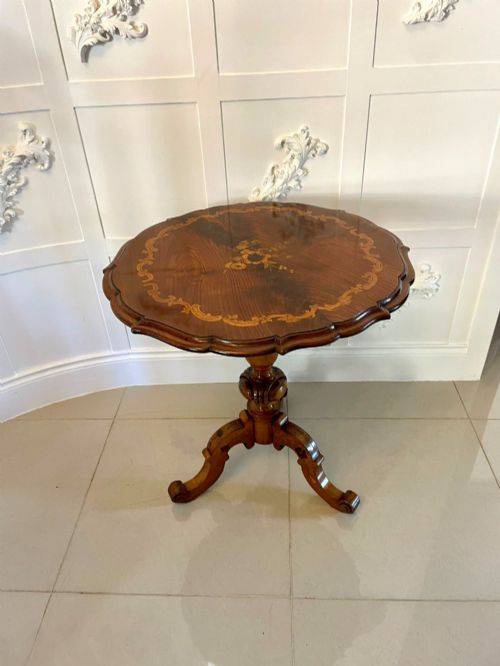
Marquetry Inlay Side Table
A marquetry inlay side table brings patterned wood veneers and decorative surface work into a room through forms spanning the eighteenth to the twentieth centuries.
Marquetry Inlay Side Table
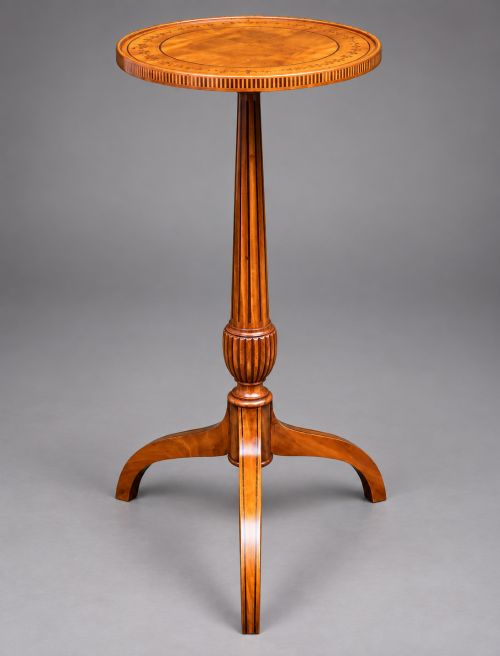
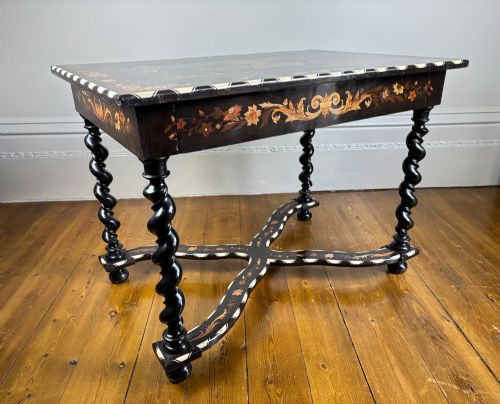
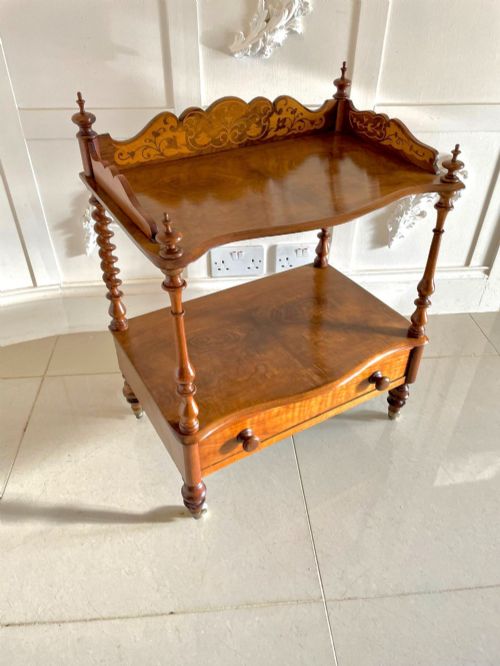
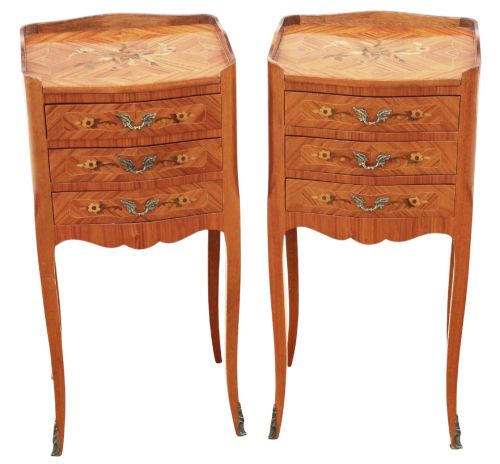
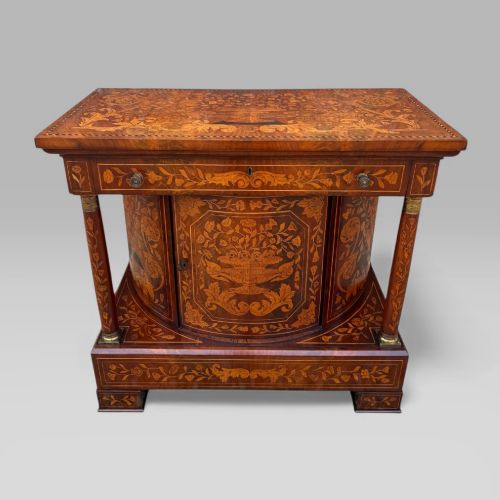
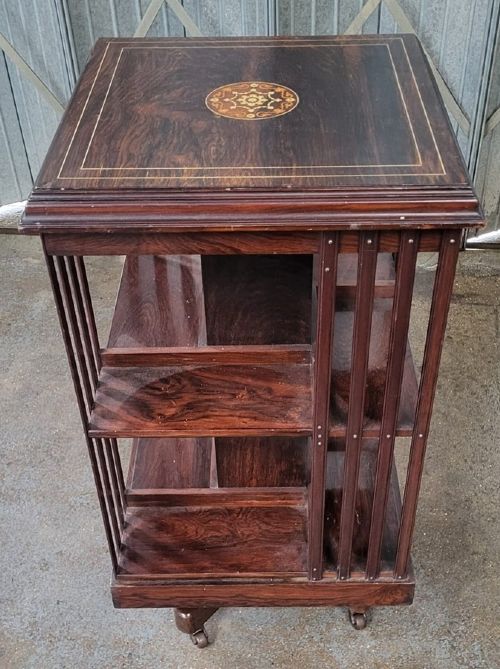
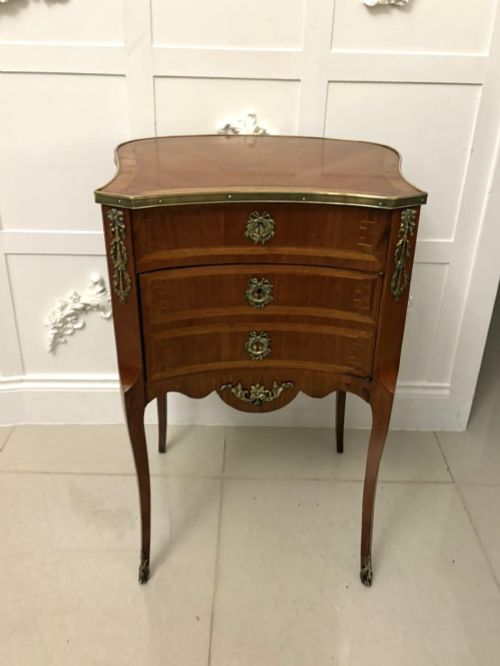
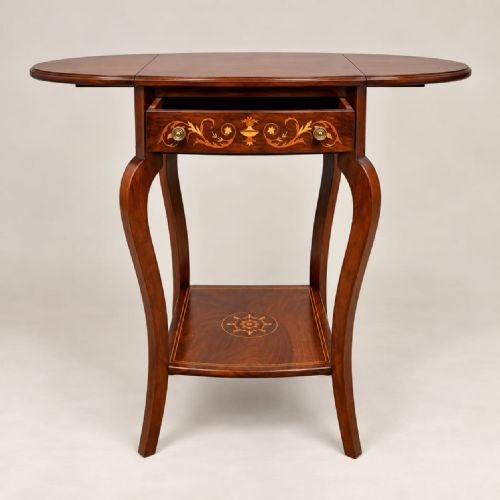
A marquetry inlay side table encompasses a variety of domestic surfaces including occasional tables, lamp tables, bedside tables, and larger centre pieces. These items serve functional roles in sitting rooms and bedrooms while displaying intricate surface ornamentation.
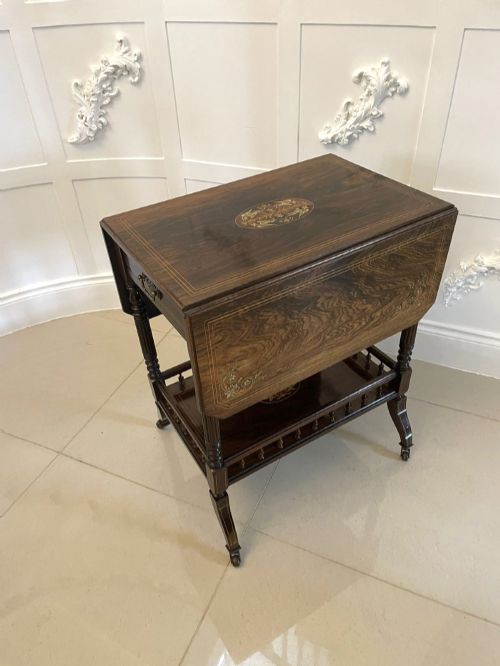
The nineteenth century and the Edwardian era provide the bulk of the examples seen here, often following French Louis XV or Victorian design vocabularies. Walnut, rosewood, and mahogany form the primary structural timbers for these decorative surfaces.
Materials and construction
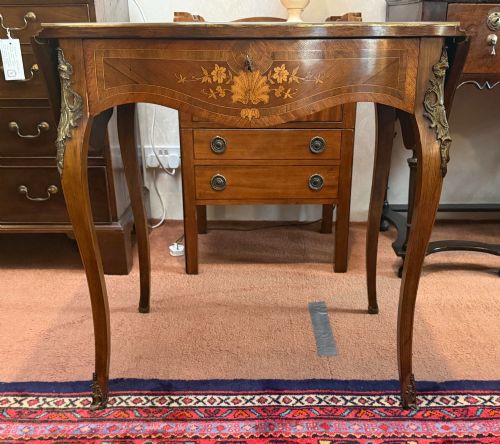
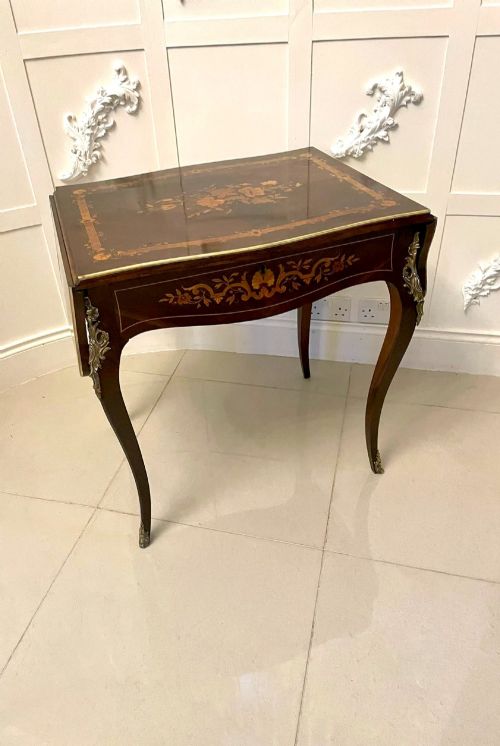
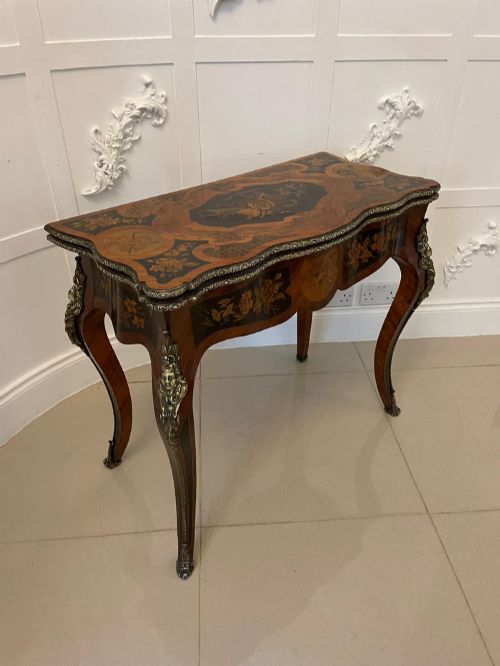
Cabinet makers constructed these pieces using dense foundational timbers such as walnut, mahogany, and rosewood, applying contrasting veneers of satinwood, kingwood, and tulipwood to create pictorial or geometric patterns. Ormolu mounts frequently accent the corners and legs of French revival pieces.
Marquetry involves cutting thin slices of diverse woods and assembling them into intricate pictorial designs before gluing them to the carcase of the table. Subsequent polishing brings out the natural colour variations between the different timber species used in the pattern.
Some tables double as games surfaces, hiding secret boards for cards or patience beneath their intricate wooden tops.
Assessing craftsmanship
The standard of execution in the marquetry cutter's work determines the precision of the joints between individual veneer pieces and the complexity of the overall design. Finer examples maintain crisp lines in floral or geometric motifs without visible gaps or excessive filler.
The choice of secondary timbers and the weight of the cast or chased ormolu mounts indicate the ambition of the original workshop. Substantial walnut or rosewood carcases provide stability that lighter, secondary woods lack.
Gillows
The Marquetry Inlay Side Table Glossary
- Marquetry inlay
- A decorative technique where small pieces of coloured wood veneer are assembled to form pictures or geometric patterns on a surface.
- Ormolu
- Gilded bronze mounts applied to furniture for decorative effect, commonly found on French revival pieces.
- Kingwood
- A dense, richly grained tropical timber used extensively for contrasting veneers in fine cabinet making.
- Centre table
- A freestanding piece designed to be viewed from all sides rather than pushed against a wall.
Marquetry Inlay Side Table: Frequently Asked Questions
Where should I place a side table?
These tables suit placement beside seating areas for holding lamps or small objects, or against hallway walls as accent surfaces.
Freestanding centre tables require placement away from walls to allow full appreciation of their decorated tops from every angle.
How do I care for wood veneer?
Keep these pieces away from direct sunlight and steady heat sources to prevent the underlying adhesives from failing and the veneers from lifting.
Apply occasional traditional wax polish to nourish the timber and maintain the lustre of the polished surface.
How do I identify French styles?
French revival pieces often feature serpentine edges, cabriole legs, and cast ormolu mounts framing the decorated wood surfaces.
These designs draw inspiration from eighteenth-century court furniture interpreted by later Victorian and Edwardian workshops.
What is the difference between marquetry and parquetry?
Marquetry creates pictorial or floral scenes using varied timber species cut into specific shapes.
Parquetry arranges geometric wood pieces into repeating patterns such as cubes or chequers.