



Swedish Tilt Top Table
A swedish tilt top table brings functional elegance and warmth to a room, offering clever folding mechanisms alongside rich native timbers.
Swedish Tilt Top Table
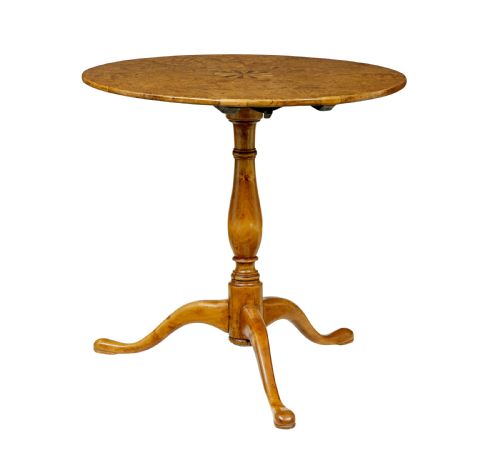
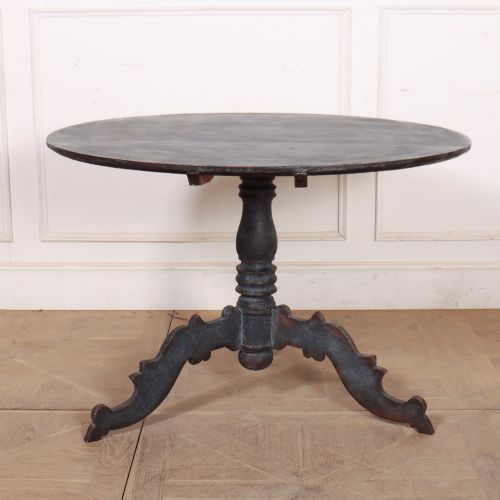
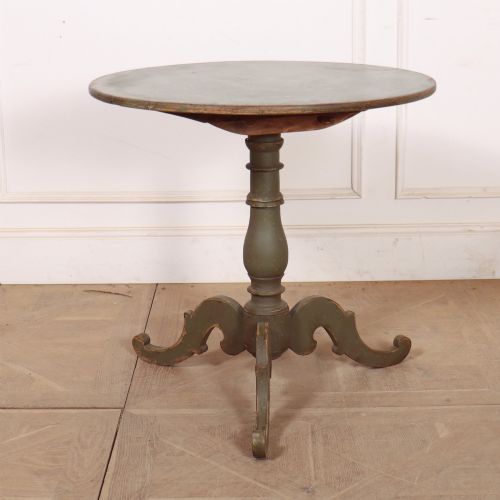
A swedish tilt top table appears primarily as a nineteenth century occasional, lamp, supper, side or centre table designed to save space when not in use. These pieces embody Scandinavian country and Biedermeier aesthetics, utilising the characteristic folding mechanism to tilt the surface upright.
The most likely version to meet on this page is a nineteenth century birch, burr birch or alder root piece. Regional variants span from Swedish Empire and country workshops to specific forms like oval, square and tripod tables.
How they were made
Cabinetmakers constructed these tables using native timbers such as birch, burr birch, alder root, ash and pine. Surfaces frequently feature carefully selected veneers or painted finishes, alongside ebonised wood details.
The pivoting mechanism requires precise carpentry to balance the heavy timber top securely upon a central column or tripod base. Inlaid decoration adds geometric or linear contrast to the figured grain of the wood.
Swedish Tilt Top Table Retail Price Guide 2026
Typical asking prices for swedish tilt top table among the pieces listed under this phrase on Sellingantiques today, from the lower quarter to the upper quarter. They describe what is for sale here now, not the wider market.
Listings feature pieces from the nineteenth century, including the specific year eighteen eighty, utilising birch, burr birch, pine, painted wood, ebonised wood, mahogany and alder root.
What varies in quality
Quality rests heavily on the choice of timber and the figure of the grain, particularly in burr birch and alder root examples. Superior pieces display harmonious matching of veneers across the top and sound engineering in the tilting mechanism.
The sophistication of the silhouette defines the upper tier, ranging from restrained country forms to polished Biedermeier and Empire designs. Finer execution shows in the crispness of any inlay and the stability of the tripod or pedestal base.
The Swedish Tilt Top Table Glossary
- Tilt top
- A table top hinged to fold vertically when not in use. This clever design allows the piece to stand flat against a wall.
- Burr birch
- Wood harvested from a birch tree growth that produces intricate, swirling grain patterns. Cabinetmakers prize this timber for decorative veneering.
- Biedermeier
- A influential Central European and Scandinavian design style spanning the nineteenth century. It prioritises clean lines, utility and minimal ornamentation over heavy historicism.
- Tripod table
- A small freestanding table supported by a pillar above three legs. This construction provides stable footing on uneven floors.
Swedish Tilt Top Table: Frequently Asked Questions
What is a swedish tilt top table?
A swedish tilt top table is a nineteenth century wooden table featuring a hinged surface that pivots vertically. These tables served various domestic roles as occasional, lamp, supper or side surfaces.
Craftsmen in Sweden utilised native woods like birch, burr birch, alder root and pine. The folding mechanism allowed households to clear floor space easily when the tables were not in use.
How do I use a tilt top table?
You use a tilt top table as a functional surface for lamps, books or supper items during daily routines. The pivoting mechanism lets you fold the top flat against the base when you need to reclaim room space.
Position the table beside a seating area or in a hallway where its decorative wood grain can be appreciated. Ensure the catch mechanism is secure whenever the top is locked in the horizontal position.
How do I identify a nineteenth century piece?
Identifying a nineteenth century piece involves examining the timber selection, construction methods and stylistic markers. Look for native woods like birch, burr birch and alder root shaped into Biedermeier, Empire or country forms.
Hand-cut joinery and the specific patina of painted or polished surfaces offer further clues to age. Regional Swedish characteristics often appear in the simplicity of the pedestal or tripod supports.
What is the difference between Biedermeier and country styles?
Biedermeier style focuses on polished wood veneers, elegant proportions and subtle geometric inlay. These pieces reflect urban sophistication and refined cabinetmaking traditions.
Country style pieces rely on painted finishes, simpler pine or birch construction and utilitarian forms. They showcase the practical demands of rural Scandinavian domestic life rather than formal parlour aesthetics.