





Biedermeier Pedestal Table
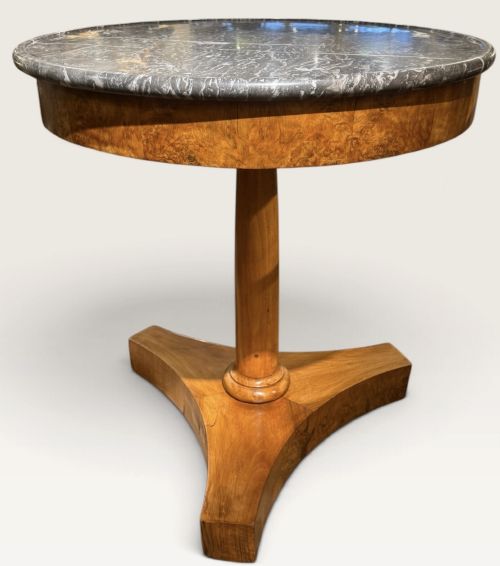
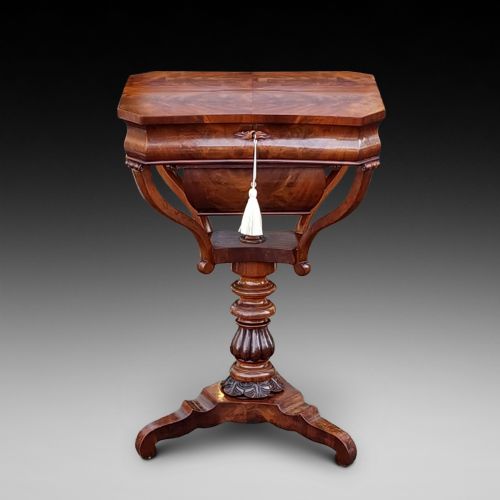
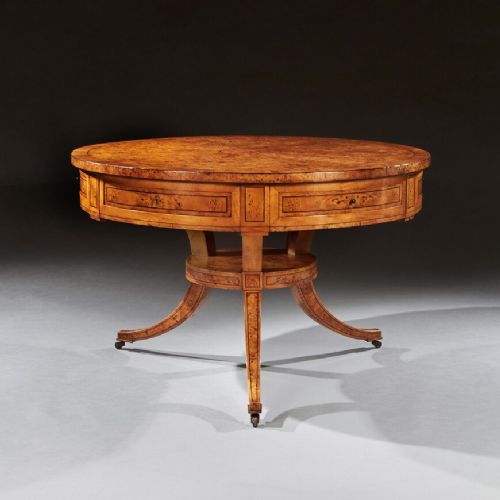
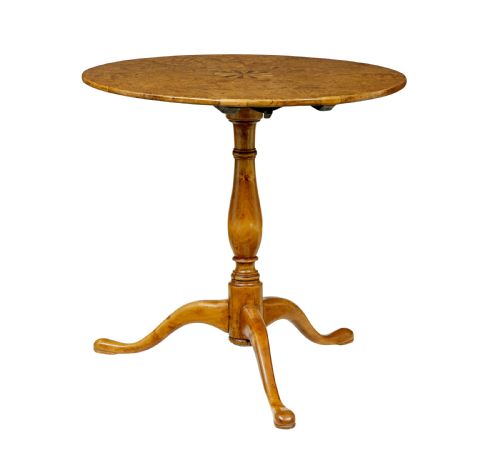
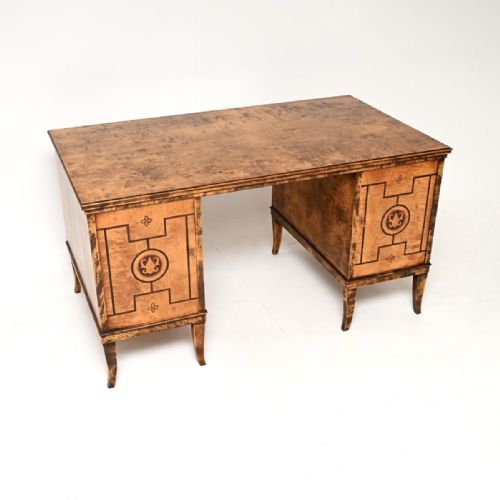
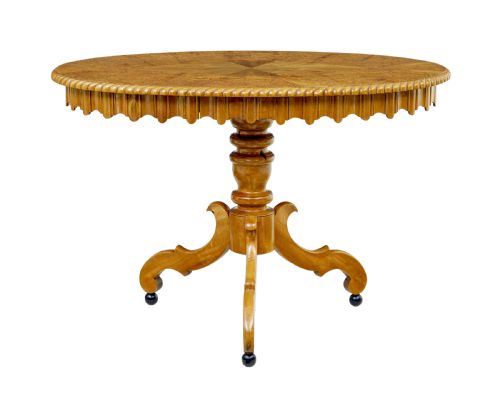
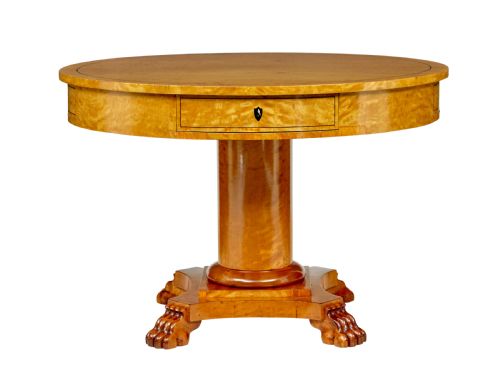
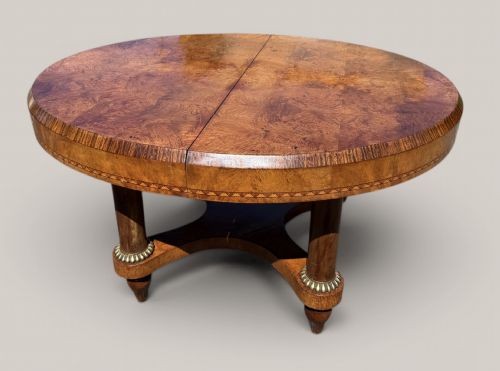
These pieces are biedermeier pedestal table examples, bringing striking grain patterns and central columns to a room.
Biedermeier Pedestal Table
A biedermeier pedestal table stands on a single central pillar, often taking the form of an occasional, centre, or drum table. These pieces emerge chiefly from 19th-century Scandinavian workshops, bringing clean silhouettes to domestic spaces.
The materials centre on light timbers like birch, burr birch, and mahogany, frequently shaped into circular or oval tops. Buyers encounter occasional tables and centre tables most often on this page.
Originating in the 19th century and extending into later revivals, these tables combine architectural solidity with domestic utility. Their restrained ornamentation lets the timber grain provide the visual focus.
Quality variations
The selection of timber grain defines the visual success of the piece, with matched burr veneers commanding attention through complex figuring. Finely executed brass or ormolu mounts and precise inlay indicate higher workshop standards.
Structural integrity relies on the stability of the central column and the flatness of the veneered top against seasonal humidity changes. Subtle proportions and harmonious column diameters separate accomplished cabinet work from standard production.
Biedermeier Pedestal Table Retail Price Guide 2026
Typical asking prices for biedermeier pedestal table among the pieces listed under this phrase on Sellingantiques today, from the lower quarter to the upper quarter. They describe what is for sale here now, not the wider market.
The listings show nineteenth-century Scandinavian origins alongside later twentieth-century interpretations, executed primarily in birch, mahogany, and burr timbers.
The Biedermeier Pedestal Table Glossary
- Burr birch
- A growth deformity in the birch tree that produces swirling, highly decorative grain patterns when sliced into veneer.
- Centre table
- A freestanding table designed to be viewed from all sides, placed in the middle of a room rather than against a wall.
- Ormolu
- Gilded bronze or brass applied as decorative mounts to furniture surfaces during the nineteenth century.
- Tilt top
- A hinged table top that pivots to a vertical position when not in use, allowing the piece to stand flat against a wall.
- Gueridon
- A small French occasional table supported by one or more columns, often featuring a circular marble top.
Biedermeier Pedestal Table: Frequently Asked Questions
Where did biedermeier furniture originate?
The style developed primarily in German-speaking lands and Scandinavia during the early to mid-nineteenth century. It reflected the tastes of the rising middle class for functional, elegant domestic furnishings.
Craftsmen focused on clean lines and expressive wood grains rather than heavy ornamentation. Swedish and other Scandinavian interpretations made extensive use of native birch timbers.
How do I use a centre table at home?
A centre table stands independently in an open space, often holding a lamp, books, or a floral arrangement. Its finished appearance from every angle allows placement in the middle of a room.
These tables also serve as functional surfaces for serving tea or playing games in a principal reception room.
What is the difference between an occasional table and a centre table?
An occasional table is typically smaller and designed to be moved easily to where it is needed in a room. A centre table is larger, heavier, and anchored visually as the focal point of a space.
Both variants utilise the central pedestal construction characteristic of the nineteenth-century Scandinavian repertoire.
How should I care for birch veneer surfaces?
Protect the timber from direct sunlight and excessive heat fluctuations to prevent the veneer from drying or cracking. Regular dusting with a soft, dry cloth maintains the polished finish without moisture damage.
Apply occasional natural wax feeds sparingly to nourish the wood and preserve the depth of the grain.