


Vintage Sewing Casket
A vintage sewing casket is a fitted box for needlework and small treasures, prized for its intricate woodwork and clever internal compartments.
Vintage Sewing Casket
A vintage sewing casket is essentially a work box designed to hold needles, thread, and notions, though many double as jewellery boxes or general trinket containers. When you browse this selection of vintage sewing casket examples, you encounter pieces that span several distinct eras from the nineteenth century.
The forms vary from simple rectangular shapes to elaborate trumpet work tables and ladies boxes. Most specimens date from the Victorian period, whilst others originate in the Regency era or around eighteen eighty.
Makers fashioned these containers to sit upon dressing tables or work stands, serving both a practical function for domestic needlework and a decorative purpose in the home. The interiors typically reveal fitted compartments lined in silk, designed to organise the tools of the maker.
Materials and construction
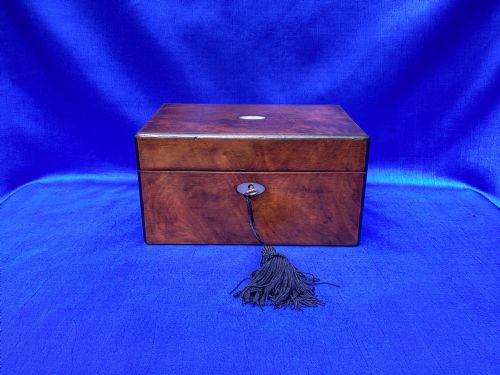
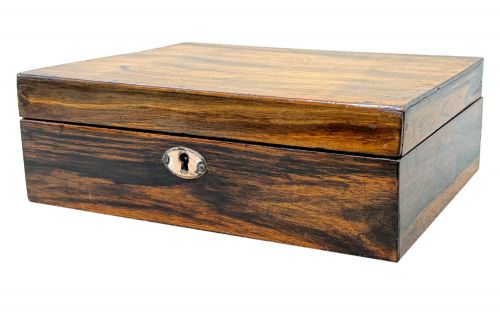
Craftsmen built the carcases of these boxes using dense timbers such as mahogany, rosewood, walnut, coromandel, satinwood, and mahogany. These foundational woods provided a stable canvas for decorative surface treatments.
Surface ornamentation involved intricate techniques including mother-of-pearl inlay, silver stringing, and marquetry. Tunbridge Ware examples utilise mosaic wood blocks to form detailed geometric or pictorial scenes across the lid and sides.
Interior fittings frequently incorporate bone and silk alongside compartmentalised wooden trays. Leather also appears on specific Regency specimens, providing a different tactile finish to the exterior.
Listings feature woods such as rosewood, mahogany, walnut, satinwood, and coromandel, combined with mother-of-pearl, bone, and silk.
Distinctions in quality
The standard of a vintage sewing casket rests upon the precision of its decorative inlay and the selection of timber veneers. Finer boxes display complex mother-of-pearl work, intricate Tunbridge Ware mosaics, or detailed marquetry that requires considerable skill to execute.
Internal organisation also dictates the level of craftsmanship, with superior examples retaining their original silk linings, bone implements, and multi-layered compartmentalised trays. The integrity of the woodwork and the retention of decorative stringing distinguish the better pieces from simpler utilitarian containers.
The Vintage Sewing Casket Glossary
- Tunbridge Ware
- A form of woodwork originating in Kent where tiny coloured wood blocks form mosaic patterns. This technique creates detailed pictorial or geometric designs on box lids.
- Marquetry
- The art of applying decorative veneer pieces to a structure to form designs. Craftsmen utilise various coloured woods to create pictorial or abstract motifs.
- Work Box
- A container specifically designed for needlework and sewing implements. These items typically feature internal trays and compartments for cottons and needles.
- Coromandel
- A dense, heavily grained timber imported from Asia, often utilised for high-end nineteenth century boxes. Its dark brown colour and striking figure make it highly decorative.
- Stringing
- A thin inlay of contrasting wood or metal set into the surface of a piece. This technique outlines panels and edges to add linear definition.
Vintage Sewing Casket: Frequently Asked Questions
What is a vintage sewing casket?
A vintage sewing casket is a decorative wooden box designed to hold needlework tools, threads, and small accessories. These containers often feature fitted interior trays and compartments.
They reflect the domestic pursuits of the nineteenth century, serving as both practical sewing companions and decorative objects for the home.
How were these boxes used?
Households utilised these boxes to keep needles, pins, silks, and small tools organised in one portable container. Many doubled as receptacles for jewellery and personal trinkets.
Ladies kept them in drawing rooms or bedrooms, where the fitted interiors kept delicate items secure and tidy.
What woods are commonly found?
The evidence shows boxes made from rosewood, mahogany, walnut, satinwood, and coromandel. These dense timbers provided durable surfaces for decorative inlays.
Craftsmen often selected exotic veneers to showcase the grain and colour of the wood across the exterior.