






Antique Pedestal Workbox
An antique pedestal workbox combines fine cabinet-making with a practical interior designed to hold needlework and small treasures.
Antique Pedestal Workbox
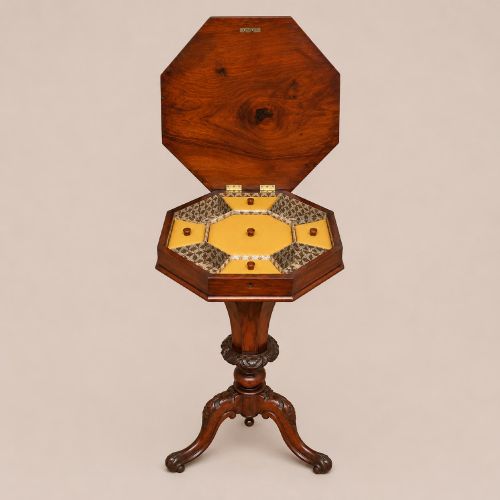
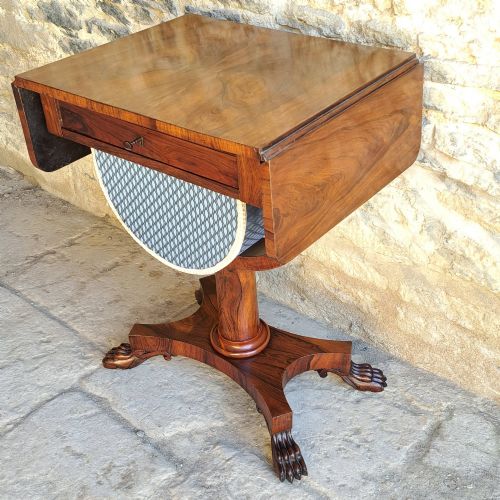
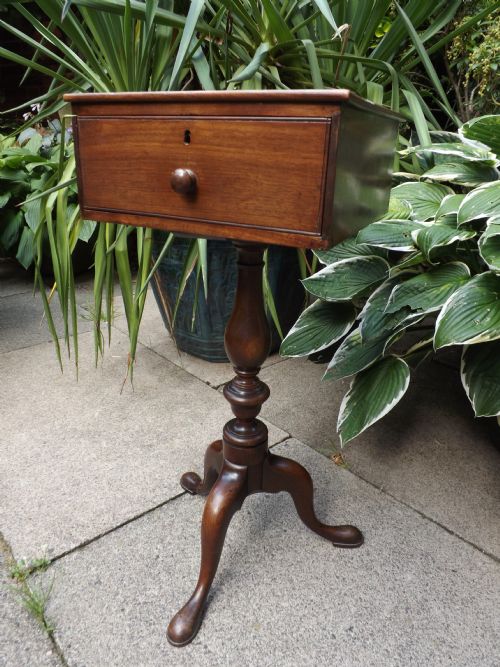
When you search for an antique pedestal workbox, you find pieces designed primarily for sewing, needlework, and small domestic tasks, often functioning as occasional or lamp tables in a modern home. These items typically feature a central pedestal base supporting a compartmented top, combining utility with decorative presence.
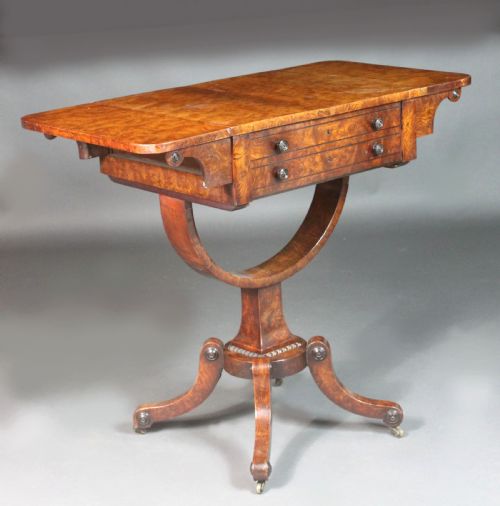
The versions most commonly met on this page belong to the Regency and Victorian periods, with materials ranging from rich rosewood and burr walnut to figured mahogany. Alongside dedicated work tables and sewing tables, related forms such as games tables and side tables appear within the selection.
Originating in the late eighteenth and nineteenth centuries, these pieces reflect the domestic habits of the period, where ladies kept their needlework neatly stored while sitting in the parlour. Their dual capacity for storage and display ensures they remain adaptable furniture for contemporary interiors.
How they were made
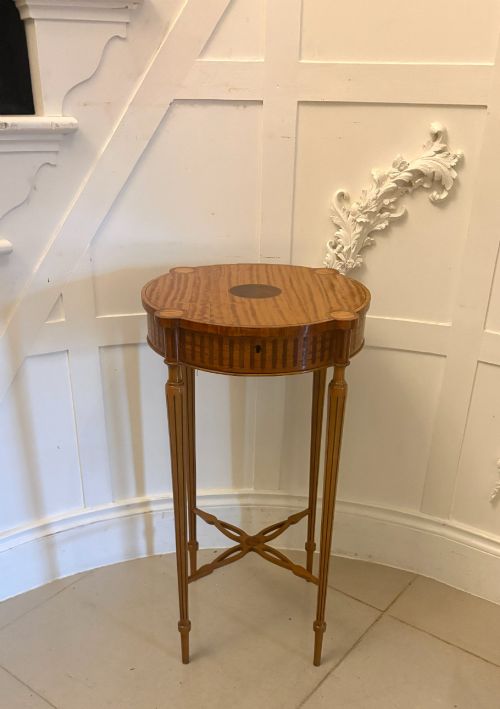
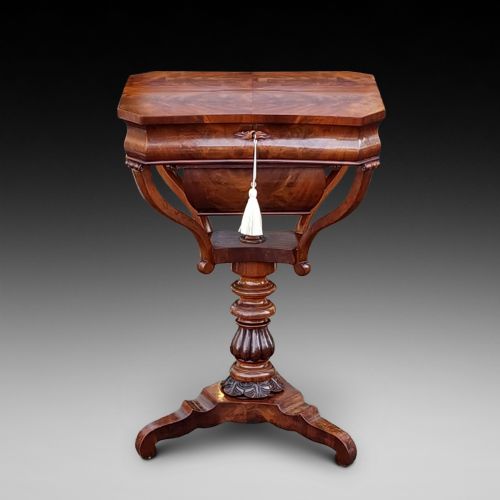
Cabinet-makers constructed these pieces using solid timbers alongside carefully applied veneers such as burr walnut, flame mahogany, and rosewood to create striking surface patterns. Satinwood inlay and contrasting stringing frequently accent the primary woods.
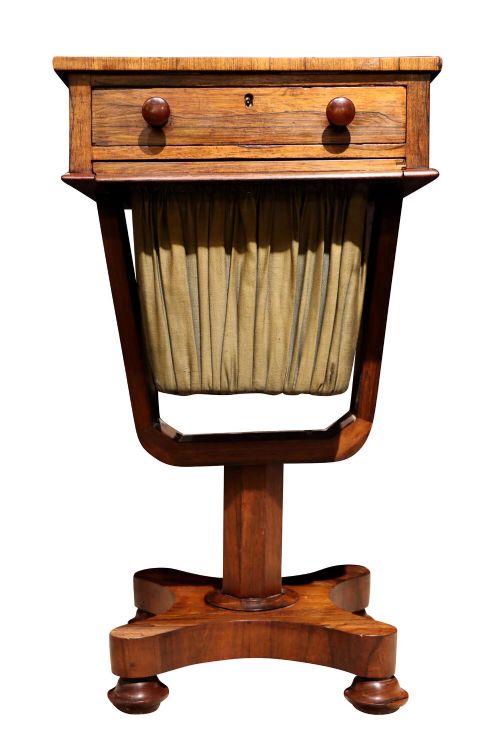
The structural support relies on a central pedestal rising from a platform base with scrolled feet, or in earlier examples, a tripod base. Internal compartments, often lined with fabric or fitted with small lidded boxes and trays, demonstrate the detailed joinery required for sewing storage.
Antique Pedestal Workbox Retail Price Guide 2026
Typical asking prices for pedestal workbox among the pieces listed under this phrase on Sellingantiques today, from the lower quarter to the upper quarter. They describe what is for sale here now, not the wider market.
The listings here span the George III, Regency, William IV, and Victorian periods, showcasing forms in mahogany, rosewood, and walnut.
What varies in quality
The standard of timber selection and the precision of veneer matching distinguish finer examples from standard production pieces. Richly figured grains and well-chosen cuts of burr walnut or flame mahogany elevate the visual impact of the cabinetwork.
Complexity and refinement within the interior fittings also dictate worth, particularly where internal trays, lidded compartments, and delicate satinwood stringing remain intact. The fluidity of the pedestal turning and the stability of the base construction further separate accomplished workshops from simpler regional output.
The Antique Pedestal Workbox Glossary
- Pedestal
- A central upright support that carries the weight of the table top above a stepped base or footed platform. This form gained widespread popularity during the Regency and Victorian eras.
- Workbox
- A lidded box or small chest designed to contain sewing implements, threads, and personal items. When mounted on a stand or pedestal, it functions as a small freestanding table.
- Veneer
- A thin slice of decorative wood applied over a secondary timber foundation to produce patterned surfaces. Burr walnut and flame mahogany are typical examples seen on these tables.
- Inlay
- A technique where contrasting woods or other materials are inserted into recessed portions of the primary surface to form decorative motifs. Satinwood is frequently used for this purpose.
- Tripod base
- A three-legged support structure radiating from a central column, common in eighteenth-century and early nineteenth-century tables.
Antique Pedestal Workbox: Frequently Asked Questions
What is an antique pedestal workbox used for?
Historically, these pieces served as specialised tables for sewing, embroidery, and holding small personal items close to hand in the drawing room. The internal compartments kept threads, needles, and tools organised beneath a lidded top.
Today, they function well as compact lamp tables, side tables, or occasional tables in living spaces, offering discreet storage for modern clutter while retaining their decorative character.
How do I tell a Regency workbox from a Victorian one?
Regency pieces often display cleaner classical lines, sometimes utilising brass inlay, rosewood, or figured mahogany with architectural proportions. The pedestals frequently spring from platform bases with brass paw feet or sabre legs.
Victorian examples tend towards heavier proportions, highly figured burr walnut veneers, and elaborate carving or serpentine outlines. Satinwood stringing and more complex internal compartmentalisation are also characteristic of the later nineteenth century.
Can I use a workbox as a bedside table?
The compact footprint and enclosed storage make these tables suitable for use beside a bed. The upper compartment provides a convenient place for small items.
Care should be taken with placement to protect polished timber and delicate veneer surfaces from direct moisture or heat.
What woods were used to make these tables?
Cabinet-makers relied heavily on exotic and native hardwoods, with rosewood, mahogany, and walnut forming the primary exterior surfaces. Finer examples made extensive use of decorative veneers such as burr walnut and flame mahogany.
Secondary timbers such as pine or oak were typically employed for internal drawer linings and structural framing hidden from view.