
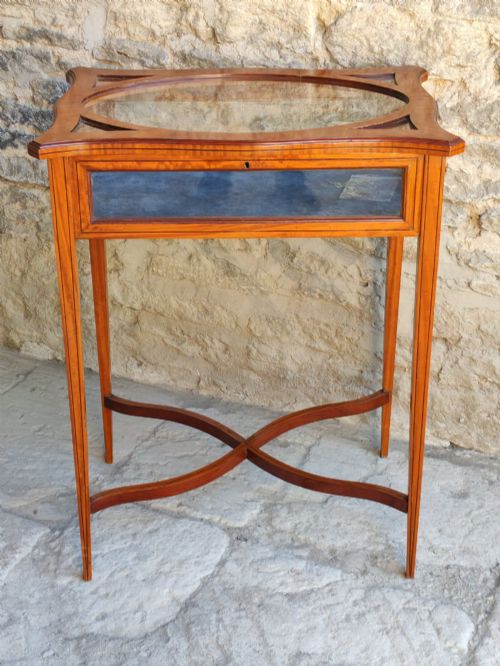
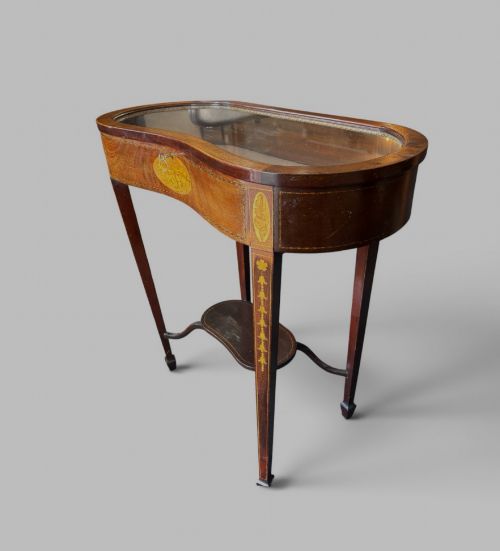


Satinwood Jewellery Box
A satinwood jewellery box offers a luminous, golden timber surface designed to safely house treasured trinkets and keepsakes.
Satinwood Jewellery Box
A satinwood jewellery box brings together compact tabletop storage and the distinctively warm, reflective sheen of exotic timber. These pieces range from dedicated portable containers to small desktop cabinets and larger display tables.
The selections encountered span several distinct periods including the Georgian era, the Regency period, and the Edwardian epoch. Buyers most frequently meet rectangular boxes, kidney-shaped display pieces, and octagonal forms.
Makers utilised this timber both as a primary structural wood and as a decorative veneer. The resulting objects serve as practical storage solutions while adding warmth to a room.
How they were made
Craftsmen built these pieces using solid timbers like mahogany and walnut as a foundation, applying fine satinwood veneers across the visible exterior surfaces. Inlay work frequently incorporates contrasting materials such as ebony, brass, and calamander to create geometric or floral borders.
Interiors were typically lined with soft fabrics including velvet to protect delicate items from scratches. Structural hardware such as brass hinges and small escutcheons provided functional security and a subtle metallic contrast to the timber.
The available listings demonstrate styles from the Georgian, Regency, and Edwardian periods, utilising satinwood alongside mahogany, walnut, and brass.
What varies in quality
The fineness of the grain and the depth of the figure in the timber dictate the visual appeal of a piece. Highly figured satinwood exhibits a shimmering chatoyancy that catches the light differently as the viewer moves around the object.
The complexity and precision of the inlay work distinguish standard production from superior craftsmanship. Crisp alignment in contrasting wood borders and well-fitted interior compartments signal higher workshop standards.
The Satinwood Jewellery Box Glossary
- Satinwood
- A durable hardwood known for its golden colour and reflective, satin-like sheen. It was widely utilised by cabinet makers during the eighteenth and nineteenth centuries for high-status furniture and decorative boxes.
- Inlay
- A decorative technique where small pieces of contrasting wood, metal, or shell are inserted into recessed cavities in the primary wood surface. This method creates flat ornamental patterns and borders.
- Bijouterie table
- A glass-topped display table designed to showcase small valuable objects and jewellery. These pieces often feature hinged lids and velvet-lined interiors.
- Escutcheon
- A small protective plate surrounding a keyhole. It is commonly made of brass and prevents the surrounding timber from sustaining wear when the key is inserted.
Satinwood Jewellery Box: Frequently Asked Questions
How do I date a satinwood box?
Dating relies upon observing the construction methods, handles, and secondary woods used within the interior compartments. Earlier Georgian and Regency examples often feature hand-cut dovetails and simpler timber linings.
Later Edwardian pieces display different joinery techniques and distinct inlay styles. Comparing these details against known period characteristics helps establish an approximate decade of origin.
How should I clean satinwood furniture?
Maintenance requires only a soft, dry cloth to remove dust from the polished wooden surfaces. Avoid using modern aerosol polishes or silicone-based sprays, which can build up and dull the historic finish.
Applying a traditional beeswax occasionally helps nourish the timber. This preserves the natural golden lustre without harming the antique polish underneath.
Where were these boxes used?
These pieces sat upon dressing tables, writing desks, or dedicated side tables in principal rooms of grand homes. They provided a secure, elegant place to store rings, brooches, and personal letters.
Display variants were placed in drawing rooms to allow guests to admire small collectibles and curiosities under glass.