
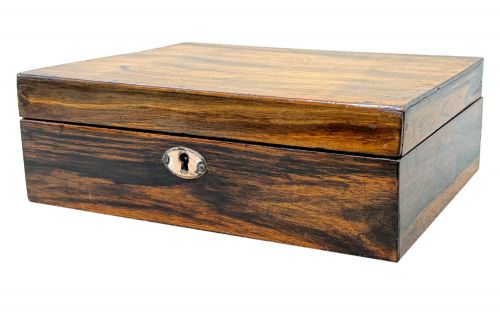


Calamander Wooden Box
These calamander wooden box examples are richly figured nineteenth century vessels built for writing, travel, and holding precious items.
Calamander Wooden Box
A calamander wooden box is a dense, heavily grained luxury container from the nineteenth century, built during the Georgian, Regency, and Victorian periods. The pieces shown here are predominantly forms like writing slopes, tea caddies, work boxes, and vanity boxes.
Most items you will meet on this page date from the Victorian era and the middle decades of the nineteenth century. Makers utilised exotic timbers, often pairing calamander and coromandel with contrasting woods like satinwood.
These objects served practical domestic and travel roles for wealthy households, functioning as portable desks, tea storage, or secure cases for jewellery. Their survival in varied forms demonstrates the high utility demanded of fine cabinet work.
How they were made
Cabinet makers constructed these boxes using dense exotic hardwoods over solid timber carcases, applying sliced veneers to display the distinctive grain of calamander and coromandel. Surfaces were frequently embellished with contrasting inlay such as satinwood, alongside structural and decorative mounts in brass.
Interiors combined fine cabinet work with fitted compartments, secret drawers, and velvet or leather writing surfaces. Advanced pieces incorporated precision brass locks and hinges, alongside delicate applied details like mother-of-pearl or pietra dura panels.
Listings span the nineteenth century, with materials ranging from solid coromandel and satinwood to applied brass and mother-of-pearl.
What varies in quality
Quality in a calamander wooden box lies in the depth and figuring of the timber veneer and the precision of the brass inlay or mounts. Superior examples exhibit seamless continuity of grain across lid and sides, whilst lesser pieces show simpler construction.
The complexity and completeness of internal fittings distinguish finer boxes from standard utility items. Original working locks, intact secret drawers, and well-preserved velvet or leather linings elevate the status of a piece within the range.
Mechi & Bazin
The Calamander Wooden Box Glossary
- Calamander
- A dense, heavily figured tropical hardwood from South Asia and Southeast Asia. Its dark brown stripes made it a premier choice for luxury nineteenth-century boxes.
- Coromandel
- A close relative to calamander, frequently used interchangeably in nineteenth-century cabinet making. It displays dramatic dark grain patterns against a warm brown background.
- Writing Slope
- A portable desk featuring a hinged, sloping lid that opens to reveal a writing surface, inkwells, and storage compartments for paper and pens.
- Tea Caddy
- A container designed to store loose tea leaves securely, often featuring internal lidded compartments to separate different varieties.
- Pietra Dura
- An artistic technique using inlaid cut and fitted polished coloured stones to create pictorial designs on box lids.
- Satinwood
- A luminous yellowish timber used for contrasting stringing and geometric inlay on dark carcases.
Calamander Wooden Box: Frequently Asked Questions
What is a calamander wooden box used for?
These boxes served multiple domestic and personal functions in the nineteenth century, including storing correspondence, holding loose tea, or organising jewellery.
Many examples functioned as portable writing desks or vanity cases for travel, combining utility with decorative display in the home.
How do I date a coromandel box?
Dating relies on stylistic clues, construction methods, and materials associated with periods like the Regency or Victorian eras. Brass mounts, interior silk linings, and cabinet labels help narrow the decade of manufacture.
Earlier pieces from around eighteen hundred tend to show Georgian proportions, while later Victorian boxes often incorporate more elaborate stationery compartments and drop fronts.
What is the difference between calamander and coromandel?
Both terms describe dense, heavily striped tropical hardwoods imported during the nineteenth century for high-end cabinet work. They share similar botanical origins and dramatic dark grain patterns.
In period usage and modern cataloguing, the names often overlap, though calamander sometimes refers to timber with lighter background tones.
How do I care for antique wood boxes?
Maintain these boxes by keeping them away from direct sunlight and steady humidity sources to prevent timber shrinkage or veneer lifting. Gentle dusting with a dry cloth preserves the polished surface.
Avoid liquid cleaners or modern polishes, which can damage nineteenth-century French polish finishes and delicate brass or mother-of-pearl inlays.