


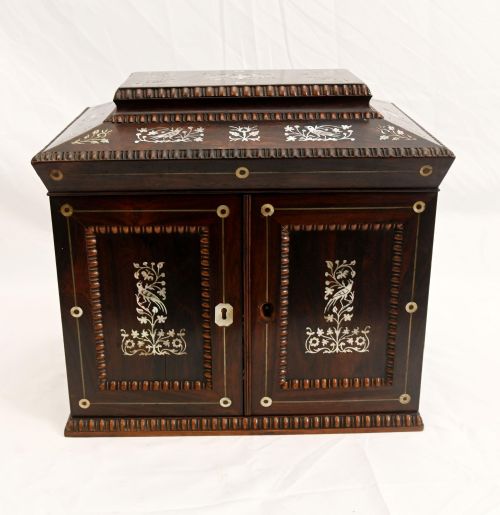
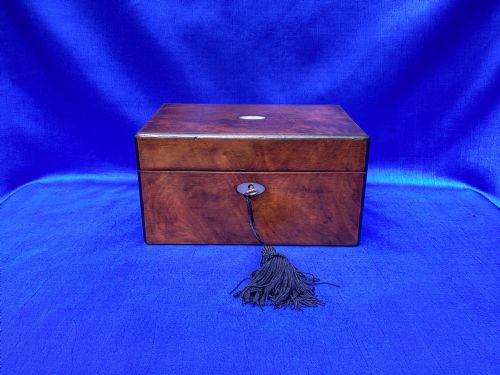


Carved Wooden Workbox
A carved wooden workbox brings the meticulous needlework of the nineteenth century straight to a modern desk or table.
Carved Wooden Workbox
When you search for a carved wooden workbox, you are looking at practical containers designed to hold sewing gear, threads, and small valuables. These items appear in various forms across this page, including traditional desktop boxes, freestanding sewing tables, and specialised cabinets.
The pieces you are most likely to meet on this page span the Victorian and Edwardian eras, utilising rich timbers like walnut, burr walnut, mahogany, and rosewood. Originating from English workshops as well as Anglo-Indian and French makers, they combine structural utility with intricate exterior decoration.
Many examples function equally well as jewellery chests, decorative boxes, or occasional tables while retaining their original compartmented interiors. The craftsmanship reflects an era when needlework accessories required dedicated, beautiful storage.
Materials and Construction
Cabinetmakers utilised dense hardwoods such as mahogany, rosewood, and walnut to build the primary carcass of each carved wooden workbox. Burr walnut and figured walnut veneers were frequently applied to create striking, patterned exterior surfaces.
Detailing often involved intricate surface carving alongside contrasting inlays and delicate mother-of-pearl accents. Brass hardware, including hinges and locks, completed the construction, while internal compartments were lined with fitted textiles.
Carved Wooden Workbox Retail Price Guide 2026
Typical asking prices for carved wooden workbox among the pieces listed under this phrase on Sellingantiques today, from the lower quarter to the upper quarter. They describe what is for sale here now, not the wider market.
The available selection spans Victorian, Edwardian, and nineteenth-century French and Anglo-Indian design traditions.
Judging Quality and Execution
Superior examples distinguish themselves through the precision of their timber selection, such as heavily figured burr walnut or smoothly finished coromandel. The depth and clarity of the exterior wood carving indicate the level of artisan skill invested in the piece.
Interior organisation also dictates grade, with higher-quality boxes featuring complete, well-fitted textile linings and sophisticated compartmental layouts rather than simple open storage.
The Carved Wooden Workbox Glossary
- Burr walnut
- A prized timber veneer showing swirling knot formations. It creates highly decorative patterns across the lid and panels of a box.
- Sarcophagus shaped
- A distinctive box profile featuring a sloping, stepped lid reminiscent of ancient monumental tombs. This form was particularly popular during the Victorian period.
- Coromandel
- A dense, heavy tropical hardwood prized for its dark brown colour and striking black streaks. It appears on select nineteenth-century pieces.
- Mother-of-pearl
- The iridescent inner layer of certain mollusc shells, used historically to create contrasting inlay motifs and escutcheons on wooden boxes.
- Work table
- A small, freestanding furniture piece combining a drawer or hanging bag for sewing materials with a stable top surface.
Carved Wooden Workbox: Frequently Asked Questions
What did people keep inside a workbox?
These boxes housed essential sewing equipment including spools of thread, needles, thimbles, and small scissors. Dedicated internal compartments kept these delicate tools organised and protected.
Many examples also served broader storage purposes, holding letters, trinkets, or personal jewellery alongside sewing supplies.
How do I date a wooden work box?
Dating relies on observing the timber choices, construction techniques, and decorative styles associated with specific nineteenth-century periods. Victorian and Edwardian pieces often exhibit distinct hardware styles and veneer treatments.
Consulting the specific era listed for each item helps place its manufacture within the broader timeline of nineteenth-century cabinetmaking.
Where should I place a workbox at home?
Desktop boxes sit comfortably on a study desk, dressing table, or living room console. Their compact size allows them to function as decorative accents while holding small everyday items.
Freestanding sewing tables and larger cabinets operate independently as occasional furniture pieces in a bedroom or parlour.
Are these boxes still useful today?
Modern owners utilise these containers to store contemporary sewing supplies, craft materials, or desktop stationery. The internal compartments remain well-suited for organising small modern accessories.
Beyond practical storage, they function as decorative antiques that display natural wood grains and historic carving techniques.